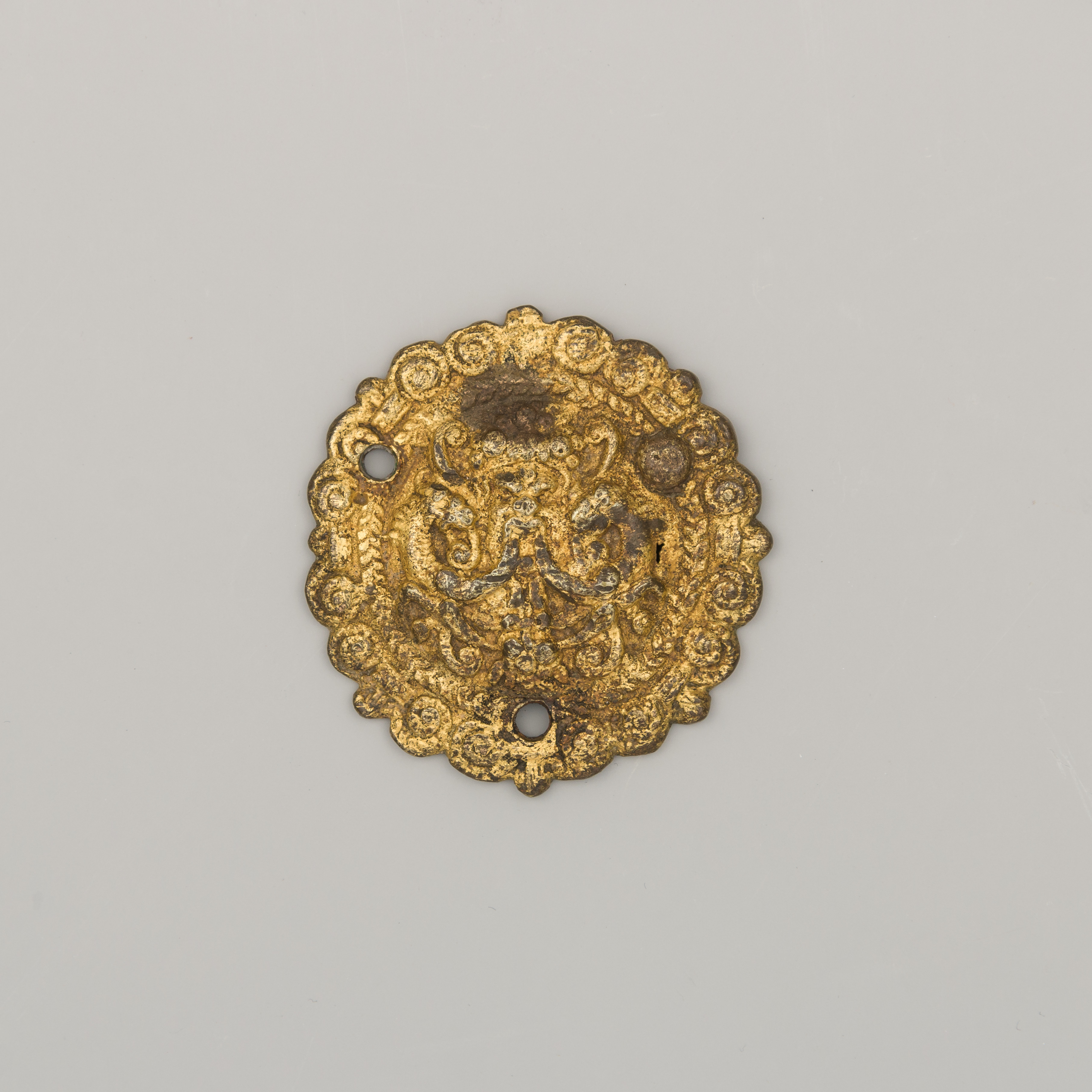
Heritage Analysis: The Bit Boss as a Case Study in Symbolic Power and Material Authority
Introduction: Defining the Object and Its Cultural Provenance
The Bit Boss, a decorative mount fashioned from copper alloy and gold, represents one of the most compelling—and understudied—artifacts within the broader corpus of equestrian adornment. While its precise origin remains contested, the strongest morphological and metallurgical evidence points toward a Germanic cultural context, likely spanning the late Roman Iron Age through the early medieval period (circa 4th–8th centuries CE). In this context, the bit boss functioned not merely as a functional component of horse tack but as a concentrated site of symbolic power, spiritual meaning, and social differentiation. For Katherine Fashion Lab, the Bit Boss offers a strategic standalone research opportunity: a compact, materially rich object capable of anchoring a 2026 luxury narrative around disciplined power, sacred mobility, and the alchemy of base metal transformed by gold.
Materiality and Craft: Copper Alloy, Gold, and the Alchemy of Authority
The Bit Boss’s material composition is central to its interpretive value. Copper alloy—whether bronze or brass—provided the structural durability required for a functional equestrian object, while gold was applied through gilding, inlay, or selective surface enrichment. This combination was neither accidental nor purely aesthetic. In Germanic and broader European metalworking traditions, gold was understood as a substance of incorruptibility and solar power, while copper alloys carried associations with transformation, alloying, and human craft. The Bit Boss thus embodies a deliberate hierarchy of materials: the base metal performs the labor, the gold confers the aura.
From a luxury strategy perspective, this material logic anticipates contemporary high-end positioning. The 2026 consumer—particularly within the quiet luxury and heritage craft segments—responds to objects that demonstrate material intelligence rather than mere accumulation. The Bit Boss’s gilded copper alloy is not a compromise; it is a statement of engineered prestige. Katherine Fashion Lab can translate this into a design philosophy that privileges composite materiality: base metals, responsibly sourced, elevated through artisanal goldwork and narrative transparency.
Symbolic Power: The Horse, the Warrior, and the Controlled Force
The Bit Boss sits at the precise point of contact between rider and horse—the mouth, the seat of breath, voice, and submission. In Germanic warrior cultures, the horse was not livestock but a companion of rank, a vehicle of sovereignty, and a participant in ritual. To adorn the bit was to mark the moment of controlled power: the transformation of raw animal force into disciplined movement. The boss itself, often circular or shield-shaped, functioned as a visual and spiritual seal at this nexus.
This symbolism carries direct implications for 2026 luxury strategy. The Bit Boss speaks to a consumer desire for power that is contained, not performed. In an era of overexposure and performative wealth, the Bit Boss offers a model of quiet authority—an object whose power is felt rather than announced. Katherine Fashion Lab can deploy this archetype in accessories, hardware, and even fragrance packaging: the boss as a recurring motif of centered control, the gold disc as a signature of restrained command.
Spiritual Meaning: Amuletic Protection and the Sacred Gaze
Beyond the functional and the social, the Bit Boss likely carried apotropaic and spiritual significance. Many Germanic and Migration Period equestrian mounts feature geometric, zoomorphic, or anthropomorphic decoration—spirals, interlace, stylized eyes, or masked faces—that served to ward off harm and invite divine favor. The boss, positioned on the horse’s cheek or bridle, was a portable altar: a point of contact between the mortal rider and the unseen forces of battle, travel, and fate.
This spiritual dimension is not a historical curiosity; it is a strategic asset. The 2026 luxury landscape is characterized by a search for meaningful adornment—objects that carry intention, protection, and narrative depth. The Bit Boss allows Katherine Fashion Lab to engage with contemporary talismanic desire without resorting to new-age cliché. The message is not superstition but inherited guardianship: the gold boss as a marker of safe passage, of journeys undertaken with purpose, of power that is both personal and protected.
Historical Adornment: From Functional Mount to Luxury Artifact
The trajectory of the Bit Boss from functional tack to collectible artifact mirrors the broader history of adornment. In its original context, it was both useful and beautiful—a total object in which utility and symbolism were inseparable. Over time, as equestrian technology evolved, such bosses migrated into jewelry, harness fittings, and decorative arts, their original function fading while their symbolic charge intensified. This is the classic heritage-to-luxury pipeline: the functional object becomes a sign, and the sign becomes a brand asset.
For Katherine Fashion Lab, the lesson is clear. The most durable luxury narratives are not invented; they are excavated. The Bit Boss provides a ready-made archetype: the gilded disc of controlled power, the material witness to sacred mobility, the Germanic synthesis of craft and command. In a 2026 market defined by authenticity, provenance, and emotional resonance, this object offers a rare combination of historical specificity and contemporary versatility.
Strategic Implications for Katherine Fashion Lab: 2026 and Beyond
Positioning the Bit Boss within a high-end luxury strategy requires three moves. First, narrative anchoring: present the Bit Boss not as a curiosity but as a foundational motif—the original luxury hardware, the ancestor of the buckle, the clasp, and the signature metal plate. Second, material translation: develop a 2026 capsule or signature line that uses copper alloy with gold vermeil or solid gold inlay, emphasizing responsible sourcing and artisanal gilding. Third, symbolic continuity: embed the boss’s meanings—protection, controlled force, sacred journey—into brand storytelling, retail environments, and digital campaigns.
The Bit Boss is not a relic. It is a strategic asset. In a luxury landscape hungry for depth, Katherine Fashion Lab can claim this Germanic emblem of power and transform it into a modern signature of disciplined elegance. The gold boss endures because it does what great luxury does: it holds the tension between force and form, between the animal and the divine, between the hand that makes and the hand that wears. That tension is the essence of heritage—and the future of the brand.