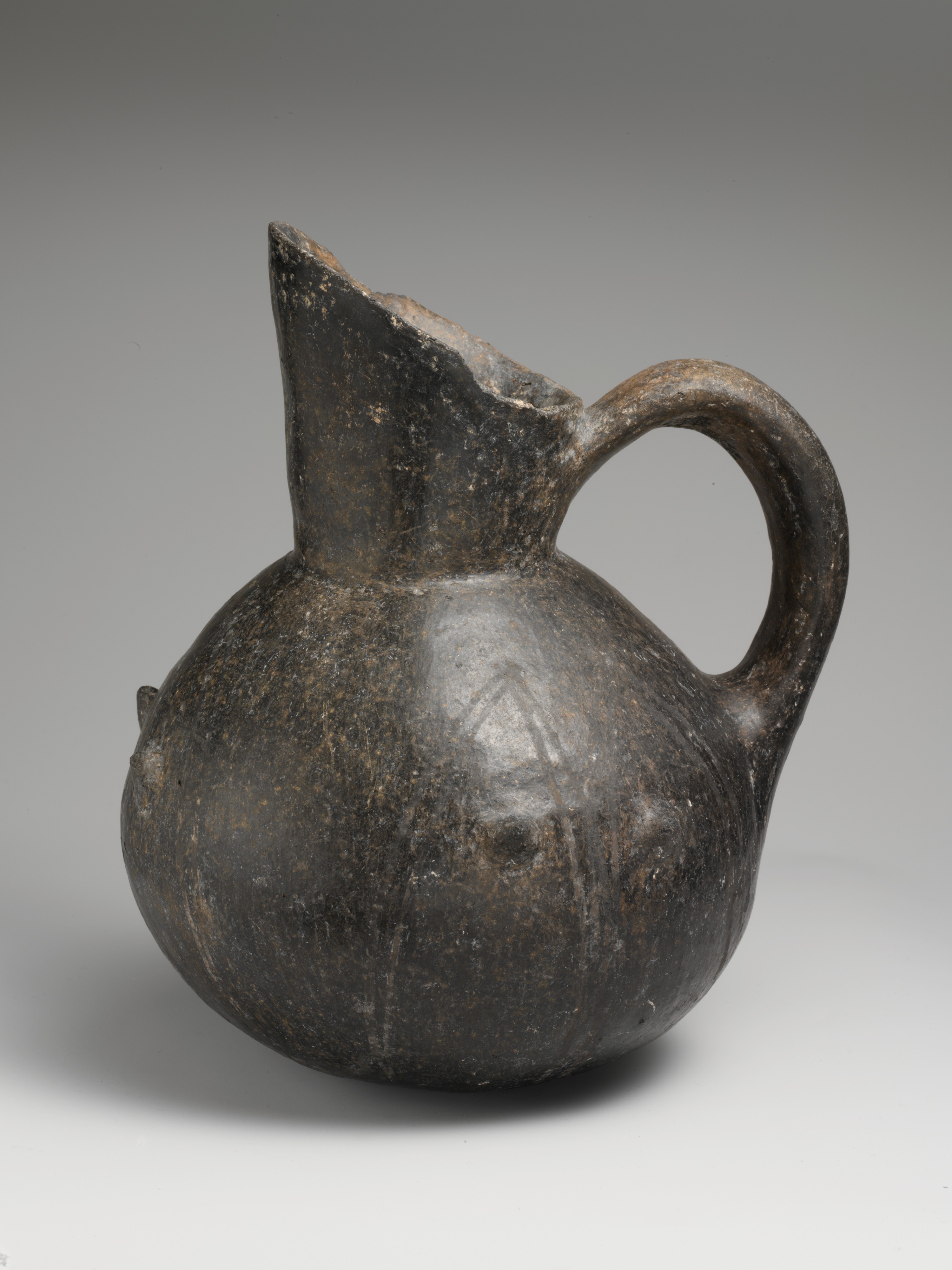
Anatolian Terracotta Jugs: Symbolic Power, Historical Adornment, and Strategic Luxury Positioning for 2026
Within the material record of Anatolia—the vast peninsula bridging the Aegean, the Black Sea, and the ancient Near East—the terracotta jug occupies a position of unusual strategic density. It is at once a utilitarian vessel and a symbolic instrument, a domestic object and a ritual apparatus. For Katherine Fashion Lab, the Anatolian terracotta jug is not merely an artifact of ceramic history; it is a compressed archive of meaning that can be decoded and repositioned within the 2026 high-end luxury landscape. This analysis examines the jug's symbolic power, its role in historical adornment, its spiritual function, and its implications for a differentiated luxury strategy grounded in deep heritage rather than surface ornament.
Symbolic Power: The Vessel as Agent
In Anatolian antiquity, the jug was never neutral. Across cultures—Hittite, Phrygian, Urartian, and the later Hellenistic and Roman strata—the act of pouring was understood as a transaction between worlds. The jug's spout, handle, and swelling body constituted a technology of transfer: liquid moved from vessel to cup, from human to altar, from mortal to divine. This functional gesture carried symbolic weight. To pour was to distribute abundance, to enact hospitality, and to participate in the cosmic order.
The symbolic power of the Anatolian jug is therefore relational rather than intrinsic. It resides in the object's capacity to mediate. The terracotta body—porous, earthy, fired from the soil of the region—grounds this mediation in the material world. Unlike metal vessels, which signal elite status through rarity and reflectivity, terracotta jugs communicate through texture, silhouette, and the tactile memory of the hand that formed them. For a luxury brand, this distinction is critical: terracotta offers an authenticity that precious metals cannot counterfeit.
Historical Adornment: Surface, Form, and the Politics of Display
Anatolian ceramic traditions demonstrate a sophisticated understanding of adornment as communication. The jug's decoration was never incidental. Painted bands, geometric registers, and stylized animal motifs—seen in assemblages from Alaca Höyük, Kültepe, and Gordion—served to mark ownership, ritual function, and cultural affiliation. The handle was frequently the most elaborately finished element, suggesting that the act of grasping and pouring was itself a performance of identity.
This has direct implications for contemporary adornment strategy. The Anatolian jug teaches that ornament should be structurally integrated, not applied. Decoration follows the logic of the vessel: it respects the curve, the lip, the join between body and handle. In luxury terms, this is the difference between design that emerges from form and design that is imposed upon it. The 2026 consumer, increasingly literate in craft narratives, will reward the former and reject the latter.
Furthermore, the historical record reveals that Anatolian jugs were often repaired rather than discarded. Golden joinery and lead staples transformed breakage into biography. This practice of visible repair anticipates contemporary luxury values around longevity, provenance, and the aestheticization of wear. A jug that has been mended is more valuable, not less, because it carries time.
Spiritual Meaning: Libation, Memory, and the Sacred Pour
The spiritual dimension of the Anatolian jug is inseparable from its function as a libation vessel. In Hittite cult practice, libation was a daily obligation of kings and priests. The jug was the instrument through which the boundary between human and divine was maintained. This is not merely religious history; it is a template for understanding how objects acquire aura. The jug became sacred not because of what it was made of, but because of what it was used for, repeatedly, within a framework of belief.
For Katherine Fashion Lab, this suggests a strategy of ritualized use. Luxury objects in 2026 must be designed for repeated, meaningful engagement—not passive display. A bag, a scent bottle, a piece of jewelry should function as a modern libation vessel: an object that is activated by the user's gesture. The spiritual meaning of the Anatolian jug is thus transferable as a design principle: create objects that reward use, that accumulate meaning through repetition, and that mark the user's participation in a lineage of care.
2026 Luxury Strategy: From Artifact to Proposition
The strategic opportunity for Katherine Fashion Lab lies in translating the Anatolian jug's heritage into a coherent luxury proposition. Three imperatives emerge.
First, material honesty. Terracotta's porosity and warmth are assets in a market saturated with synthetic perfection. A 2026 luxury object can embrace the visible hand of the maker—fingerprints, subtle asymmetries, the evidence of firing—as markers of authenticity. This aligns with the broader shift toward "slow luxury" and traceable provenance.
Second, structural adornment. Design should follow the Anatolian principle that ornament is inseparable from form. Handles, rims, and joins are opportunities for signature detailing, not afterthoughts. This creates recognizable brand codes without relying on logos.
Third, ritualized use. The jug's spiritual power came from its role in repeated, intentional action. Luxury brands in 2026 must design for ritual: the daily pour, the careful opening, the deliberate placement. Objects that invite ritual become indispensable.
The Anatolian terracotta jug is not a relic. It is a strategic model. It demonstrates that symbolic power, historical adornment, and spiritual meaning can be engineered into objects that endure. For Katherine Fashion Lab, the task is not to reproduce the jug, but to reproduce its logic: vessels of meaning, formed from the earth, activated by the hand, and valued across time.