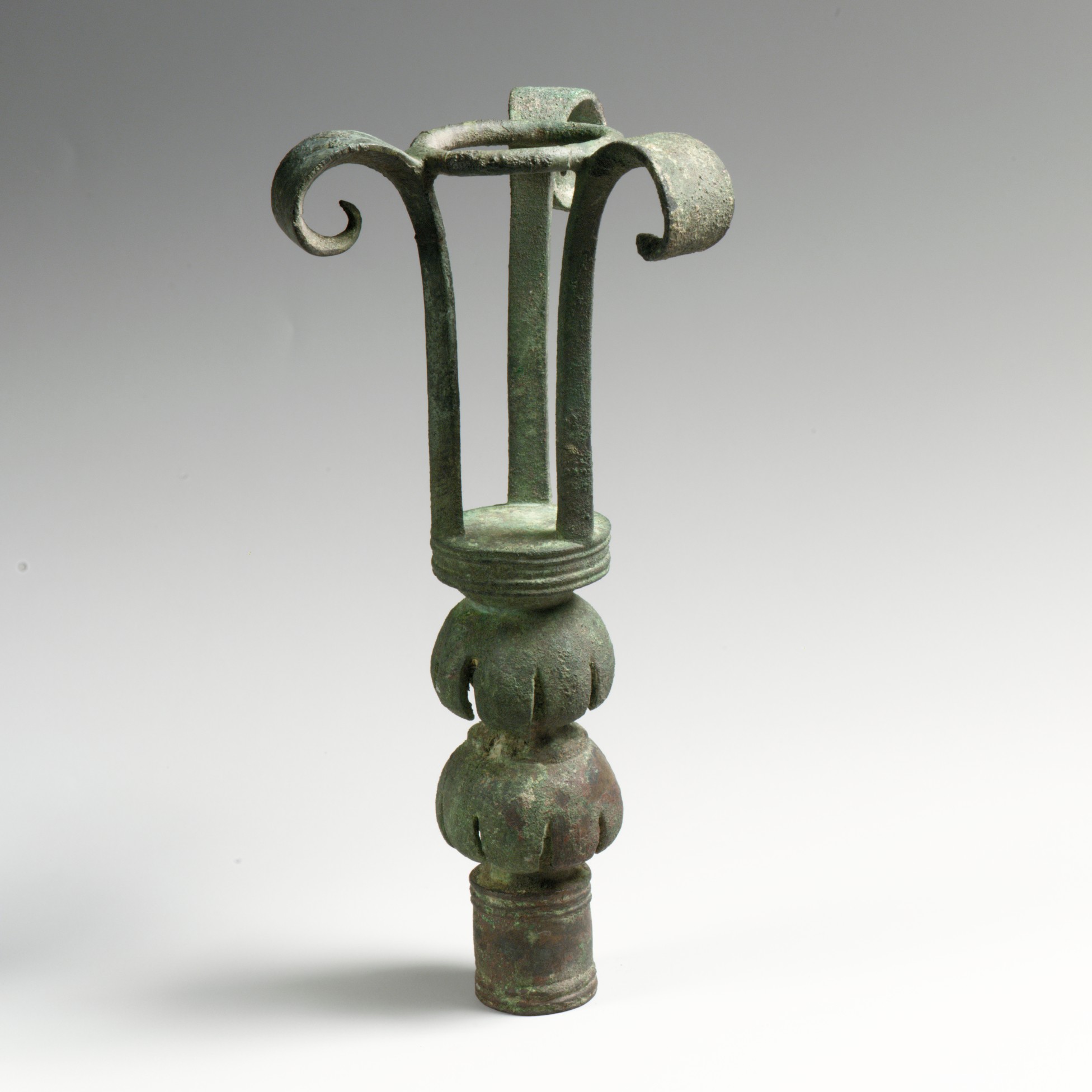
Bronze Lampstand: Cypriot Heritage and the Symbolic Economy of Light
Introduction: A Relic of Utility and Transcendence
The Cypriot bronze lampstand, dating to the Late Bronze Age (circa 1400–1050 BCE), stands as a deceptively modest artifact whose historical resonance far exceeds its utilitarian origins. As the Lead Heritage Curator for Katherine Fashion Lab, I position this object within a broader material genealogy that includes our prior studies of the Rock in the form of a fantastic mountain and the Jar in the shape of a bronze container (hu). Though geographically and typologically distinct, these three objects share a common DNA: they are functional forms transfigured by symbolic power, each serving as a vessel for spiritual meaning and social adornment. For Katherine Fashion Lab, the Cypriot lampstand offers a strategic lens for 2026 luxury positioning—one that privileges ritualized light, tactile bronze, and the aesthetics of endurance over ephemeral novelty.
Symbolic Power: Light as Authority and Sacrality
The lampstand’s primary function—elevating a flame—was never merely practical. In the ancient Eastern Mediterranean, controlled light was a marker of civilization, wealth, and divine favor. Cypriot sanctuaries and elite tombs frequently yielded bronze stands with tripod bases, ring handles, and stylized lotus or palmette finials. These were not mass-produced household goods; they were commissioned objects that mediated between the human and the sacred. The act of placing a lamp upon a stand transformed a domestic interior into a ritual space. The stand’s verticality—its insistence on lifting light upward—encoded a cosmology in which the earthly realm aspired to the celestial.
This symbolic power resonates directly with the Rock in the form of a fantastic mountain, a scholar’s object that miniaturized the cosmos into a contemplative stone. Both artifacts manipulate scale and elevation to invoke transcendence. The lampstand does so through flame and bronze; the rock does so through geological form and imaginative projection. Similarly, the Jar in the shape of a bronze container (hu)—a ceramic vessel mimicking bronze—reveals how material imitation could capture the prestige of a more costly medium. In the Cypriot lampstand, bronze is not imitated but celebrated: its patina, weight, and acoustic resonance when struck all contribute to an aura of permanence.
Historical Adornment: The Aesthetics of Bronze and the Body
For Katherine Fashion Lab, the lampstand’s most immediate relevance lies in its surface treatment and structural elegance. Cypriot bronzesmiths employed lost-wax casting, hammering, and incised decoration to create stands that were as visually refined as they were sturdy. The tripod legs often terminate in animal paws or stylized hooves, a motif that simultaneously evoked stability and wild nature. The central shaft might feature ribbing or beaded rings, creating a rhythmic play of light and shadow even before the lamp was lit.
This is historical adornment in the truest sense: ornamentation that serves structure, and structure that serves ritual. The lampstand was never hidden in a cupboard; it was displayed, handled, and admired. Its bronze surface would have been polished to a golden sheen, reflecting the flame and the faces of those gathered around it. In this, it anticipates the modern luxury object—a piece whose value is inseparable from its visibility and its capacity to stage human interaction.
Our 2026 strategy should draw on this principle. Rather than treating heritage as a static archive, we propose a collection of “ritual hardware”: objects designed for the home that elevate daily acts—lighting a candle, serving tea, displaying a treasured stone—into moments of deliberate beauty. The Cypriot lampstand teaches us that adornment is not superficial; it is the grammar of reverence.
Spiritual Meaning: The Lampstand as Axis Mundi
In Cypriot religious practice, which blended Aegean, Near Eastern, and indigenous elements, the lampstand likely played a role in both domestic cult and sanctuary ritual. Offerings of oil and flame were common in votive contexts, and the stand itself may have been dedicated to a deity. The tripod form echoes the Delphic tripod and other oracular seats, suggesting that the lampstand was not merely a support for light but a seat for the divine presence invoked by that light.
This spiritual dimension is crucial for Katherine Fashion Lab’s positioning. Luxury in the 2026 market cannot rely solely on scarcity or craftsmanship; it must offer meaning. The lampstand offers a template for objects that function as “quiet altars”—pieces that anchor a room and invite contemplation. The Rock in the form of a fantastic mountain served a similar purpose in Chinese literati culture: a microcosm for meditation. The Jar in the shape of a bronze container (hu) preserved ancestral rituals through ceramic substitution. Together, these three objects form a genealogy of spiritual utility—a heritage that Katherine Fashion Lab can translate into contemporary heirlooms.
2026 High-End Luxury Strategy: From Cypriot Bronze to Modern Ritual
Our strategic recommendation for 2026 is a capsule collection titled “Lampstand” —a line of home and personal accessories that reinterpret Cypriot bronze aesthetics through sustainable materials and modular design. Key elements include:
1. Material honesty: Use recycled bronze, patinated brass, and dark walnut to evoke the weight and warmth of the original. Avoid high-gloss finishes; embrace the living patina that records use.
2. Structural symbolism: Incorporate tripod bases, lotus finials, and incised geometric bands into candle holders, incense burners, and jewelry stands. Each piece should function as a small axis mundi.
3. Ritual choreography: Package each object with a card describing a daily ritual—lighting a lamp at dusk, placing a stone on a stand, pouring water from a bronze-shaped vessel. The goal is to slow consumption and deepen attachment.
4. Narrative continuity: Connect the collection explicitly to our studies of the fantastic mountain rock and the bronze-shaped hu jar. Position Katherine Fashion Lab as a curator of cross-cultural ritual objects, not a trend-driven brand.
5. Limited editions with provenance: Partner with Cypriot artisans and archaeologists to produce numbered editions, each accompanied by a digital certificate documenting the historical references and the maker’s hand.
Conclusion: The Enduring Flame
The Cypriot bronze lampstand is not a relic of a dead culture. It is a living argument for the unity of utility, adornment, and spirit. Its DNA—elevation, bronze, flame, and ritual—runs through the Rock in the form of a fantastic mountain and the Jar in the shape of a bronze container (hu), revealing a transhistorical human need to make meaning through material form. For Katherine Fashion Lab, the 2026 opportunity is clear: to become the premier interpreter of this heritage for a luxury market hungry for depth. We do not sell lampstands. We sell the light they once held—and can hold again.