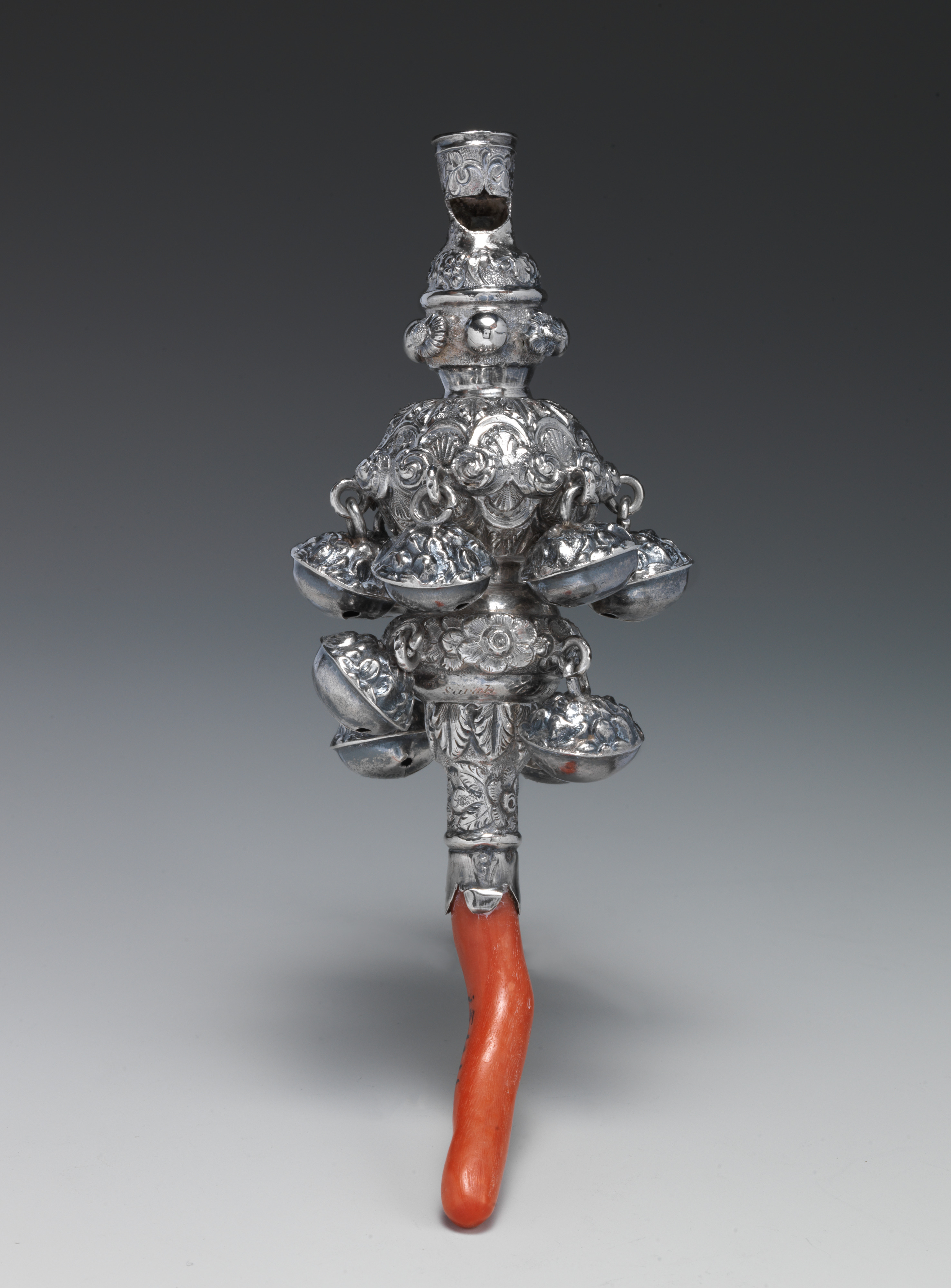
Heritage Analysis: The Silver and Coral Child's Rattle and Teether in Ancient Civilization
Introduction: The Object as Cultural Artifact
Within the material culture of ancient civilizations, few objects embody the intersection of utility, spirituality, and luxury as compellingly as the silver and coral child's rattle and teether. Far from a mere instrument of infant distraction, this composite artifact functioned as a talisman, a status marker, and a pedagogical tool embedded within complex systems of belief. For Katherine Fashion Lab, the strategic examination of this object offers a rich heritage narrative—one that connects archaic protective rituals to contemporary luxury codes of craftsmanship, provenance, and emotional permanence. As the maison positions itself for the 2026 luxury landscape, the rattle and teether emerges not as a relic of nursery antiquity but as a blueprint for high-value, meaning-dense adornment.
Material Symbolism: Silver and Coral as Apotropaic Agents
The selection of silver and coral was neither arbitrary nor purely aesthetic. In ancient Mediterranean, Near Eastern, and later European traditions, both materials carried profound apotropaic—evil-averting—properties. Silver, associated with the moon and the goddess Artemis or Luna, was believed to repel malevolent forces, particularly those targeting the vulnerable. Its cool luster and resistance to tarnish positioned it as a metal of purity and endurance. Coral, organically harvested from the sea, was regarded as a petrified plant with the power to absorb negative energy. Pliny the Elder documented coral's use as an amulet for children, claiming it warded off the "evil eye" and protected against epilepsy and poisoning. The combination of silver and coral thus created a synergistic shield: the metal provided structural permanence, while the organic gemstone offered dynamic, living protection.
From a symbolic power perspective, the rattle's form itself—a handle terminating in a cluster of bells or a teething surface—invoked the ritual of sound as a spiritual disinfectant. Noise-making devices were used in antiquity to frighten away demons during transitional life stages, particularly infancy, when the child hovered between the mortal and spirit worlds. The teether, often carved from coral or bone, simultaneously soothed physical pain and, by extension, symbolically "cut" the teeth of destiny—a first act of agency against suffering.
Historical Adornment and Social Stratification
Archaeological evidence from Roman Britain, Etruscan tombs, and Byzantine hoards reveals that silver-coral rattles were not ubiquitous. Their cost and material rarity restricted them to elite households, where they served as both functional objects and heirlooms. A rattle excavated in a 4th-century CE child's grave in Gaul, for instance, featured a silver handle inscribed with protective Greek letters and a coral teether shaped like a fist—a gesture of defiance against harm. Such objects were frequently buried with their owners, indicating their perceived spiritual value beyond death.
In historical adornment terms, the rattle functioned as a portable emblem of lineage. It was often suspended from a nurse's belt or the child's cradle, visible to visitors as a declaration of wealth and piety. The craftsmanship—filigree, granulation, and gemstone setting—mirrored the techniques used in adult jewelry, collapsing the boundary between infant utility and high adornment. This continuity suggests that ancient societies did not segregate luxury by age; rather, they invested in protective beauty from the first breath.
Spiritual Meaning: Liminality, Protection, and Initiation
The spiritual meaning of the silver-coral rattle must be understood through the lens of liminality. Infancy represented a threshold state—the child was not yet fully integrated into the social body, making it susceptible to spiritual predation. The rattle's sound created a sonic boundary, while the coral's red hue (evoking blood and life force) reinforced vitality. In some traditions, the coral was believed to change color when the child fell ill, acting as a diagnostic amulet. The silver, often engraved with crosses, stars, or runes, layered Christian, pagan, and folk magic into a single object—a syncretic testament to pre-modern resilience strategies.
Moreover, the teething process itself was ritualized. The first tooth marked a milestone of embodiment, and the coral teether, pressed against gums, transferred protective essence into the child's body. This was not mere superstition; it was an early form of material agency, where the object became a co-participant in the child's becoming.
2026 High-End Luxury Strategy: From Artifact to Aspirational Code
For Katherine Fashion Lab, the strategic standalone research on this artifact yields actionable luxury insights for 2026 and beyond. The contemporary luxury market is shifting from logo-driven status to narrative-driven meaning, with consumers seeking objects that encode protection, provenance, and emotional durability. The silver-coral rattle offers a template for three strategic pillars:
1. Talismanic Craftsmanship: Position new collections as "modern amulets" that blend precious metals with organic, traceable gemstones. Emphasize apotropaic intent—not as superstition, but as a design philosophy of care and intentionality. A 2026 rattle-inspired pendant or charm could feature recycled silver and sustainably sourced coral (or coral alternatives like red enamel) to align with ethical luxury.
2. Intergenerational Heritage: The rattle's role as an heirloom suggests a product line focused on "first luxury" objects—pieces designed to be passed down, engraved with birth dates or protective symbols. This counters the disposability of fast fashion and appeals to the ultra-high-net-worth desire for legacy.
3. Ritualized Utility: Luxury in 2026 will reward objects that serve a genuine function while elevating it. A teether or rattle reimagined in sterling silver and hand-carved coral (or ethically lab-grown coral) becomes a performative artifact—used in nursery rituals, photographed for social media, and displayed as sculpture between uses.
Furthermore, the syncretic spiritual symbolism—silver for the moon, coral for the sea, sound for the air—offers a multi-sensory branding narrative. Katherine Fashion Lab can develop a "Liminal Collection" that draws on these elemental codes, targeting the growing market for spiritual but non-dogmatic luxury. The 2026 consumer, particularly millennials and Gen Z inheritors, seeks objects that are both beautiful and biographically meaningful. The ancient rattle, with its layered protections, provides that blueprint.
Conclusion: The Strategic Value of Archaic Protection
The silver and coral child's rattle and teether is not a quaint curiosity. It is a sophisticated ancient technology of care, combining metallurgy, gemology, acoustics, and ritual into a single portable device. For Katherine Fashion Lab, its heritage analysis reveals a luxury strategy rooted in permanence, protection, and emotional resonance—values that will define the high-end market in 2026. By translating the rattle's symbolic power into contemporary adornment, the maison can claim a unique position: not merely selling objects, but offering talismans for a new era of uncertainty. The child's rattle, once a shield against demons, becomes a shield against meaninglessness—the ultimate luxury.