The Etched Siren: Couture, Captivation, and the Soft-Ground Aesthetic
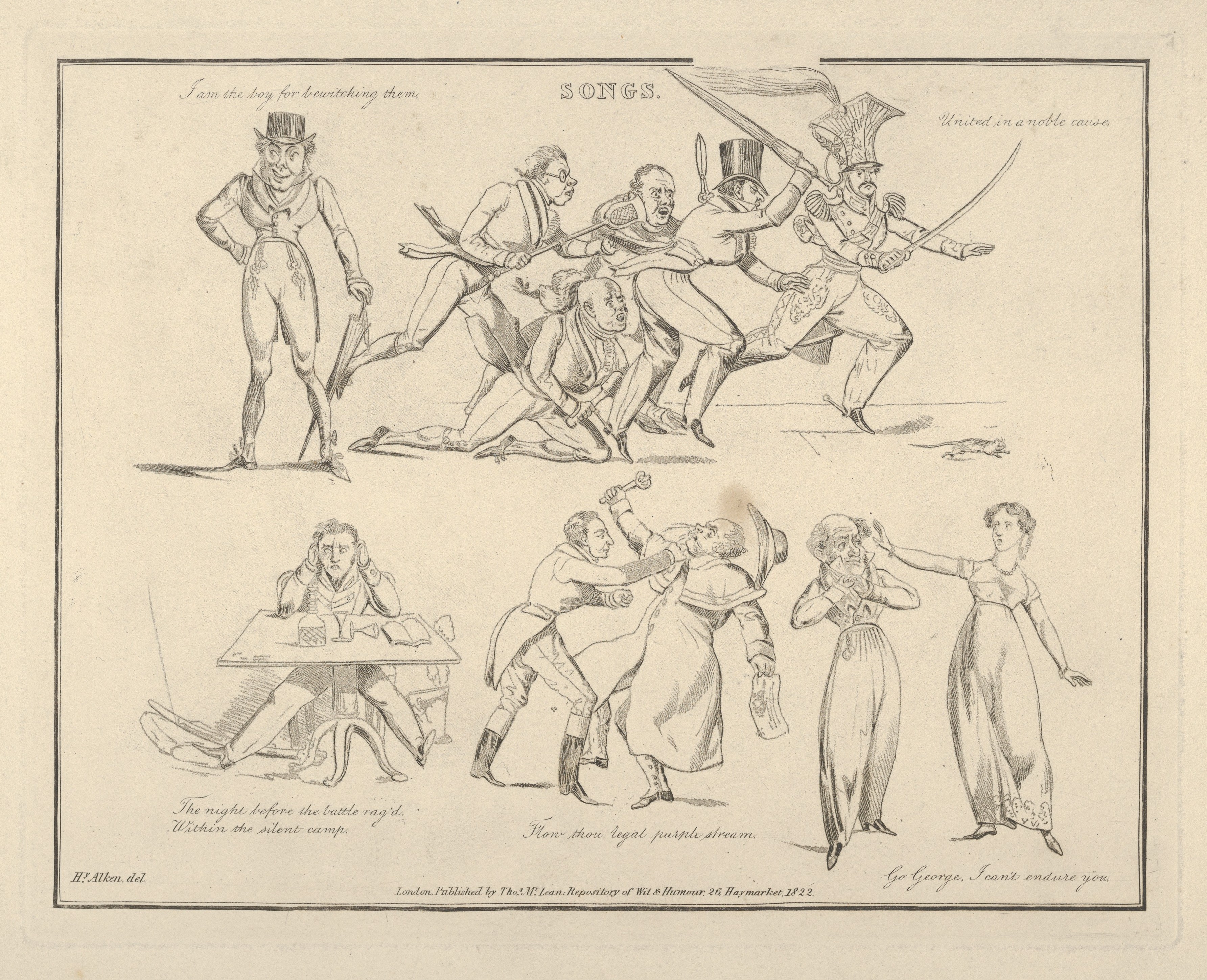
Within the global heritage of textile and printmaking, few artifacts possess the peculiar power to arrest the eye quite like the soft-ground etching. It is a medium of whispers rather than declarations, of graphite-soft textures and granular tonalities that mimic the intimacy of a sketchbook page. When Katherine Fashion Lab encounters a standalone study bearing the lyrical inscription “I am the boy for bewitching them…”, the object ceases to be a mere historical print and becomes a proposition about allure itself. This analysis examines how the soft-ground etching—a technique born of the eighteenth-century European atelier yet now part of a shared global heritage—functions as a material metaphor for bewitchment, and how its aesthetic logic informs contemporary couture narratives of seduction, identity, and the handmade gesture.
The Technique as Textile: Soft-Ground Etching and the Tactile Gaze
Soft-ground etching distinguishes itself from its harder cousins through a deliberate vulnerability. By mixing tallow with the etching ground, the artist creates a surface that yields under the pressure of a pencil or stylus, capturing the grain of the paper beneath and the drag of the hand. The resulting line is not crisp but chalky, not declarative but suggestive. In this sense, the medium behaves like a fine wool challis or a washed silk crepe—materials that absorb light rather than reflect it, that record the body’s movement through subtle distortion. For the couturier, this is instructive. A garment that bewitches does not shout; it imprints. It relies on the viewer’s desire to lean closer, to decipher the texture, to complete the image in the mind’s eye.
The standalone study in question—unmoored from a series, a suite, or a bound volume—intensifies this effect. Without context, the figure or motif must generate its own gravity. The inscription “I am the boy for bewitching them…” reads as both a boast and a confession, a line that could belong to a music-hall ballad, a pastoral masque, or a private diary. In global heritage terms, such inscriptions frequently traveled across cultures: British mezzotints inspired French fashion plates; Japanese ukiyo-e actor prints influenced Art Nouveau poster design. The soft-ground etching, with its capacity for tonal gradation, became a lingua franca for capturing the fleeting expressions of performers, lovers, and dandies. The “boy” of the title is therefore not a fixed identity but a persona—a role assumed, performed, and circulated.
Bewitching as Couture Strategy: The Architecture of Allure
To bewitch is to occupy a threshold between presence and absence. The soft-ground etching enacts this threshold materially: its lines are present enough to describe a form, yet absent enough to invite projection. In couture, the same principle governs the most successful designs. Consider the bias-cut gown of the 1930s, which clings without constraint, or the deconstructed tailoring of the 1990s, which reveals the body by revealing the garment’s construction. These are not garments that conceal; they are garments that frame the act of looking. The soft-ground aesthetic—with its smoky blacks, its feathered edges, its refusal of the hard contour—offers a visual vocabulary for this framing.
Moreover, the phrase “I am the boy for bewitching them” carries a gendered and performative charge that resonates with contemporary fashion’s interrogation of identity. The “boy” may be a dandy, a page, a lover, or a figure of ambiguous youth. In the history of global heritage printmaking, such figures often served as vehicles for exploring desire without naming it. The soft-ground technique, because it softens anatomical precision, allows the body to become a site of imaginative play. For Katherine Fashion Lab, this suggests a design ethic: do not over-specify the wearer’s identity; instead, create surfaces that reward prolonged attention. A soft-ground print translated into jacquard, devoré velvet, or hand-painted silk offers the wearer a similar power—the power to be looked at without being fully known.
Standalone Study, Global Heritage: The Object as Itinerant Sign
The designation “standalone study” is crucial. It removes the work from a narrative sequence and positions it as an itinerant sign—capable of migrating across cultures, periods, and disciplines. In the context of global heritage, such objects are often the most generative precisely because they are incomplete. They do not belong to a single tradition; they belong to the history of attention itself. A soft-ground etching of a bewitching boy might have originated in a European print shop, but its visual logic echoes in Japanese nikuhitsu-ga paintings, in Indian miniature portraits, in Persian calligraphic exercises where the line between text and image dissolves.
For the couturier, this itinerancy is a license. It permits the translation of a historical printmaking technique into a contemporary collection without resorting to literal quotation. The soft-ground aesthetic can manifest as a faded digital print on organza, as a distressed metallic thread on tulle, or as a hand-felted wool that mimics the medium’s granular bite. The inscription—“I am the boy for bewitching them…”—can become an embroidered refrain along a hem, a whispered manifesto for the wearer who chooses to be both subject and object of the gaze.
Conclusion: The Couture of the Unfinished Line
Ultimately, the soft-ground etching teaches couture a lesson about restraint. Bewitchment is not achieved through excess but through the strategic withholding of information. The medium’s soft, yielding line—born of tallow and acid, of pressure and chance—reminds us that allure is a form of collaboration. The viewer, like the wearer, must participate. In a global heritage context, this standalone study becomes a template for a fashion that is at once deeply historical and radically open: a fashion that does not declare “I am this” but instead whispers “I am the boy for bewitching them…” and lets the world lean in.