Katherine Fashion Lab Heritage Research Series
The Baltic Medal, 1854–55: Bronze, Memory, and the Strategic Grammar of Adornment
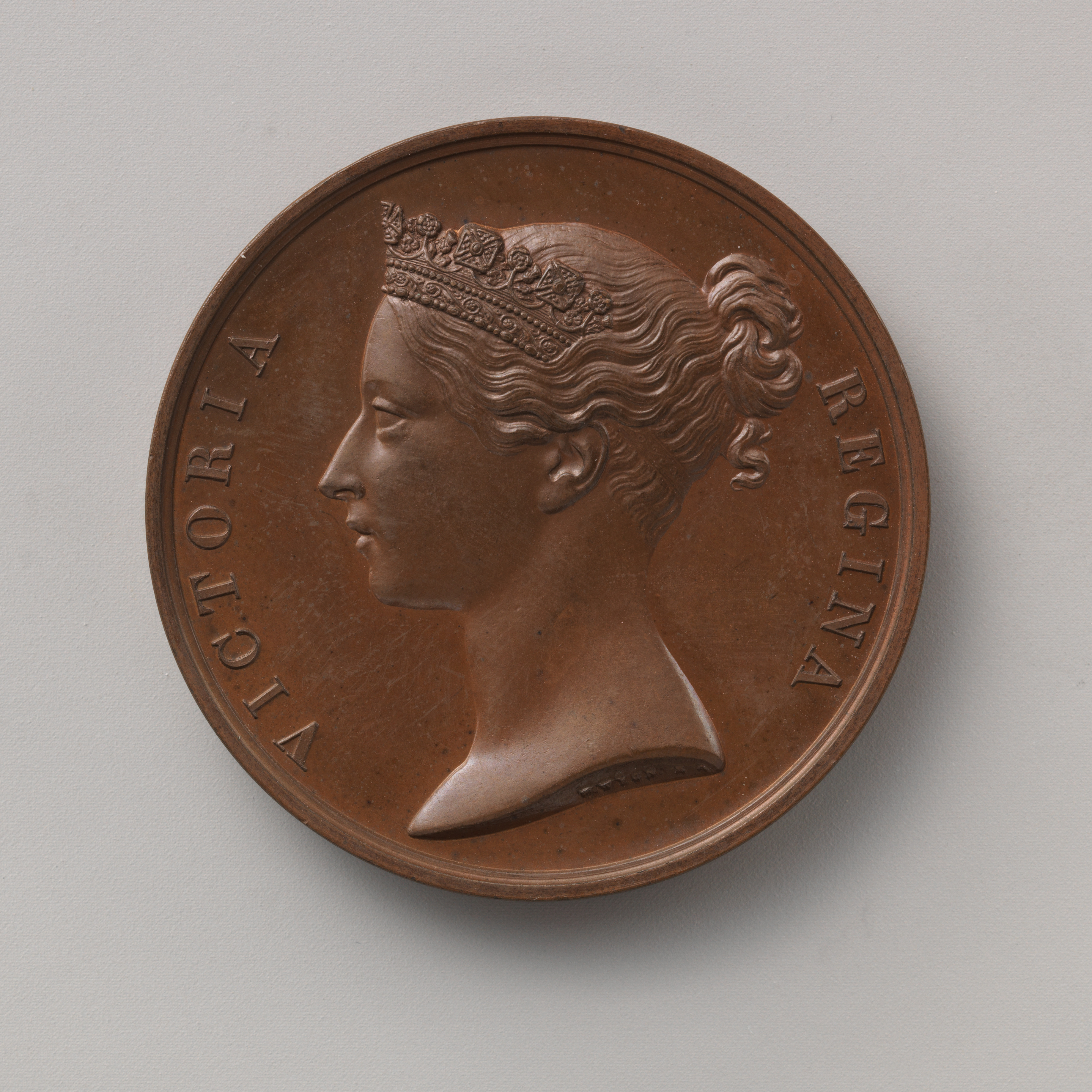
Within Katherine Fashion Lab's ongoing inquiry into how material objects encode cultural memory, the Baltic Medal issued to the fleet concerned in the Baltic waters during the years 1854–55 presents a deceptively modest case. Cast in bronze, it is neither monumental nor rare in the manner of court regalia. Yet its alloy, its iconography, and its conditions of distribution make it an exemplary artifact for understanding how empires convert conflict into wearable memory — and how that conversion logic can inform a 2026 luxury strategy grounded in authenticity rather than nostalgia.
Historical Context and Material Composition
The Baltic Medal was authorized in 1856 to recognize service in the Baltic campaigns of the Crimean War, awarded to Royal Navy and Royal Marine personnel, and in specific instances to allied forces. Its medium is bronze — a deliberate choice in an era when medals for general service were frequently struck in silver. The distinction matters. Silver signaled gallantry; bronze signaled endurance. The Baltic theatre was not a theatre of decisive fleet engagements but of blockade, ice, reconnaissance, and attrition. The medal's material grammar therefore aligns precisely with the nature of the service it commemorates: persistence under conditions that offered little glory and considerable hazard.
This is the first transferable principle for luxury strategy. Material selection is never neutral. A house that chooses bronze, patinated brass, or oxidized silver over polished gold is making an argument about the values it wishes to attach to its client — durability, discernment, and resistance to spectacle. In 2026, as the luxury market continues to fragment between hyper-visible logo economies and quiet-craft economies, the Baltic Medal's bronze logic favors the latter.
Iconography and Symbolic Power
The obverse of the medal bears the diademed head of Queen Victoria; the reverse depicts Britannia seated, holding a trident, with a lion at her side and the word "BALTIC" above. The composition is conventional, but its symbolic load is heavy. Britannia is not depicted in triumph over a vanquished enemy. She is seated — a posture of possession and vigilance rather than conquest. The trident asserts command of the sea; the lion asserts sovereign protection; the absence of a defeated adversary asserts that the medal's meaning is about presence, not victory.
This is a sophisticated piece of symbolic engineering. It allows the recipient to wear the medal without the awkwardness of celebrating a campaign that produced few decisive results. The medal honors the act of showing up in hostile waters. For a contemporary luxury brand, the parallel is direct: the most durable symbolic capital accrues not to brands that claim victory over competitors, but to brands that claim fidelity to a standard under difficult conditions. The Baltic Medal is, in effect, an early instance of what we might call provenance-as-adornment.
Spiritual and Ritual Meaning
Medals of this type functioned within a ritual economy. They were worn on the left breast, often alongside other campaign medals, and their order of precedence was strictly regulated. This is not merely administrative detail; it is liturgical. The sequence in which medals are worn constitutes a public autobiography, a hierarchy of service rendered visible on the body. The Baltic Medal's position in that sequence — typically after medals for earlier campaigns and before those for later ones — anchored the wearer within a linear narrative of imperial service.
Katherine Fashion Lab's research context draws a parallel here with two objects from a very different tradition: the 《Rock in the form of a fantastic mountain》 and the 《Jar in the shape of bronze container (hu)》. At first glance, a scholar's rock and a bronze-form ceramic vessel have nothing in common with a Victorian campaign medal. But all three objects participate in the same underlying operation: they take raw material — stone, clay, metal — and convert it into a carrier of meaning that exceeds its physical function. The rock becomes a miniature cosmos; the hu becomes an ancestor vessel; the medal becomes a wearable record of endurance. The DNA correlation lies in the transformation, not the form.
Implications for 2026 High-End Luxury Strategy
Three strategic directives emerge from this analysis.
First, material honesty as differentiation. The Baltic Medal's bronze is not a compromise; it is a statement. A 2026 collection that uses bronze, patinated alloys, or reclaimed metals with visible provenance can claim a similar honesty. The luxury client of 2026 is increasingly literate in material semiotics and will penalize brands that use base materials while claiming precious ones.
Second, the ritual of wearing. The medal's power depended on regulated display — order, placement, occasion. Luxury accessories in 2026 can recover this ritual dimension through modularity, stacking logic, and explicit guidance on how pieces are meant to be worn together. The customer should not be left to improvise; the brand should provide the grammar.
Third, endurance over triumph. The Baltic Medal commemorates presence under difficulty, not victory. A luxury house that positions its heritage around resilience, craft persistence, and long-horizon commitment will find a more durable emotional register than one that positions around conquest, novelty, or status competition. In a market saturated with spectacle, the bronze logic — quiet, heavy, and slow — is the more radical proposition.
Katherine Fashion Lab's heritage practice is not antiquarianism. It is the disciplined extraction of strategic principles from material culture. The Baltic Medal, read carefully, offers a complete brief for a 2026 collection: honest metal, regulated ritual, and a story about staying the course.