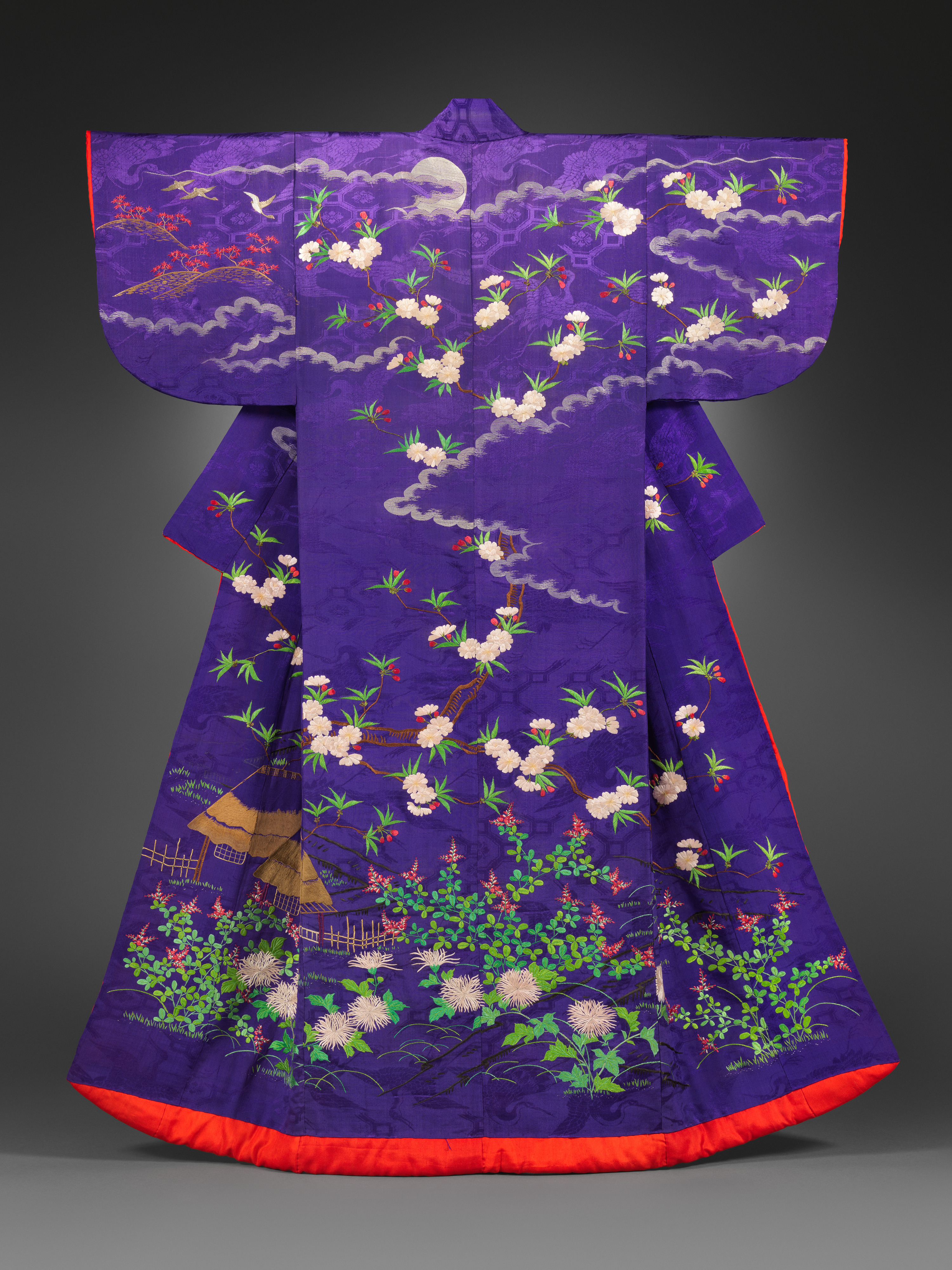
Heritage Asset Analysis: Robe (Kosode) with Landscape and Seasonal Flowers
Object Identification and Material Composition
The object under examination is a Japanese kosode, the direct antecedent of the modern kimono, executed in figured silk satin with silk-and-gold-thread embroidery. The garment features a landscape composition interwoven with seasonal flowers, a motif structure that situates it firmly within the Edo-period (1603–1868) aesthetic tradition. The figured satin ground, likely a rinzu or similar patterned weave, provides a subtle tonal depth against which the embroidery—rendered in silk floss and metallic gold thread—achieves pronounced relief and luminosity. The technical execution suggests commission by a wealthy merchant-class patron or a samurai household, as the cost of gold-thread embroidery and complex figured weaving placed such garments beyond the reach of ordinary consumers.
Symbolic Power and Iconographic Reading
The landscape-and-flowers composition is not decorative in the modern sense but operates as a codified symbolic system. In Japanese visual culture, seasonal flowers function as temporal markers, each carrying layered literary and spiritual associations. Cherry blossoms (sakura) signal impermanence and the Buddhist doctrine of transience; chrysanthemums (kiku) denote longevity and imperial virtue; plum blossoms (ume) represent endurance and the arrival of spring. When combined with landscape elements—mountains, watercourses, mist—the garment becomes a microcosmic map of the natural and spiritual order.
Crucially, the kosode's symbolic program was also socially performative. The choice of motif communicated the wearer's cultural literacy, seasonal awareness, and alignment with established aesthetic hierarchies. In a society governed by sumptuary regulation, the ability to display such a garment was itself a statement of status and connoisseurship. The gold thread, in particular, carried associations with sacred space, as gold was used in Buddhist temple decoration and by extension signaled proximity to spiritual and temporal authority.
Historical Adornment and the Kosode as Cultural Artifact
The kosode emerged as the principal outer garment of Japanese dress during the Muromachi period and reached its aesthetic apex in the Edo period, when the kimono as we recognize it today took form. The transition from the kosode as a practical undergarment to a surface for elaborate pictorial embroidery reflects broader shifts in Japanese material culture: the rise of urban merchant wealth, the codification of the iemoto (school-based) artistic lineages, and the development of a sophisticated textile economy centered on Kyoto's Nishijin weaving district.
The landscape-and-flowers kosode belongs to a genre of garments sometimes called meisho-e (famous-place pictures), in which recognizable sites or idealized landscapes were embroidered or painted onto fabric. These garments functioned as wearable travel narratives and poetic allusions, allowing the wearer to inhabit a literary landscape. The embroidery technique itself—likely shishū in silk and metallic thread—required hundreds of hours of specialized labor, often performed by women in workshop settings whose contributions remain largely anonymous in historical records.
Spiritual Meaning and the Aesthetics of Transience
The spiritual dimension of the kosode is inseparable from its seasonal iconography. Japanese aesthetics, shaped by Shinto purification rites and Buddhist meditation on impermanence, valorize the fleeting moment—the mono no aware sensibility. A garment depicting spring flowers and flowing water does not merely decorate the body but places the wearer within a cyclical cosmology. The landscape elements evoke the sansui (mountain-water) tradition of ink painting, which itself derived from Chinese Chan Buddhist models of contemplative viewing.
The gold thread introduces a further spiritual register. In Buddhist iconography, gold represents the incorruptible and the enlightened; its presence on a garment suggests a wish for protection, merit, or spiritual refinement. The kosode thus operates simultaneously as luxury object, social signifier, and devotional instrument—a convergence that defines the highest achievements of Japanese textile art.
Strategic Implications for 2026 High-End Luxury Positioning
For Katherine Fashion Lab, the kosode offers a strategic template for heritage-driven luxury in an era of cultural authentication and provenance transparency. Three implications merit attention.
First, symbolic density as differentiation. The 2026 luxury consumer, particularly in Asian and diaspora markets, rewards garments that carry legible cultural narratives rather than generic ornament. A contemporary reinterpretation of the kosode's seasonal symbolism—executed with documented craft provenance—positions the brand within the heritage-luxury segment rather than the fashion-cycle segment. This supports higher price points and longer product lifecycles.
Second, material authenticity as brand equity. The original kosode's value resides in its figured silk satin and hand-embroidered gold thread. Any 2026 strategy should prioritize traceable silk sourcing, artisanal embroidery partnerships (potentially with Nishijin workshops), and transparent documentation of technique. These elements are increasingly audited by luxury consumers and by ESG-conscious investors.
Third, narrative-led retail and archival authority. The landscape-and-flowers kosode is a collectible narrative asset. Katherine Fashion Lab can leverage standalone research of this kind to build an archival authority—publishing heritage analyses, commissioning museum-grade documentation, and staging curated exhibitions. This positions the brand as a cultural custodian, not merely a producer, which is the defining posture of enduring luxury houses.
Conclusion
The kosode with landscape and seasonal flowers is a convergence of technical mastery, symbolic density, and spiritual intention. Its value for Katherine Fashion Lab lies not in superficial citation but in structural emulation: the integration of material integrity, codified meaning, and cultural stewardship. A 2026 luxury strategy grounded in these principles can claim heritage legitimacy while addressing the contemporary demand for authenticity, provenance, and narrative depth.