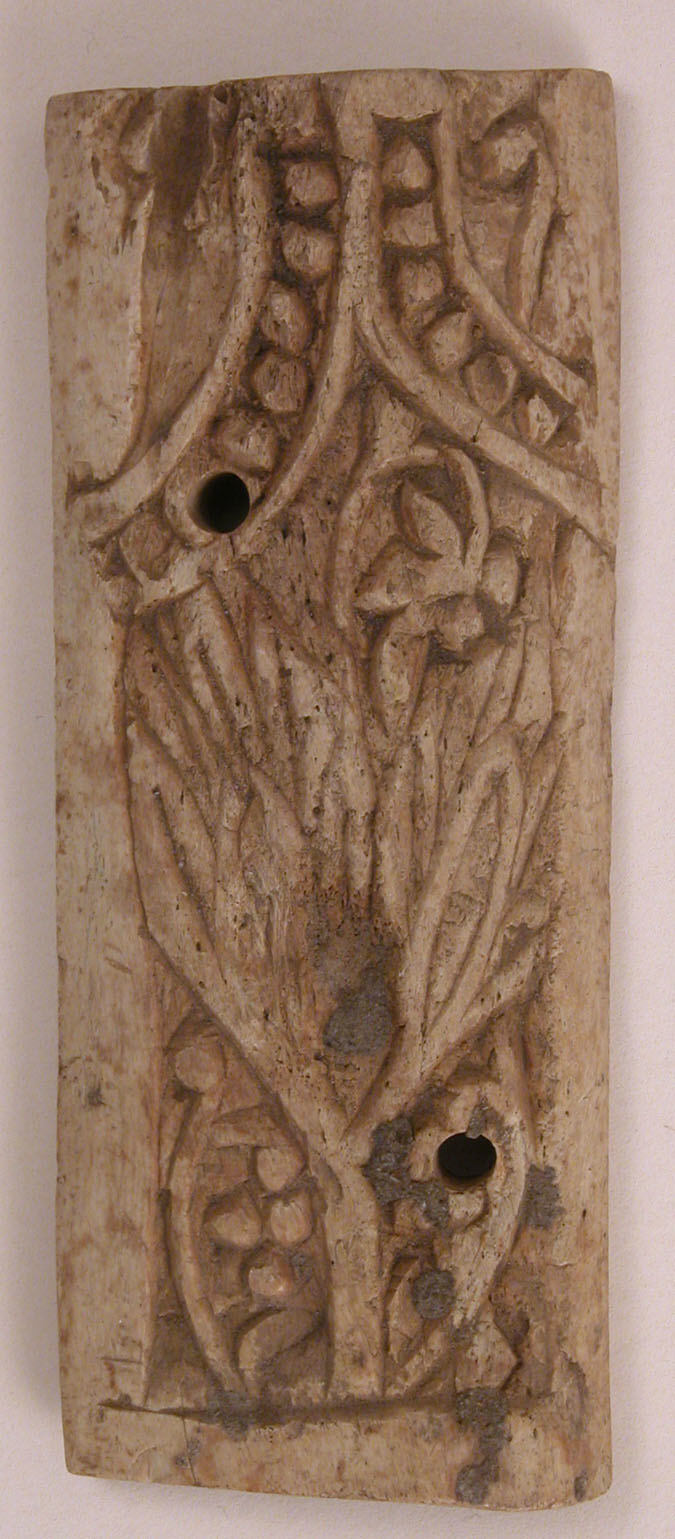
Heritage Asset Analysis: The Carved Bone Plaque of Ancient Civilization
Introduction: A Strategic Artifact of Enduring Value
Within the Katherine Fashion Lab's Strategic Standalone Research framework, the carved bone plaque emerges as a singularly potent heritage asset. Originating from an Ancient Civilization and executed in bone with vestigial polychrome decoration, this object condenses material scarcity, ritual function, and symbolic density into a compact form. For a luxury house positioning itself at the intersection of archaeology and atelier practice, the plaque is not merely an artifact; it is a strategic cipher for authority, protection, and ancestral continuity. Its analysis yields direct implications for 2026 high-end luxury strategy, where provenance, narrative depth, and tactile authenticity command premium positioning.
Materiality and the Economics of Scarcity
Bone as a medium signals deliberate selection rather than opportunistic use. In Ancient Civilizations, osseous material carried dual associations: the durability of the skeleton and the intimacy of the body. Unlike gold or lapis, bone was not imported from distant quarries; it was harvested from domesticated or hunted fauna, rendering it both accessible and existentially charged. The carving required specialized tools and sustained labor, while the surviving traces of paint—likely mineral pigments such as hematite, malachite, or carbon black—indicate a final chromatic layer that was applied with intention and periodically renewed. This layering of labor, from carving to pigmentation, establishes the plaque as a high-investment object. For Katherine Fashion Lab, this translates into a narrative of slow craft and material honesty, directly countering the disposability of fast luxury. The plaque's eroded paint is not a defect but a proof of temporal depth, a patina that cannot be synthetically replicated.
Symbolic Power: The Plaque as Instrument of Authority
In ancient contexts, the plaque form—flat, portable, and often perforated for suspension—functioned as an amuletic or administrative device. It could be worn against the chest, sewn onto ritual garments, or displayed within a shrine. Its symbolic power derived from three overlapping registers:
1. Apotropaic function. Carved motifs—spirals, zigzags, anthropomorphic figures, or geometric interlace—were not decorative but operative. They were believed to deflect malevolent forces, bind oaths, or channel ancestral protection. The plaque was a portable boundary, a material prayer.
2. Status and lineage. Ownership of a finely carved plaque implied access to specialized artisans and ritual knowledge. In burial contexts, such objects accompanied the deceased into the afterlife, signaling rank and securing post-mortem continuity. The plaque thus served as a social passport in both visible and invisible worlds.
3. Mnemonic device. The carved surface could encode genealogies, territorial claims, or calendrical events. It was a tactile archive, meant to be touched and read by initiates. This mnemonic capacity elevates the plaque from ornament to intellectual property.
Historical Adornment: Wearing the Sacred
As adornment, the bone plaque occupied a liminal space between jewelry and talisman. It was worn on cordage of leather or plant fiber, positioned at the sternum or throat—sites of breath, voice, and vulnerability. Unlike later metal torcs or gemstone pendants, the bone plaque retained a visceral connection to the animal and the ancestor. Its surface would have been smoothed by skin contact, developing a personal patina that merged the wearer's body with the object's history. This intimacy of wear is a critical insight for contemporary luxury: the plaque demonstrates that high-value adornment need not rely on rarity of material alone, but on the depth of embodied relationship. The 2026 luxury consumer, increasingly fatigued by logo-driven ostentation, seeks objects that accrue meaning through touch, ritual, and time.
Spiritual Meaning: The Plaque as Threshold Object
Ancient spirituality rarely separated the material from the metaphysical. The bone plaque, carved from the remains of a living creature and painted with earth pigments, was a condensed cosmogram. It mediated between the human and the animal, the living and the dead, the visible and the unseen. In shamanic or priestly contexts, the plaque could serve as a focal point for trance, its carved lines guiding the eye into altered states. The remains of paint suggest that its chromatic life was cyclical—repainted for festivals, funerals, or seasonal rites. This cyclical renewal is a powerful metaphor for luxury brands that wish to position themselves as custodians rather than creators. The plaque is not a finished product; it is a process, a relationship maintained over generations.
Strategic Implications for 2026 High-End Luxury
For Katherine Fashion Lab, the carved bone plaque offers a blueprint for a 2026 collection or capsule that privileges symbolic density over surface novelty. Four strategic directives emerge:
First, adopt the plaque as a modular talisman. Design a series of bone or bone-composite plaques, hand-carved with proprietary motifs that encode the house's founding narrative. Each plaque can be worn as a pendant, attached to a handbag, or displayed in a bespoke case. The modularity allows for personalization while retaining a core symbolic language.
Second, embrace visible restoration. The plaque's surviving paint should inspire a finish technique that mimics archaeological patina—mineral pigments applied and partially abraded to reveal the substrate. This signals authenticity and temporal depth, directly appealing to the 2026 consumer's desire for objects that feel excavated rather than manufactured.
Third, ritualize the acquisition. The plaque was not bought; it was inherited, gifted, or excavated. Katherine Fashion Lab can create a private client ritual—a "provenance ceremony"—where each plaque is accompanied by a hand-bound dossier detailing its symbolic motifs, material origin, and suggested wearing protocols. This transforms a transaction into an initiation.
Fourth, leverage the bone narrative for sustainability. Bone is a byproduct of ethical food systems. By sourcing bone from certified regenerative farms or partnering with archaeological replicas, the house can align with circular luxury principles without compromising the artifact's aura. The plaque becomes a symbol of regenerative adornment, not extraction.
Conclusion: From Excavation to Atelier
The carved bone plaque of Ancient Civilization is not a footnote in material history; it is a strategic precedent. It demonstrates that symbolic power, historical adornment, and spiritual meaning can be compressed into a portable, tactile object that accrues value through wear and ritual. For Katherine Fashion Lab, the plaque offers a 2026 luxury strategy grounded in archaeological authenticity, slow craft, and narrative depth. By translating its materiality, symbolism, and cyclical renewal into contemporary design and client experience, the house can claim a position not as a trendsetter, but as a custodian of enduring meaning. The plaque survives because it was made to be worn, touched, and remembered. Luxury, at its highest level, aspires to the same fate.