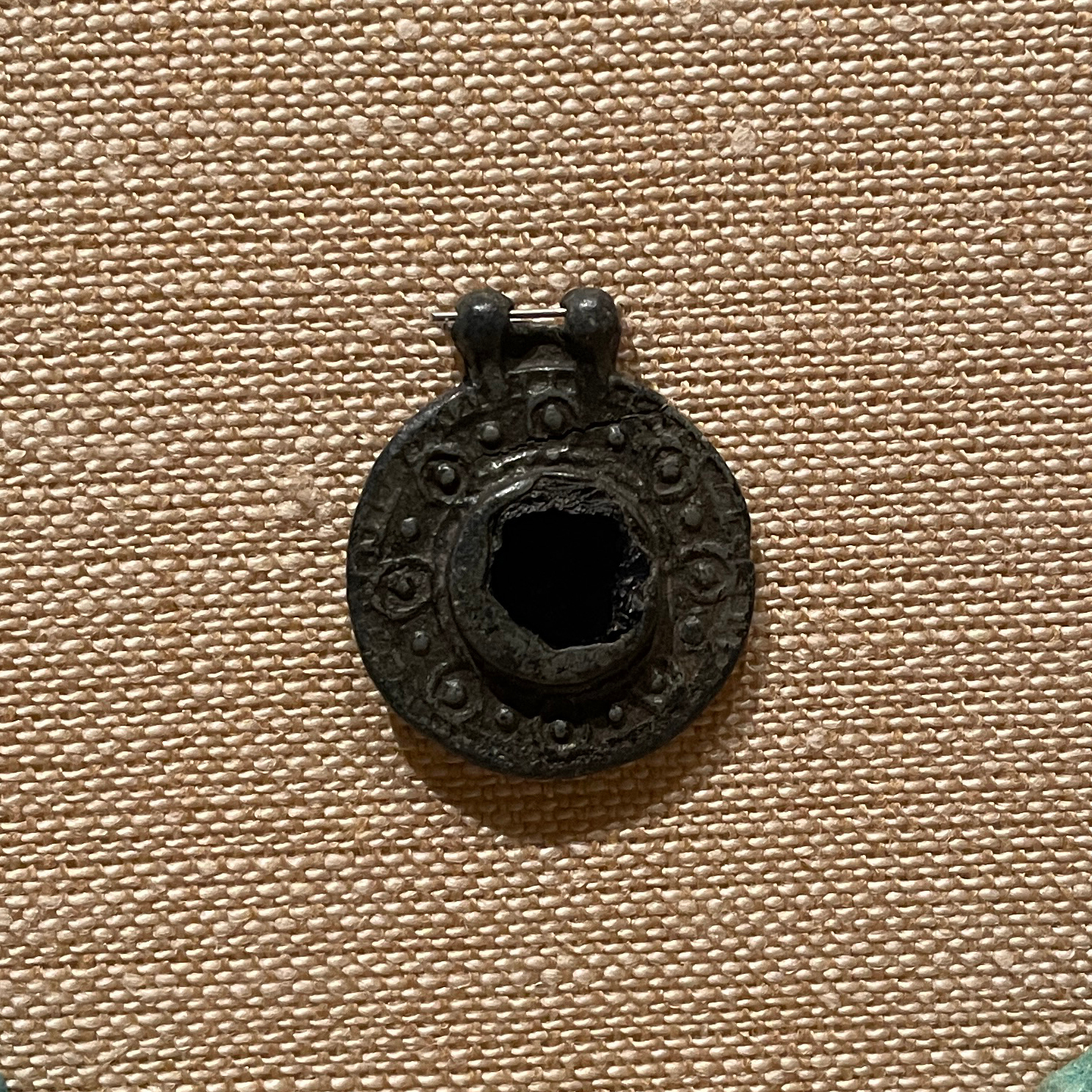
Pendant: A Study in Cast Lead and Global Heritage
Within the evolving discourse of contemporary adornment, few objects occupy as paradoxical a position as the cast lead pendant. Simultaneously ubiquitous and overlooked, utilitarian and symbolic, this humble artifact constitutes a remarkable case study in the relationship between materiality, heritage, and cultural transmission. At Katherine Fashion Lab, our standalone study of the pendant—drawn from global heritage traditions and executed in cast lead—invites a rigorous reappraisal of how we assign value to objects that sit at the intersection of ornament and utility.
The pendant, in its most fundamental form, is an object suspended from a chain, cord, or pin, worn against the body. Its history is as old as human civilization itself. From Paleolithic shells strung on sinew to Egyptian scarabs, from Roman bullae to medieval reliquaries, the pendant has served as amulet, identifier, status marker, and devotional instrument. What distinguishes the present study is not the pendant's form—which is ancient and universal—but its material: lead, cast through traditional methods. This choice is deliberate and loaded with meaning, and it is precisely this tension that Katherine Fashion Lab seeks to interrogate.
The Material Paradox: Lead as Heritage and Hazard
Lead occupies a peculiar place in the hierarchy of materials. It is dense, soft, easily melted, and readily cast—qualities that made it indispensable to ancient metallurgists, Roman plumbers, and colonial-era artisans alike. In the context of global heritage, lead pendants appear across cultures: amulets in West Africa, protective talismans in the Balkans, trade goods in pre-Columbian networks, and devotional medals throughout Catholic Europe. The material's low melting point allowed for intricate casting at modest temperatures, enabling decentralized production and wide circulation.
Yet lead is also a material of toxicity and, in modern regulatory frameworks, of prohibition. Its presence in jewelry has been restricted or banned in many jurisdictions due to health concerns. This duality—heritage versus hazard, craft versus contamination—is central to the pendant's conceptual power. The cast lead pendant thus becomes a meditation on the afterlife of materials: what happens when a substance once revered becomes reviled? What does it mean to wear a material that carries both memory and warning?
Katherine Fashion Lab's position is neither nostalgic nor dismissive. Rather, we treat the lead pendant as a critical object—one that forces us to confront the politics of materiality. Its weight, its coldness against the skin, its dull patina, and its very prohibitions all contribute to a semiotics of adornment that is inseparable from its physical properties.
Casting as Technique and Transmission
The method of casting is equally significant. Unlike the lost-wax precision of gold or the malleability of silver, lead casting tends toward the rough, the porous, the imperfect. It captures the texture of the mold with brutal fidelity, including flaws. In global heritage contexts, this technique was often passed down through families, guilds, or ritual specialists. To cast lead was to participate in a lineage of knowledge—one that linked the artisan to ancestors, to local deities, and to the practical needs of a community.
In our standalone study, the pendant is not presented as a finished luxury object but as a document of process. Each casting bears the marks of its making: the seam line, the sprue remnant, the slight asymmetry that signals the human hand. These imperfections are not defects but evidence—evidence of a technique that has traveled across continents and centuries, adapting to local cosmologies while retaining its essential character.
This global heritage dimension is crucial. The cast lead pendant is not the property of any single culture. It appears in Nordic amulets, in West African protective charms, in South Asian devotional pendants, and in Andean ritual objects. Its universality challenges the Eurocentric narratives that often dominate fashion and jewelry history. By centering a material that is both global and marginalized, Katherine Fashion Lab aims to decolonize the pendant—to restore its multiplicity and its complexity.
Wearability, Risk, and the Ethics of Adornment
Any serious analysis of a lead pendant must address the question of wearability. Is it ethical to wear a toxic material? Is it responsible to produce one? These are not idle questions. They strike at the heart of what adornment means in an age of environmental and health consciousness. The pendant's answer—if it has one—is that risk is always part of the equation. Gold mining devastates landscapes; diamond extraction funds conflicts; leather production involves animal suffering. Lead is simply a more honest case, its dangers visible and legislated rather than hidden.
In this light, the cast lead pendant functions as a provocation. It asks the wearer to acknowledge the material costs of beauty. It refuses the comfortable fiction that adornment is innocent. And it insists that heritage—real heritage—includes the difficult, the dangerous, and the contested.
Conclusion: The Pendant as Critical Artifact
Katherine Fashion Lab's study of the cast lead pendant is not an endorsement of lead use in contemporary jewelry. It is, rather, an invitation to think more deeply about the objects we wear and the histories they carry. The pendant, in this analysis, is a hinge between past and present, between craft and industry, between heritage and hazard. Its materiality—dense, soft, toxic, enduring—makes it an ideal vehicle for exploring the contradictions that define modern adornment.
As a standalone study, it stands as a reminder that fashion and jewelry are never merely decorative. They are material arguments about value, memory, and risk. And the cast lead pendant, suspended between cultures and centuries, remains one of the most eloquent—and unsettling—arguments of all.