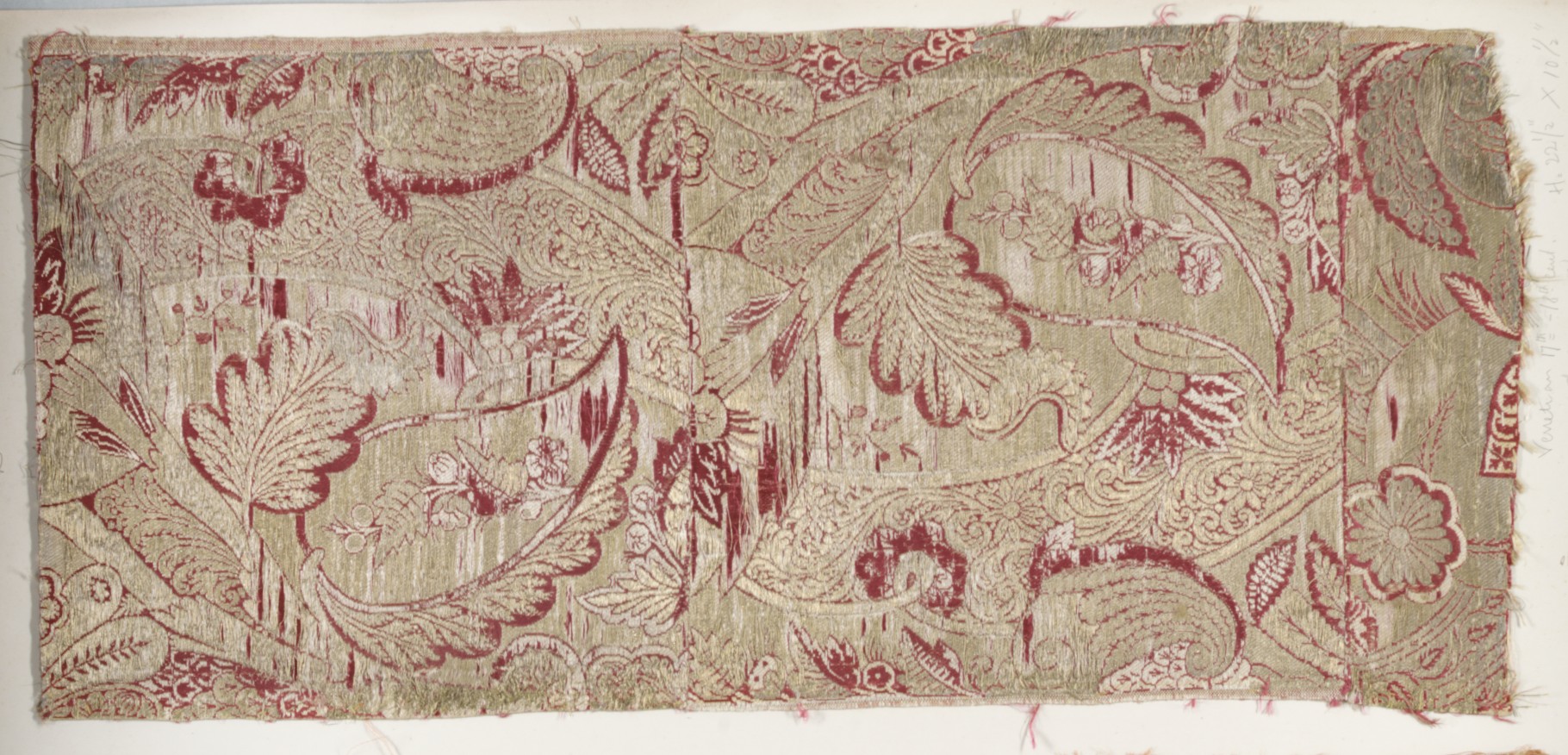
Fragment: A Standalone Study in Couture Materiality and Cultural Memory
Within the disciplined parameters of the Katherine Fashion Lab, the object designated simply as Fragment resists the conventional taxonomy of garment or accessory. It is neither a completed ensemble nor a preparatory toile, but rather an autonomous study—a self-contained investigation into the expressive capacity of two materials: silk and metal thread. Its origin is catalogued as Global Heritage, a deliberately expansive designation that acknowledges the porous, transcontinental nature of textile knowledge systems. This analysis examines Fragment as a critical artifact, positioning it at the intersection of material science, heritage discourse, and contemporary couture practice.
The Ontology of the Fragment
The very naming of this study invites scrutiny. In art history, the fragment carries a double burden: it is simultaneously a ruin and a relic, an incomplete whole and a self-sufficient sign. Fragment embraces this ambiguity without resolving it. Unlike the non-finito of Renaissance sculpture, which gestures toward an absent completion, Fragment asserts its incompleteness as a positive condition. It does not yearn for a missing sleeve or bodice; it occupies its own perimeter with conviction.
This ontological stance has precedent in couture's more experimental registers—one thinks of the textile essais produced in postwar Parisian ateliers, where weavers and embroiderers tested chromatic and structural hypotheses on isolated panels. Yet Fragment departs from that functional lineage. Its purpose is not to preview a finished garment but to interrogate the material itself as a carrier of meaning. The study asks: what can silk and metal thread say when liberated from the obligations of wearability?
Silk as Substrate and Signifier
Silk occupies a privileged position in the global heritage imaginary. From the ancient networks of the Silk Road to the soieries of Lyon and the silk traditions of Hangzhou and Kanchipuram, the fiber has functioned as both commodity and cultural cipher. In Fragment, silk is not merely a ground for embellishment; it is an active participant in the work's argument.
The silk substrate—apparently a tightly woven plain or twill structure—provides a luminous field whose optical properties shift with the viewer's position. This chatoyance, inherent to the protein fiber's triangular cross-section, introduces a temporal dimension: the work is never quite the same from one moment to the next. Such mutability aligns with the study's heritage brief, which resists the notion of a fixed, singular origin. Silk, after all, is a material of movement—biological, commercial, and symbolic.
Critically, the silk in Fragment appears unstained by literal narrative. There is no printed iconography, no obvious quotation of a specific historical textile. Instead, the heritage resides in the technē—the knowledge embedded in the weave, the finishing, the handling. This is heritage as tacit knowledge rather than heritage as motif, a distinction that elevates Fragment above mere pastiche.
Metal Thread: Tension, Rupture, and Radiance
If silk supplies continuity, metal thread introduces disruption. Historically, metallic yarns—whether beaten gold, silver-gilt membrane, or modern synthetic equivalents—have signified hierarchy, sanctity, and permanence. They appear in Byzantine vestments, in Mughal zardozi, in the ceremonial regalia of countless cultures. Their presence is rarely neutral; metal thread announces value.
In Fragment, however, the metal thread operates less as ornament than as structural antagonist. Its stiffness contrasts with silk's drape; its reflectivity competes with silk's sheen. Where the silk absorbs and diffuses light, the metal thread returns it in sharp, almost aggressive glints. This optical friction generates a visual tension that prevents the eye from settling into passive appreciation.
The application of the metal thread—whether couched, laid, or woven—deserves close attention. The study appears to exploit the thread's resistance, allowing it to stand slightly proud of the silk surface. This three-dimensionality casts micro-shadows that deepen the work's tonal range. In couture terms, this is a high-risk strategy: metal thread can shred delicate silk if tension is misjudged. That Fragment survives intact suggests a high order of technical control, a hallmark of the Lab's methodological rigor.
Global Heritage as Method, Not Motif
The designation Global Heritage could easily descend into vagueness, a catch-all for exoticized references. Fragment avoids this trap by treating heritage as a method rather than a motif. The work does not cite a single tradition; instead, it channels the broader principle that textiles have always been vectors of exchange, adaptation, and hybridity.
Consider the metal thread alone. Its ancestry spans Andean plateresque embroidery, Japanese kinran, and European passementerie. To isolate a single origin would be to falsify the material's history. Fragment acknowledges this by refusing to resolve its references into a coherent narrative. The viewer is left with the materials themselves—silk and metal—as the primary evidence of a shared, contested, and ongoing global textile inheritance.
Standalone Study as Critical Form
Finally, Fragment's status as a standalone study merits defense. In an industry preoccupied with the finished look—the runway, the red carpet, the retail floor—the study occupies a marginal position. Yet it is precisely this marginality that grants Fragment its critical freedom. Unburdened by fit, function, or commercial viability, it can pursue material questions to their logical ends.
The Katherine Fashion Lab's decision to present Fragment as a standalone work, rather than as a component of a larger collection, is itself a curatorial statement. It asserts that couture's future may lie not only in spectacular garments but in rigorous, self-contained inquiries into material and meaning. Fragment is not a promise of something else. It is the thing itself—a silk and metal thread meditation on heritage, tension, and the radiant incompleteness of knowledge.
In sum, Fragment demonstrates that the most eloquent couture statements are often the quietest. By restricting itself to two materials and a single, unresolved form, it achieves a density of reference that more elaborate works frequently lack. It is a fragment in name only; in effect, it is a complete argument.