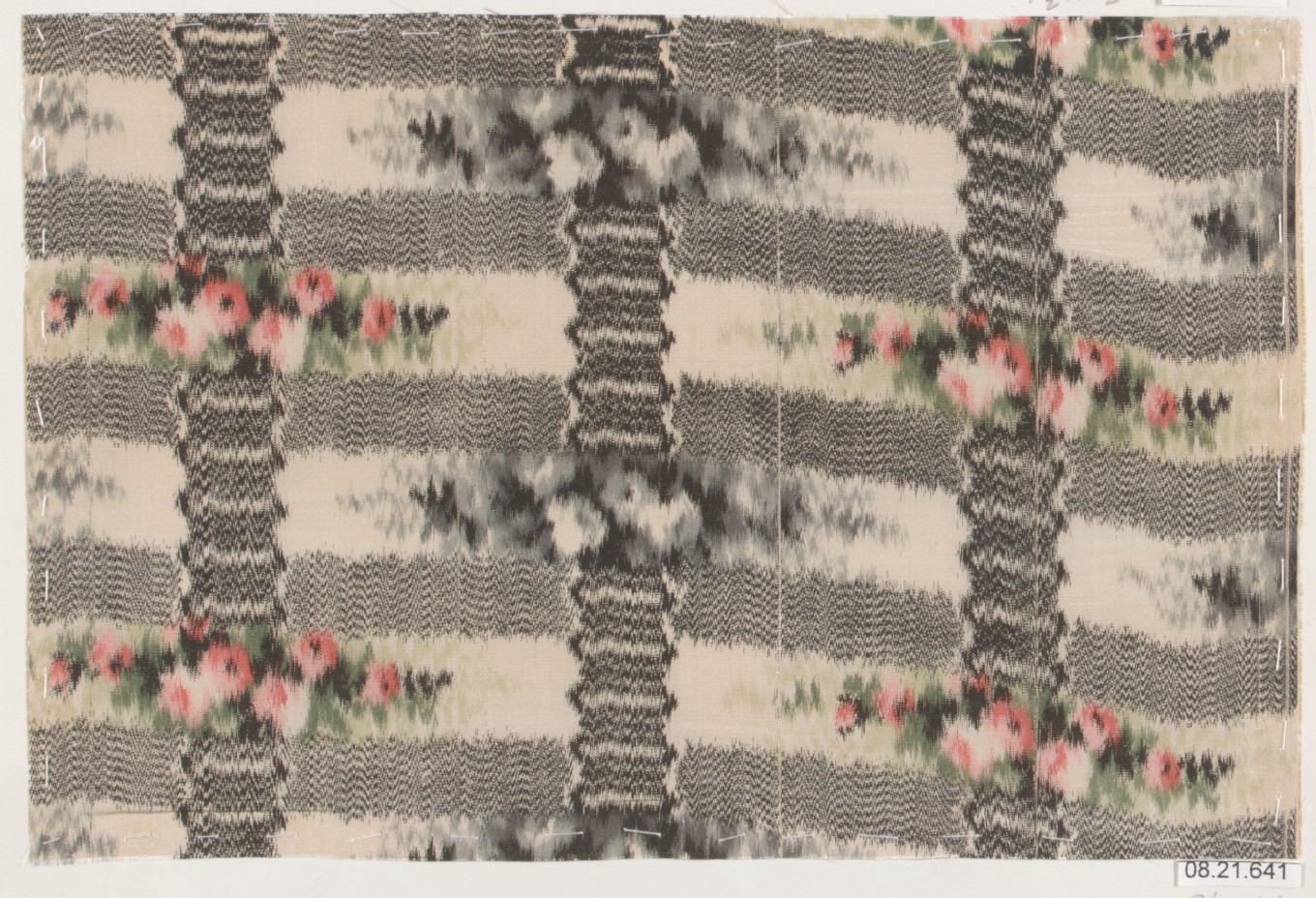
Textile Sample Analysis: Silk as a Global Heritage Material
Within the disciplined framework of couture practice, the textile sample functions as more than a swatch of fabric; it is a primary document, a material archive that encodes geography, labor, and cultural memory. The present study examines a single silk sample of global heritage origin, treating it as a standalone object of analysis. By isolating this specimen from any specific collection or seasonal narrative, the investigation allows the material itself to become the subject of inquiry, revealing how silk operates simultaneously as a luxury commodity, a carrier of civilizational exchange, and a technical substrate for couture construction. For the atelier, understanding silk at this depth is not an academic exercise but a prerequisite for informed design decisions.
Material Identification and Technical Profile
The sample under review presents the characteristic luster, drape, and tensile behavior associated with protein-based silk filament. Fibroin, the structural protein comprising the core of the filament, is enveloped by sericin, a gum-like protein that is typically removed during degumming. The resulting fiber exhibits a triangular cross-section that refracts light in multiple directions, producing silk's signature soft sheen rather than the sharp specularity of synthetic alternatives. This optical property is not merely decorative; it governs how a finished garment reads under runway lighting, in daylight, and in the intimate environment of a fitting room.
From a performance standpoint, silk demonstrates an exceptional strength-to-weight ratio, notable elasticity, and hygroscopic behavior that allows it to absorb and release moisture without feeling damp. These characteristics make it uniquely suited to garments that must maintain structure while responding to the body's movement. In couture, where a single gown may require dozens of hours of hand-finishing, the choice of silk quality directly determines the feasibility of techniques such as bias cutting, hand-rolled hems, and intricate draping.
Global Heritage and the Silk Roads
Silk's heritage is inseparable from the networks of exchange that connected East Asia, Central Asia, the Middle East, and Europe for over two millennia. Originating in ancient China, sericulture was guarded as an imperial secret before gradually disseminating westward along the Silk Roads. Each region that adopted silk production adapted it to local conditions, resulting in distinct traditions: the crisp taffetas of Lyon, the fine mulberry silks of Hangzhou, the richly patterned brocades of Persia, and the handwoven ikats of Central Asia. A single sample of "global heritage" silk therefore carries within it a layered provenance that resists simplistic attribution.
For the contemporary fashion house, this heritage raises important questions of ethics and representation. Couture has historically drawn upon these traditions while often obscuring the artisans and ecosystems that sustain them. A rigorous analysis must acknowledge that silk is not a neutral material; its production involves land use, water consumption, and labor conditions that vary dramatically across geographies. Responsible curation of silk-based couture requires transparency about sourcing, support for traditional sericulture communities, and a willingness to value the knowledge embedded in heritage production as highly as the finished garment.
Construction Behavior and Couture Applications
In the atelier, silk's behavior under the needle and on the dress form dictates its couture applications. Its low coefficient of friction allows layers to slide and settle, enabling the fluid draping associated with classical eveningwear. Conversely, its tendency to fray demands precise seam finishing, often executed by hand with silk thread and French seams. The material's responsiveness to steam and shaping permits milliners and tailors to mold fabric into three-dimensional forms without excessive interfacing, preserving lightness and movement.
The sample's weight and weave—whether a gossamer chiffon, a structured duchesse satin, or a supple crepe—determine its role within a design vocabulary. Lightweight silks are deployed for overlays and linings where translucency and softness are paramount; heavier silks provide the architectural foundation for bodices, trains, and sculptural silhouettes. Understanding these distinctions allows the designer to select silk not by reputation alone but by measurable performance criteria aligned with the intended garment.
Cultural Symbolism and Market Positioning
Silk occupies a privileged position in the cultural imagination, signifying refinement, sensuality, and exclusivity. This symbolism has commercial consequences: silk garments command premium pricing and are frequently positioned as heirloom pieces. Yet the material's symbolic weight also creates risk. Overuse of silk as a generic marker of luxury can flatten its complexity, reducing a rich heritage to a marketing signifier. The couture house that treats silk with intellectual seriousness—documenting its origin, honoring its makers, and exploiting its technical properties with precision—distinguishes itself from competitors who treat the fiber as mere surface.
Furthermore, silk's global heritage invites cross-cultural dialogue rather than appropriation. Collaborations with weaving communities, fair-trade certification, and the integration of regional motifs with consent and credit can transform silk from a contested commodity into a vehicle for equitable exchange. In this sense, the textile sample becomes a site of ethical decision-making as much as aesthetic exploration.
Conclusion: The Sample as Strategic Knowledge
This standalone study of a global heritage silk sample demonstrates that couture analysis must operate across material science, cultural history, and ethical practice. Silk is simultaneously a protein filament, a historical actor, and a symbol whose meanings shift across contexts. For Katherine Fashion Lab, the implication is clear: mastery of silk requires not only technical fluency but also historical literacy and ethical commitment. By treating each textile sample as a document to be read rather than a resource to be consumed, the atelier positions itself within a longer continuum of craft knowledge—one that respects the fiber's origins while pushing its expressive potential into new formal territory. The sample, though small, thus becomes a lens through which the entire value chain of couture can be examined, questioned, and ultimately refined.