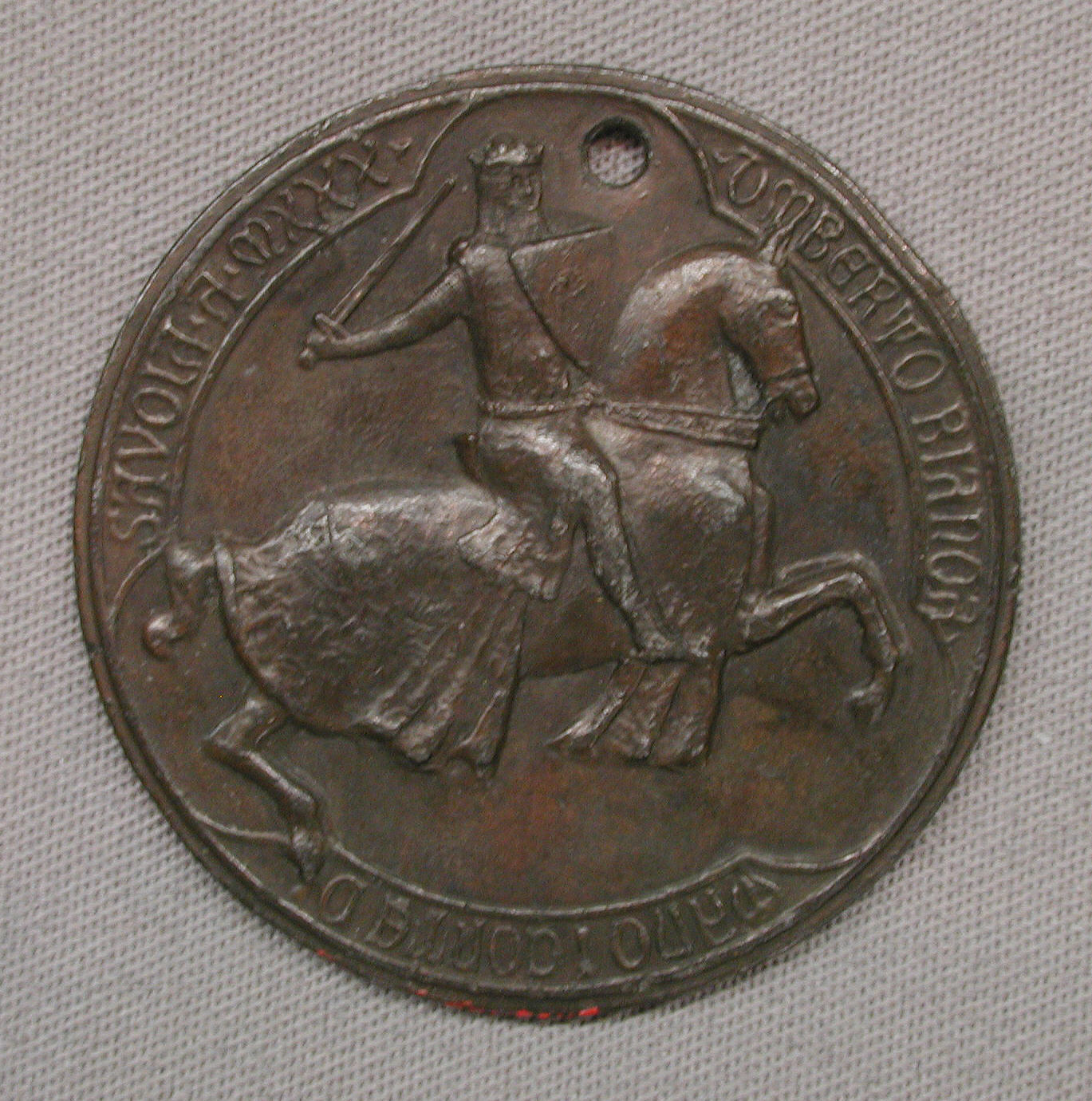
Heritage Asset Dossier: The Umberto Biancomano of Savoy and the Bronze Idiom of Sacred Power
I. Provenance and Materiality: Reading the Object Within Its Civilization
The Umberto Biancomano of Savoy enters the Katherine Fashion Lab archive not as a curiosity of dynastic portraiture, but as a material witness to one of antiquity's most consequential aesthetic decisions: the elevation of bronze into a language of legitimacy. Within the broader corpus of ancient civilizations, bronze occupied a position that no other medium could claim. It was expensive, technically demanding, and—critically—capable of holding form at a scale and precision that stone and ceramic could not match. To commission bronze was to announce that one possessed not merely wealth, but access to the metallurgical knowledge networks that defined elite power in the ancient world. The Biancomano object, whatever its precise funerary or votive function, participates in this logic. Its surface patina—that characteristic green-grey oxidation that connoisseurs of the medium read as a second skin—records centuries of ritual handling, environmental exposure, and, in all likelihood, deliberate curation by later custodians. For Katherine Fashion Lab, this patina is not damage; it is provenance made visible.
Our research context draws a deliberate parallel with two objects from our comparative study: 《Rock in the form of a fantastic mountain》 and 《Jar in the shape of bronze container (hu)》. At first glance, these objects appear to occupy different registers—one a landscape form, the other a vessel. Yet both, like the Biancomano bronze, reveal a shared civilizational instinct: the desire to miniaturize the cosmos and render it portable, possessable, and ritually accessible. The fantastic mountain compresses sacred geography into a handheld object; the hu jar translates bronze's ritual authority into ceramic form, democratizing an elite medium while preserving its symbolic charge. The Biancomano bronze sits at the intersection of these two impulses. It is simultaneously a compressed cosmology and a vessel of authority—an object that, by virtue of its material, its form, and its survival, asserts a continuous claim on the sacred and the sovereign.
II. Symbolic Power and Historical Adornment: The Bronze Body as Political Text
In the semiotics of ancient adornment, bronze functioned as a boundary object between the human and the divine. Unlike gold, which signified solar permanence, or iron, which signified martial utility, bronze carried a dual valence: it was both the material of ritual vessels and the material of weapons. This duality is essential to understanding the Biancomano object's symbolic power. To wear, wield, or display bronze in the ancient world was to inhabit a liminal identity—one that could pivot between priestly and martial registers depending on context. The Savoyard provenance of the Biancomano object adds a further layer. The House of Savoy, across its long history, consistently deployed material culture as a tool of legitimacy, commissioning works that fused classical referents with dynastic ambition. A bronze bearing this lineage is therefore not merely an antique; it is a document of how power clothes itself in the prestige of deep time.
Historical adornment, in this reading, is never merely decorative. The Biancomano bronze's surface treatment—whether incised, patinated, or originally gilded—would have been calibrated to specific lighting conditions, ritual calendars, and viewing audiences. Its spiritual meaning resides precisely in this calibration. The object was designed to be seen in motion, under torchlight, within architectural frames that amplified its reflective qualities. This is the same principle that governs contemporary high jewelry presentation: the object must perform under controlled conditions. The difference is that the ancient bronze performed for the gods and the ancestors, while the modern jewel performs for the red carpet and the client portfolio. Katherine Fashion Lab's heritage strategy must honor this continuity without collapsing the distinction.
III. Spiritual Meaning: The Bronze as Vessel of Continuity
The spiritual charge of the Biancomano bronze derives from its capacity to hold. Whether the object originally contained offerings, relics, or simply the memory of a commissioning sovereign, its form is organized around the logic of containment. This is the same logic that governs the hu jar and the fantastic mountain: each is a container, whether of grain, of wine, of incense, or of cosmological narrative. In the ancient imagination, to contain was to control. The priest who poured libations into a bronze vessel was not merely performing a gesture; he was enacting a technology of mediation between human and divine orders. The Biancomano object, as a bronze of Savoyard provenance, inherits this function and extends it into the political sphere. To possess such an object was to possess a conduit—a material guarantee that the boundary between the mundane and the sacred remained permeable.
For Katherine Fashion Lab, this spiritual dimension is not a footnote but a strategic asset. The 2026 luxury landscape is characterized by what our market intelligence terms "authenticity hunger"—a consumer preference for objects that can narrate their own continuity. The Biancomano bronze narrates continuity across millennia. Its spiritual meaning is not a claim to literal religious efficacy, but a demonstration that material objects can carry intention across time. This is the core proposition of heritage luxury: that the object you acquire today participates in a chain of custody that extends backward to the furnace and forward to the heir.
IV. 2026 Luxury Strategy: Translating Bronze Logic into Contemporary Desire
The strategic translation of the Biancomano bronze into Katherine Fashion Lab's 2026 portfolio requires three moves. First, material storytelling: the house should commission a limited series of bronze-finish hardware and jewelry elements that cite the object's patina without simulating it. The distinction between citation and simulation is crucial for the luxury consumer who reads authenticity as a form of connoisseurship. Second, ritual framing: the Biancomano bronze's original context was ritual; its contemporary presentation should restore a sense of occasion through packaging, lighting, and narrative sequencing that treats the point of sale as a threshold. Third, lineage documentation: each object in the series should carry a provenance card that connects it explicitly to the Biancomano study and the comparative research on the fantastic mountain and the hu jar. This documentation transforms a purchase into an act of custodianship.
The broader lesson of the Biancomano bronze for Katherine Fashion Lab is that heritage is not a backward-looking category. It is a forward-looking technology for converting material into meaning. The ancient bronzesmiths understood this. The House of Savoy understood this. The 2026 luxury market, despite its digital surface, remains hungry for the same promise: that the object you hold connects you to something that outlasts you. The Biancomano bronze is that promise in metallic form. Our task is to translate it without betraying it.