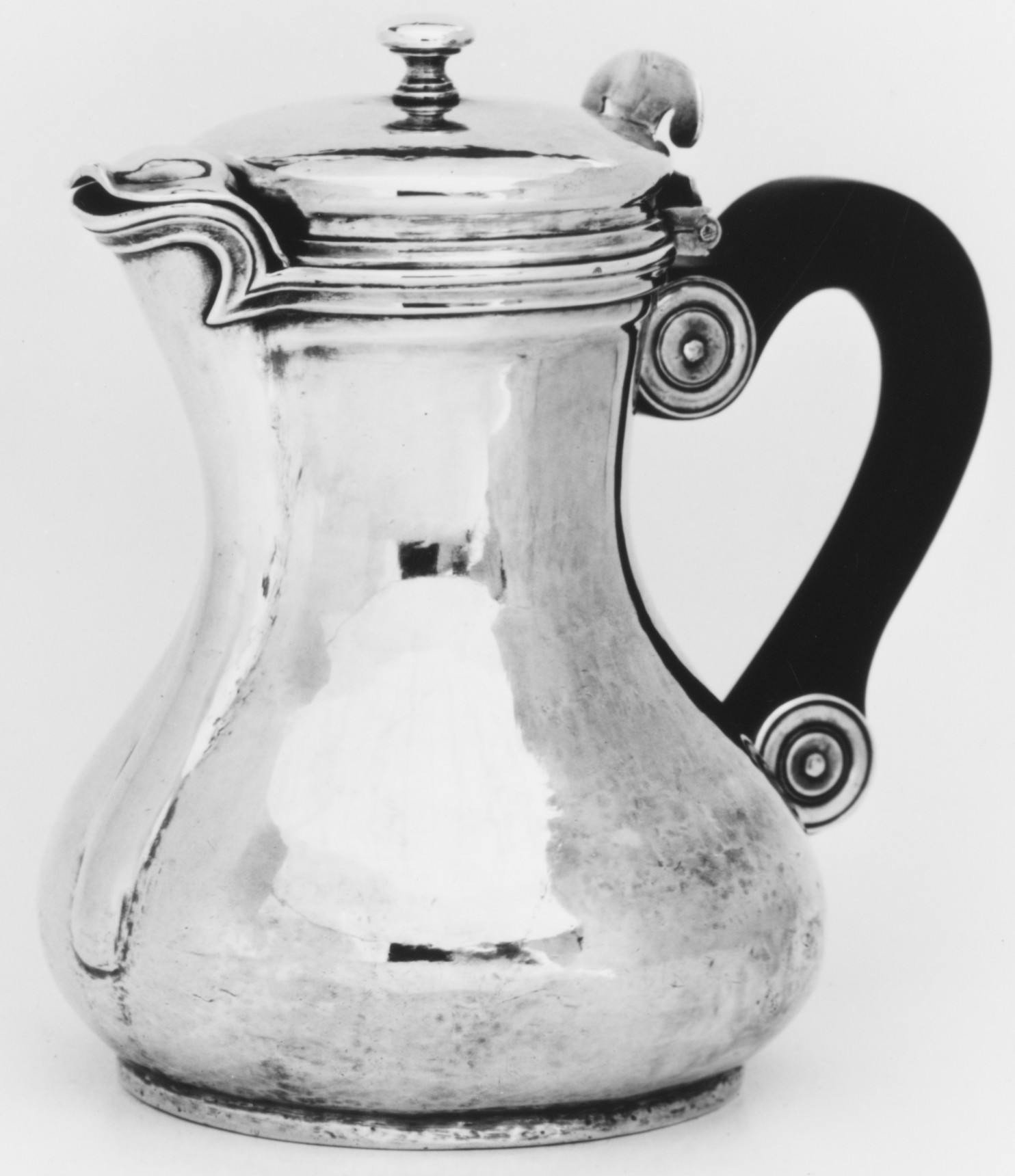
Heritage Asset Analysis: The Ancient Silver and Ebony Coffeepot
Introduction: A Vessel at the Intersection of Utility and Divinity
Within the Katherine Fashion Lab heritage portfolio, few objects carry the strategic density of the ancient silver and ebony coffeepot. Ostensibly a domestic implement, this vessel operates as a compressed archive of civilizational ambition. Its dual medium—precious silver paired with dense, dark ebony—encodes a tension between luminosity and obscurity, between the sacred and the sovereign. For a 2026 luxury strategy, this object is not a curiosity of the ancient world but a blueprint for symbolic authority. The coffeepot, in its earliest ceremonial iterations, was never merely a container. It was a throne in miniature, a reliquary of hospitality, and a mechanism of diplomatic power.
Symbolic Power: The Metallurgy of Legitimacy
Silver, in ancient civilizations from Mesopotamia to the Indus Valley, was the metal of the moon, of reflection, and of contractual memory. Unlike gold, which announced solar permanence, silver was associated with cyclical renewal—the waxing and waning of authority. A silver coffeepot, therefore, signaled that the host possessed not only wealth but the capacity to regulate time itself. The ritual of pouring became a performance of measured generosity: the thin, controlled stream of liquid demonstrated mastery over abundance.
Ebony, sourced through long-distance trade routes from Africa and South Asia, added a second layer of meaning. Its near-black density evoked the primordial, the funerary, and the protective. Handles and finials carved from ebony were not decorative afterthoughts; they were talismanic. To grasp the ebony handle was to touch the edge of the underworld while remaining anchored in the social world. The coffeepot thus mediated between realms—a portable altar that turned a courtyard or tent into a temporary temple of consumption.
Historical Adornment: Surface as Status Narrative
Ancient silver coffeepots were rarely left plain. Repoussé and chasing techniques transformed their surfaces into heraldic landscapes: processions of lions, winged genies, grapevines, and geometric interlace. These adornments were not merely ornamental. They were legible to the trained eye—a visual contract between the owner and the community. A pot adorned with a lion hunt declared martial capability; one with pomegranates and vines signaled fertility and agricultural surplus.
The ebony components, often inlaid with silver wire or carved with calligraphic bands, introduced a counter-rhythm. Where the silver body reflected light and caught the gaze, the ebony absorbed it, creating a chiaroscuro effect that predates Baroque dramaturgy by millennia. This contrast was a deliberate design strategy: the object demanded to be seen from a distance and then rewarded close inspection. In contemporary luxury terms, this is the difference between a logo and a signature—between instant recognition and intimate connoisseurship.
Spiritual Meaning: The Pouring as Sacrament
In many ancient cultures—from the Hittite courts to the Scythian steppes—the pouring of a heated beverage from a metal vessel was a sacred act. The coffeepot, though its contents varied (herbal infusions, fermented mare’s milk, or early coffee-like decoctions), functioned as a libation device. The steam rising from the spout was interpreted as a prayer ascending; the first pour was often dedicated to a deity or ancestral spirit.
Silver’s antimicrobial properties, empirically observed but mythologically framed, reinforced the vessel’s reputation for purity. To drink from a silver coffeepot was to ingest not only the liquid but the vessel’s virtue. Ebony, associated with the tree of life in several ancient cosmologies, completed the spiritual circuit. The object was thus a closed loop of meaning: earth (ebony) transformed into culture (silver), and culture returned to the divine through ritual use.
2026 High-End Luxury Strategy: From Artifact to Archetype
For Katherine Fashion Lab, the ancient silver and ebony coffeepot offers a strategic template for the 2026 luxury market, which increasingly rewards narrative depth over surface novelty. Three imperatives emerge:
1. Material Honesty as Radical Differentiation. In an era of synthetic alternatives and digital saturation, the coffeepot’s insistence on two authentic materials—one reflective, one absorptive—models a disciplined approach to product architecture. A 2026 collection could reinterpret this duality in handbags, small leather goods, or home objects: polished silver-toned hardware paired with matte, dark-grain ebony or sustainably sourced blackwood. The contrast should not be decorative but structural, echoing the original’s functional logic.
2. Ritual as Retention. The coffeepot’s power lay in its role within a repeated ceremony. Luxury brands in 2026 will not survive on one-time transactions but on embedded rituals. Katherine Fashion Lab can design objects that invite daily or weekly use—a vessel, a case, a tool—each accompanied by a prescribed gesture or sequence. The silver-and-ebony coffeepot teaches that retention is not a loyalty program but a liturgy.
3. Spiritual Patina, Not Vintage Distress. The ancient object’s spiritual meaning emerged from use, not from artificial aging. A 2026 strategy should reject “pre-distressed” luxury in favor of materials that develop genuine patina: silver that tarnishes in the pattern of its owner’s touch, ebony that darkens and polishes with handling. The brand becomes a custodian of time, not a manufacturer of nostalgia.
Conclusion: The Coffeepot as Strategic Mirror
The ancient silver and ebony coffeepot is not a relic to be admired behind glass. It is a strategic mirror for Katherine Fashion Lab. It demonstrates that symbolic power is built through material contrast, that historical adornment is a language of legitimacy, that spiritual meaning is enacted through ritual, and that luxury in 2026 will belong to those who understand these principles not as decoration but as infrastructure. The coffeepot poured authority for kings and priests. For the modern luxury house, it pours a blueprint.