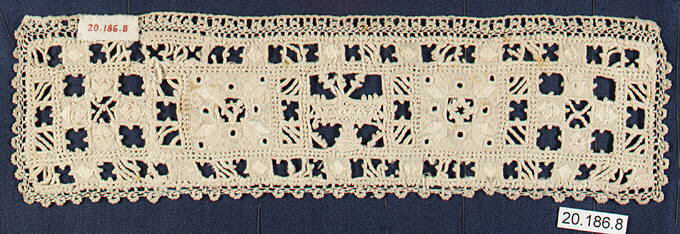
Strip: A Standalone Study in Cutwork and Global Heritage
Katherine Fashion Lab approaches the standalone study as a disciplined exercise in reduction: one technique, one material logic, one historical thread, examined without the distraction of seasonal narrative. The subject here is strip—not the casual horizontal band of sportswear or the nautical stripe of resortwear, but strip as a structural device in couture cutwork. In this context, strip denotes the deliberate removal, separation, and reconfiguration of material into linear elements that are subsequently joined, suspended, or layered. It is an architecture of absence as much as presence, and its lineage belongs to no single culture but to a global heritage of textile intelligence.
Cutwork as the Governing Discipline
Cutwork is frequently misunderstood as decoration. In couture, it is a method of construction. When a designer cuts a solid cloth into strips—whether by hand, laser, or blade—the fabric ceases to behave as a continuous surface. It becomes a system of components. Each strip carries its own grain, weight, and edge behavior. The couturier must then decide how those strips relate: do they overlap, interlace, float, or return to a ground structure? This decision is not ornamental but structural, and it determines whether the garment drapes, collapses, or holds its intended silhouette.
The standalone study format is particularly suited to strip-based cutwork because it isolates the variable. Without the pressure of a collection theme, the designer can test strip width, spacing, and direction against a single body form. The results are often more revealing than a full runway narrative: a 3mm strip behaves differently from a 30mm strip, and a vertical strip cut on the bias behaves differently from a horizontal strip cut on the straight grain. These are not minor distinctions. They are the difference between a garment that moves with the body and one that resists it.
Global Heritage: Strip Across Cultures
Strip is one of the most widely distributed textile strategies in human history, and its global heritage is neither uniform nor interchangeable. In West African weaving traditions, particularly among the Ashanti and Ewe, narrow-band strip cloth is woven on horizontal looms and then sewn into larger panels. The strip is not a cut element but a woven unit, and the resulting cloth carries a rhythm of repeated bands that is both structural and symbolic. In Japanese sakiori and boro, strips are torn from worn textiles and rewoven or layered into new cloth, embedding repair and longevity into the garment's logic. In Andean textiles, discontinuous warp and weft techniques create strip-like apertures that function as both ventilation and visual rhythm. In European couture, the strip emerges most forcefully in the twentieth century, when designers such as Mariano Fortuny and later Issey Miyake used pleating and cutwork to turn cloth into a series of parallel planes.
To treat strip as a global heritage is not to flatten these traditions into a single aesthetic. It is to recognize that the strip is a recurring solution to a recurring problem: how to make cloth that is simultaneously light, strong, and expressive. The couture designer who works in cutwork enters this lineage not as an owner but as a participant. The ethical dimension is unavoidable. A strip technique lifted from one tradition and applied without understanding its material logic becomes pastiche. A strip technique studied in its original context—its loom, its fiber, its social function—becomes a genuine conversation.
Material Behavior and the Cut Edge
In cutwork, the edge is the most important seam. Unlike a conventional seam, which hides its construction, a cut edge is exposed. It must be finished, sealed, or intentionally left raw. The choice depends on the fiber. Silk organza cut into strips will fray unless heat-sealed or bound; its transparency makes every finish visible. Wool crepe holds a clean cut and can be left raw for a soft, felted edge. Leather and suede cut into strips behave like ribbon, with a weight that pulls the garment downward. Technical synthetics can be laser-cut into strips with sealed edges that require no finishing at all, but they lack the memory and recovery of natural fibers.
The standalone study demands that the designer test these behaviors empirically. A strip of silk organza 5mm wide may support its own weight when suspended vertically but collapse when turned horizontally. A strip of wool crepe 20mm wide may hold a curve without pressing. These are not theoretical questions. They are answered only by cutting, hanging, and observing. The couture atelier is, in this sense, a laboratory.
Strip as Silhouette and Skin
When strip cutwork is used at the level of the full garment, it produces a silhouette that is both revealing and concealing. The strips create a secondary skin—a lattice that mediates between the body and the outside world. This is not the same as transparency. A transparent garment shows the body; a strip-cut garment constructs the body through intervals. The eye completes the surface, and the wearer's movement constantly reconfigures it. This is why strip cutwork is so effective in motion and so difficult to photograph. A still image captures a single configuration; the garment itself is a sequence.
For Katherine Fashion Lab, the value of this standalone study lies in its resistance to trend. Strip cutwork is not seasonal. It is a technique that rewards patience, precision, and material knowledge. It connects the atelier to a global heritage of textile problem-solving while remaining stubbornly contemporary. The strip is not a motif. It is a method—and in couture, method is the only lasting luxury.