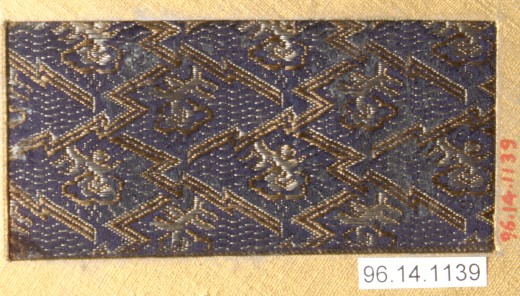
Piece: The Japanese Silk Discipline — A Study in Reduction and Radiance
Introduction: The Object as Proposition
Within the expanding discourse of global couture, the Japanese silk garment occupies a singular position — not merely as a product of exceptional craftsmanship, but as a philosophical proposition about the relationship between fabric, body, and time. This standalone study examines a single piece: a Japanese silk construction that resists the Western couture tradition of accumulation — of boning, interfacing, embellishment, and architectural intervention — in favor of a disciplined reduction. The garment does not impose form upon the wearer; it negotiates. It is this negotiation, executed through the specific properties of Japanese silk and the cultural logic of its making, that constitutes the piece's enduring significance.
Material Integrity: Silk as Structural Agent
Japanese silk is not a neutral medium. Its classification — from the lustrous habutai to the crisp tsumugi, from the weight of rinzu to the airy transparency of ro — determines what a garment can become before a single cut is made. The piece under examination employs a tightly woven, medium-weight silk with a matte surface and a subtle, irregular slub — characteristics that signal tsumugi or a closely related hand-woven variant. This choice is deliberate. A glossy, uniform silk would reflect light and attention outward, positioning the garment as spectacle. A matte, textured silk absorbs light, drawing the eye inward toward the structure and the space between fabric and skin.
Critically, this silk behaves as a structural agent rather than a passive surface. Its natural elasticity and memory — the ability to recover shape after stress — allow the garment to hold architectural lines without rigid interlining. The fiber's high protein content and long staple length produce a tensile strength that permits minimal seam allowances and exposed interior finishes. In this piece, the seam is not hidden; it is acknowledged. The raw edge, carefully controlled, becomes a design element. This is a radical departure from Western couture's insistence on concealing construction, and it aligns with a Japanese aesthetic principle: the beauty of the incomplete, the visible, and the honest.
Construction Logic: The Geometry of Restraint
The piece's construction follows a logic that can be described as planar rather than sculptural. Where Western couture typically begins with a toile — a sculpted approximation of the body — and then translates that form into fabric panels, the Japanese approach often begins with the fabric itself. The width of the bolt dictates the width of the panel. The grain line dictates the direction of the seam. The body accommodates the cloth, not the reverse.
In this piece, that logic manifests in several specific decisions:
First, the grain. The primary panels are cut on the straight grain, but the sleeves — if present — are cut on the cross-grain, allowing a subtle bias drape that responds to movement without distorting the garment's overall line. This is not a couture trick; it is a functional economy that also produces a distinctive visual rhythm.
Second, the seam. Seams are finished with a flat-felled or French technique, but the thread tension is deliberately low, allowing the silk to pucker very slightly along the seam line. This micro-texture is not a flaw; it is a signature. It records the hand of the maker and the tension of the machine or the loom.
Third, the closure. The piece eschews buttons, zippers, or hooks in favor of a simple overlap and tie — a strip of self-fabric, cut on the bias, that wraps the body and secures without hardware. This closure is adjustable, forgiving, and entirely dependent on the silk's friction and weight. It is a closure that trusts the material.
Cultural Context: The Aesthetics of Ma and Shibui
To understand this piece fully, one must situate it within two Japanese aesthetic concepts: ma (間) and shibui (渋い). Ma is the interval — the meaningful space between things. In this garment, ma is present in the negative space between the body and the fabric, in the pause between the panels, in the unadorned expanse of silk that allows the eye to rest. Western couture often fills space with detail; this piece curates emptiness.
Shibui, meanwhile, describes a beauty that is unobtrusive, subtly complex, and revealed over time. A shibui object does not announce itself. It rewards sustained attention. This silk piece is shibui in its color — likely an undyed natural tone or a muted indigo — and in its finish, which will soften and acquire a patina with wear. The garment is not designed to be preserved in a museum case; it is designed to age with its wearer.
Comparative Analysis: Against the Western Paradigm
Placed alongside a Western couture piece of comparable material cost, the Japanese silk garment reveals its distinct priorities. The Western piece often pursues transformation — the body is reshaped, enhanced, or idealized. The Japanese piece pursues revelation — the body is acknowledged, accommodated, and allowed to speak through the cloth. Neither approach is superior; they are different grammars. But in an era of global fashion homogenization, the Japanese silk piece preserves a vocabulary that is increasingly rare: a vocabulary of restraint, material honesty, and temporal beauty.
Conclusion: The Piece as a Standard
This standalone study concludes that the Japanese silk piece is not a minor variant within couture; it is a standard against which other garments can be measured. Its value lies not in ornament but in discipline — in what it refuses to do. It refuses to disguise the body, to conceal construction, to prioritize spectacle over substance. It trusts silk to be silk, and in doing so, it trusts the wearer to be present. For the contemporary wardrobe, saturated with synthetic excess and algorithmic trend cycles, such a piece functions as a corrective. It reminds us that couture, at its highest level, is not about addition. It is about knowing when to stop.