Nefertum: The Lotus Born God and the Strategic Power of Sacred Adornment
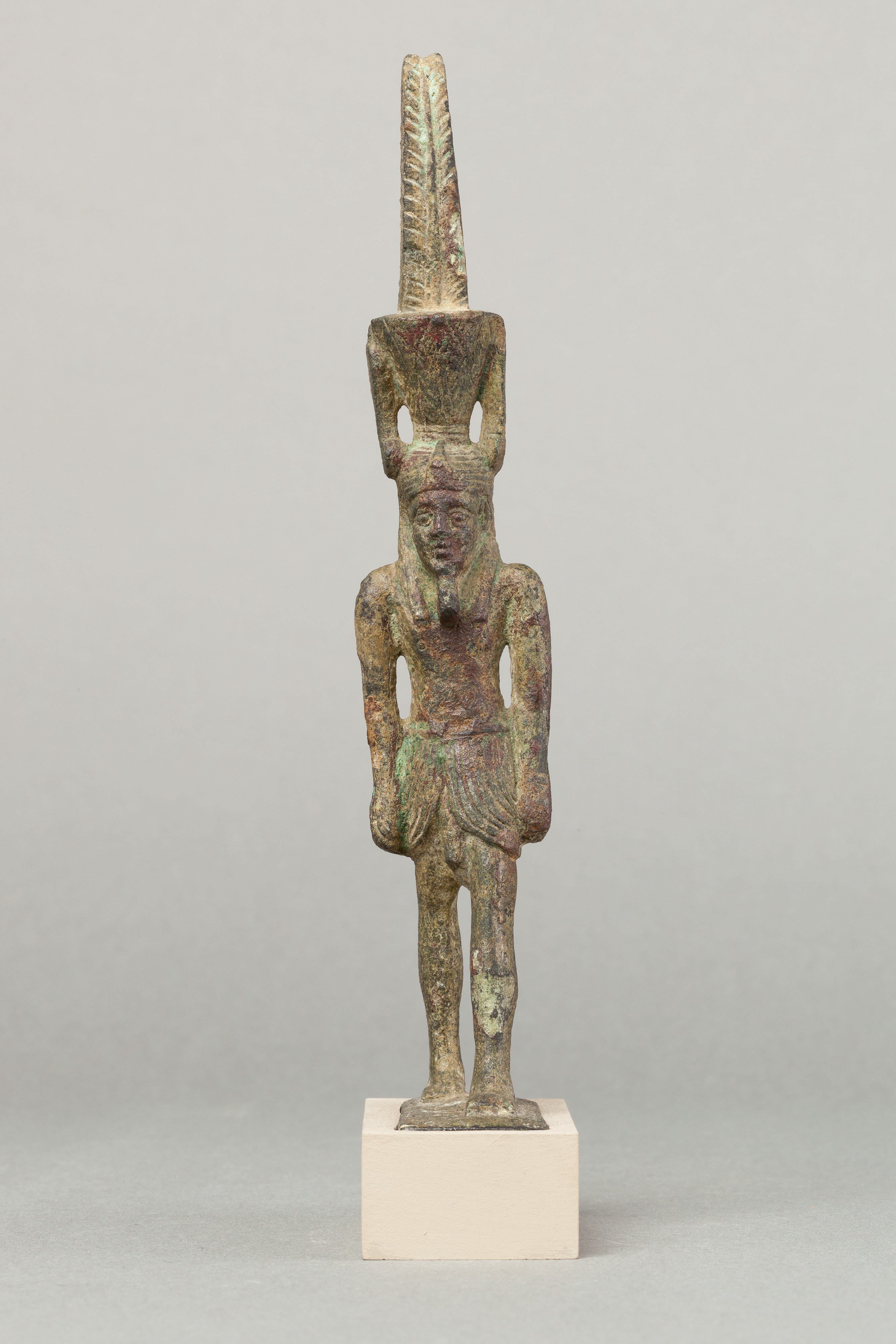
Within the broader portfolio of ancient Egyptian divinity, Nefertum occupies a position of unusual strategic interest for the contemporary luxury analyst. Unlike the dominant solar or funerary deities whose iconography saturates popular imagination, Nefertum operates at the intersection of fragrance, regeneration, and royal adornment — a triad that maps with remarkable precision onto the value architecture of twenty-first-century high-end luxury. This analysis examines a cupreous metal representation of the deity, situating its symbolic power, historical function, and spiritual meaning within a forward-looking framework for 2026 market positioning.
Origin and Material Context
Nefertum emerges from the Memphite theological tradition as the son of Ptah and Sekhmet, later absorbed into the Heliopolitan ennead as the offspring of Atum. His name, conventionally rendered as "the beautiful one who closes" or "he who is perfect," carries an aesthetic proposition embedded in its etymology — beauty as completeness rather than surface ornament. The deity is most commonly depicted as a youthful male figure wearing a blue lotus blossom upon his head, sometimes rising directly from the flower itself. This iconography is not decorative but cosmological: the lotus was understood to emerge from the primeval waters at the moment of creation, making Nefertum a personification of first light and first breath.
The medium under examination — cupreous metal, encompassing bronze and related copper alloys — is significant. Egyptian metalworkers achieved sophisticated control over copper-tin ratios by the Late Period, and cupreous statuary served a distinct function from stone or wood. Metal figures were frequently produced for temple deposition, votive offering, or personal devotion, and their material value made them both spiritually potent and economically legible. A cupreous Nefertum is therefore not merely a religious object but a store of value, a portable conduit for divine favor, and an artifact of elite patronage.
Symbolic Power: Fragrance, Lotus, and Regeneration
The lotus headdress is the defining attribute of Nefertum and the primary carrier of his symbolic capital. In Egyptian thought, the blue lotus (Nymphaea caerulea) was associated with the sun's daily rebirth, with the sensation of intoxication, and with the ritual use of perfume. Nefertum presided over the kyphi, the sacred incense compound whose recipe appears in temple inscriptions and whose preparation was itself a liturgical act. To invoke Nefertum was to invoke scent as a medium of transformation — the idea that invisible matter could carry prayer, memory, and divine presence.
This positions the deity as an early theorist of what the modern luxury sector calls sensory branding. Fragrance is the most intimate and least rational of luxury categories; it bypasses visual critique and operates directly on memory and identity. Nefertum's domain anticipated this logic by several millennia. His symbolic power rests on the proposition that beauty is not seen but inhaled, absorbed, and internalized — a proposition with direct implications for how a heritage-driven maison might construct its olfactory narrative.
Historical Adornment and Ritual Function
In temple practice, Nefertum's image participated in the daily ritual of dressing, anointing, and censing the divine statue. Priests applied oils, textiles, and cosmetic preparations to the cult image in a sequence that mirrors contemporary high-touch client ceremony. The god was also linked to the uraeus and to royal headdress, and his lotus motif appears on jewelry, amulets, and funerary equipment across the New Kingdom and Late Period. Adornment, in this context, was never merely aesthetic; it was a technology of protection and legitimation.
For the modern curator, the lesson is structural rather than literal. Nefertum's historical adornment economy combined rarity of material, ritual exclusivity, and codified symbolism — three levers that remain the load-bearing columns of high-end positioning. The cupreous figure, small enough to be held, represents the original portable luxury object: intimate, materially honest, and charged with meaning that exceeds its weight.
Spiritual Meaning and Contemporary Resonance
Nefertum's spiritual meaning is regenerative rather than redemptive. He does not judge; he restores. The lotus rises from mud and opens at dawn, and the god embodies the assurance that beauty can emerge from disorder. In an era of climate anxiety, geopolitical fragmentation, and digital saturation, this is a commercially and culturally resonant proposition. Luxury consumers in 2026 are not seeking escapism so much as renewal — objects and experiences that signal continuity, craft, and the possibility of beginning again.
Strategic Implications for 2026 High-End Luxury
Katherine Fashion Lab should treat Nefertum not as a motif to be reproduced but as a strategic archetype. Four implications follow.
First, olfactory-led storytelling. The maison should develop a signature scent architecture anchored in lotus, kyphi-adjacent resins, and copper-tinged mineral notes, positioning fragrance as the primary entry point to the Nefertum narrative rather than an accessory to it.
Second, material integrity. Cupreous metal — bronze, oxidized copper, warm patinated finishes — offers a counterpoint to the saturated gold aesthetic that dominates Egyptian-inspired luxury. Copper reads as archaeological, intellectual, and contemporary, aligning with the quiet-luxury and material-honesty preferences of the 2026 affluent consumer.
Third, ritualized client experience. The daily dressing of the divine image provides a template for appointment-based retail: slow, sensory, sequenced, and personalized. Ceremony is the ultimate differentiator in a market where product parity is near-total.
Fourth, regenerative positioning. Nefertum's promise of renewal should inform the brand's sustainability narrative, framing responsible sourcing and circular craft not as compliance but as a return to an ancient understanding of beauty as cyclical and sacred.
Conclusion
Nefertum is a compact, high-density heritage asset. A single cupreous figure encodes fragrance, regeneration, royal adornment, and ritual exclusivity — a portfolio of meanings that most contemporary brands spend decades attempting to construct. For Katherine Fashion Lab, the strategic opportunity lies in translation rather than replication: to build a 2026 luxury proposition in which scent is the primary medium, copper is the signature material, and renewal is the governing promise. The lotus opens at dawn; the question for the maison is whether it is positioned to be present at first light.