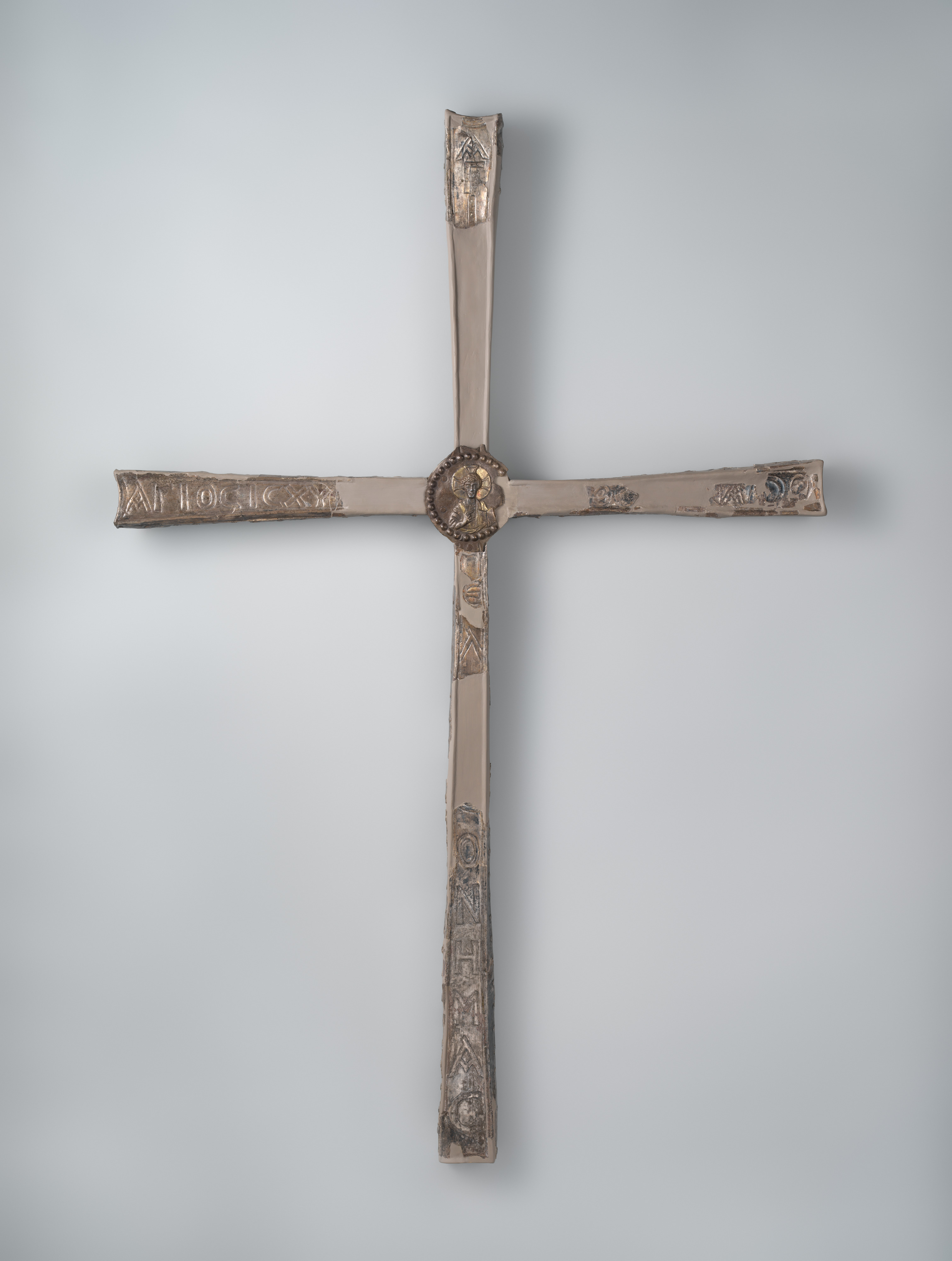
Heritage Asset Analysis: The Syrian Processional Cross
Introduction: An Object of Consecrated Movement
Within the material culture of Eastern Christianity, few objects command as much ceremonial gravity as the processional cross. The Syrian example under examination—silver repoussé and engraved work mounted upon a wooden shaft—represents a distinct lineage of liturgical metalwork that emerged from the workshops of the Levant, a region whose silversmithing traditions stretch unbroken across two millennia. For Katherine Fashion Lab, this artifact is not merely a devotional instrument. It is a compressed archive of symbolic power, trade-route aesthetics, and ritual choreography that offers a rare strategic template for 2026 luxury positioning.
Historical Provenance and Craft Lineage
Syrian Christian communities, particularly those of the Antiochian and Syriac Orthodox traditions, developed a distinctive approach to processional crosses between the late Byzantine period and the Ottoman era. Unlike the static altar cross, the processional cross was engineered for motion—carried aloft at the head of liturgical processions, funerary rites, and pilgrimage circuits. The wooden shaft, often turned from local olive or walnut, provided the necessary length and lightness for extended ritual use, while the silver head served as the visual and theological apex of the entire assembly.
The silverwork itself reflects the Levant's position as a crossroads. Syrian smiths absorbed Byzantine iconographic conventions—the flared arms, the central medallion—while incorporating Islamic metalworking techniques such as niello inlay and intricate geometric borderwork. This syncretism was not dilution but sophistication: the cross became a site where multiple visual languages coexisted under a single devotional purpose. For a luxury house, this is a critical precedent. The most resilient aesthetic codes are rarely pure; they are hybridized, and their hybridity is precisely what allows them to travel across markets and centuries.
Symbolic Power: The Cross in Motion
The processional cross operates on a symbolic register distinct from that of the pectoral or altar cross. Its power is kinetic. When raised and carried, it transforms the physical space of the church or street into a consecrated corridor. The silver head catches candlelight and sunlight alike, functioning as a mobile beacon. In Syrian liturgical practice, the cross was often accompanied by fans of liturgical fans (rhipidia) and censers, creating a multisensory procession in which sight, sound, and scent were orchestrated around the silver object.
This kinetic symbolism carries a strategic lesson: objects that are designed to be seen in motion possess a different luxury value than objects designed for static display. They create memory through participation. The congregation does not merely observe the cross; it follows it. That participatory dynamic is the gold standard for experiential luxury in 2026, where the most valuable brands are those that choreograph movement rather than merely furnish products.
Spiritual Meaning and Adornment Logic
The adornment of the Syrian processional cross follows a theology of radiance. Silver was selected not only for its durability and value but for its scriptural associations with divine light and purification. The engraved scenes—typically the Crucifixion, the Anastasis, or the Theotokos—were positioned to be legible to the faithful walking behind, meaning the cross was designed for a viewer in motion, at a distance, under flickering light. This is an early example of what contemporary designers would call "user-centered design under variable conditions."
The wooden shaft, often undecorated or lightly stained, served as a deliberate visual counterweight. It grounded the silver in humility, reminding the viewer that the instrument of execution preceded the instrument of glory. This material dialectic—precious metal against humble wood—is a compositional principle that luxury houses can translate directly into product architecture: the tension between the elevated and the elemental is what generates emotional resonance.
Strategic Implications for 2026 High-End Luxury
Three strategic vectors emerge from this heritage analysis.
First, ritual choreography as brand experience. The processional cross was never designed to be admired in a vitrine. It was designed to lead. For 2026, Katherine Fashion Lab should consider how signature pieces can anchor movement-based experiences—runway processions, salon presentations, or pilgrimage-inspired retail activations—where the customer is a participant rather than a spectator.
Second, hybridized craft narratives. The Syrian cross's fusion of Byzantine, Syriac, and Islamic techniques offers a model for storytelling that resists monocultural simplification. In an era of increasing consumer sophistication, provenance narratives that acknowledge cross-cultural exchange signal authenticity rather than appropriation, provided the sourcing and partnership structures are ethical and transparent.
Third, the silver-and-wood dialectic. The material contrast at the heart of this artifact can inform a 2026 collection strategy that pairs precious metals with organic, tactile substrates—silver with raw silk, gilt with unfinished oak. This is not nostalgia; it is a formal principle with proven longevity.
Conclusion: From Antioch to the Atelier
The Syrian processional cross is a heritage asset of unusual strategic density. It encodes movement, light, hybrid craft, and a theology of radiance into a single portable object. For Katherine Fashion Lab, its value lies not in replication but in translation. The cross teaches that luxury objects achieve their highest power when they are designed to be carried, followed, and remembered in motion. In 2026, the brands that understand this will not merely sell products; they will lead processions.