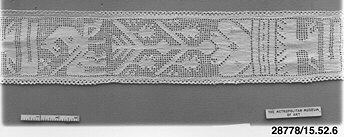
The Architecture of Infancy: Swaddling Bands as Proto-Couture
Within the historiography of dress, the swaddling band occupies a peculiar position: it is simultaneously the most universal and the most overlooked garment in the global wardrobe. Long before the corset, the crinoline, or the tailored jacket entered the fashion lexicon, the swaddling band constituted humanity's first exercise in structured dressing—a textile system engineered to shape, constrain, and protect the human form at its most vulnerable. At Katherine Fashion Lab, we approach the swaddling band not as a curiosity of nursery history but as a foundational artifact of construction, one whose logic of binding, tension, and release anticipates nearly every subsequent development in Western and non-Western tailoring.
Origins and the Global Distribution of a Technique
The swaddling band appears independently across civilizations separated by oceans and millennia, a convergence that speaks to shared functional imperatives rather than diffusion. In ancient Egypt, linen bands wrapped infants in tight, linear patterns visible in tomb reliefs and preserved textile fragments. In Greco-Roman antiquity, the fascia and spargana served both medical and ritual purposes, with physicians such as Soranus of Ephesus prescribing specific wrapping sequences to ensure straight limbs. Across the Andes, pre-Columbian cultures bound infants to cradleboards using woven straps, while in imperial China and Japan, layered bands of silk and cotton performed analogous functions within distinct cosmological frameworks.
What unites these traditions is not merely the act of wrapping but the engineering intelligence embedded in the band itself. A swaddling band is not a shapeless strip of cloth; it is a calibrated textile with a defined width, tensile strength, and directional grain. The band must hold without cutting, secure without strangling, and release without disturbing. This is, in essence, the same problem-solving logic that governs the boning of a corset or the stay tape of a tailored shoulder.
Linen: The Material Logic of Restraint
Linen dominates the historical record of swaddling for reasons that are both practical and symbolic. Flax fibers possess high tensile strength, low elasticity, and remarkable moisture-wicking properties—qualities essential for a garment in constant contact with an infant's skin. Unlike wool, linen does not felt or irritate; unlike silk, it withstands repeated washing and boiling. In European traditions, linen bands were often bleached in the sun and beaten during laundering, a regimen that softened the fiber while preserving its structural integrity.
The material's inelasticity is precisely what makes it suitable for binding. A band that stretches cannot maintain consistent tension; it loosens with movement and fails in its primary function. Linen's resistance to deformation allows the swaddling band to act as an external skeleton, a textile exoskeleton that supports the infant's undeveloped musculature. This is a principle later appropriated by couture: the use of non-stretch fabrics such as silk organza and horsehair braid to create structure in bodices and skirts.
Drawnwork: Ornament as Structural Reinforcement
The introduction of drawnwork into swaddling bands marks a critical transition from pure utility to decorative craft. Drawnwork—the technique of withdrawing weft or warp threads from a woven ground and binding the remaining threads into geometric patterns—transforms a plain linen strip into a porous, lace-like fabric. In the context of swaddling, drawnwork served a dual purpose: it provided ventilation for the infant's skin while simultaneously reinforcing the edges of the band, preventing fraying and maintaining dimensional stability.
This is a sophisticated textile intervention. By removing threads, the maker creates openings that allow air circulation, reducing the risk of rash and infection. By binding the remaining threads with needlework, she creates a lattice that resists unraveling. The resulting band is lighter, more flexible, and more visually refined than a plain strip of linen. In Renaissance Italy and later in colonial Latin America, drawnwork swaddling bands became heirloom objects, embroidered with family crests and passed down through generations—a practice that anticipates the monogrammed layette as a marker of lineage and taste.
The Swaddling Band as Proto-Couture: A Theoretical Reading
To analyze the swaddling band through the lens of couture is to recognize that the fundamental grammar of garment construction—tension, layering, edge finishing, and fit—was established at the cradle. The swaddling band is not a precursor to fashion; it is fashion's original template. Consider the parallels:
Bias and grain. A swaddling band must be cut on the straight grain to prevent twisting. This is the same principle that governs the cutting of a couture gown's foundation.
Binding and finishing. The edges of a swaddling band are typically hemmed or bound to prevent raveling—a technique identical to the Hong Kong finish used in bespoke tailoring.
Layering and tension. Multiple bands are applied in overlapping spirals, each layer exerting controlled pressure. This is the logic of the corset's spiral steel boning, the mummy's wrappings, and the couture client's fitting sessions.
Symbolic function. The swaddling band marks the body as social. It is the first garment that says: this body belongs to a culture, a class, a family. In this sense, it is the ancestor of the uniform, the wedding dress, and the couture commission.
Conclusion: The Band That Binds Civilization
At Katherine Fashion Lab, we argue that the swaddling band deserves a place in the canon of dress history not as a footnote but as a foundational text. Its materials—linen and drawnwork—represent the intersection of utility and ornament, the two poles between which all fashion oscillates. Its global distribution demonstrates that the impulse to structure the body is universal, even as its specific forms are culturally contingent. And its construction techniques—binding, layering, tensioning, finishing—constitute the elementary vocabulary of couture itself.
To study the swaddling band is to study the origins of our discipline. It is to recognize that the first couturier was not Charles Frederick Worth but the anonymous maker who, millennia ago, understood that cloth could shape flesh, that tension could create form, and that a strip of linen could hold a civilization's future in its folds.