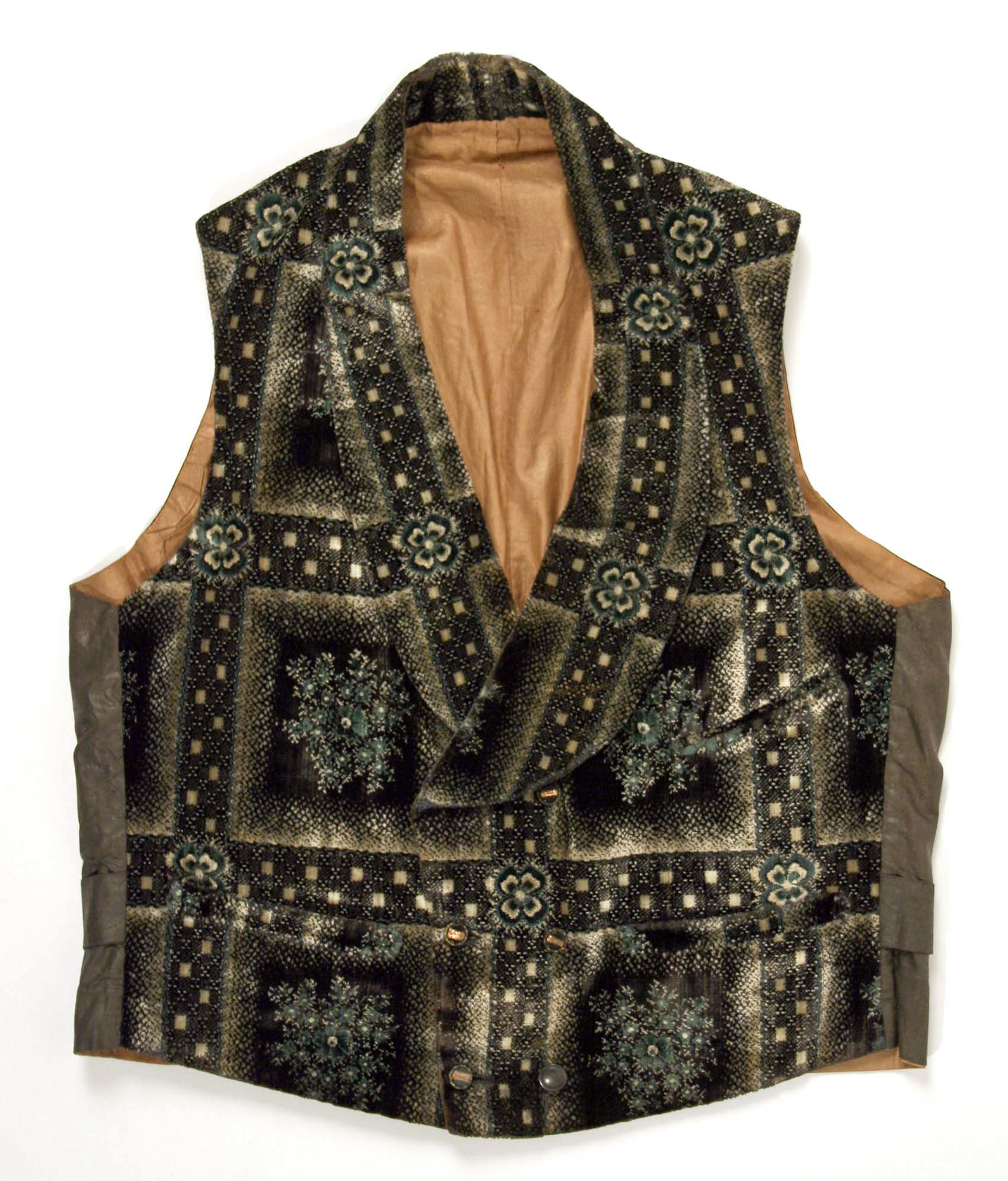
The Waistcoat Reconsidered: An American Study in Silk and Cotton
The waistcoat occupies a curious position in the contemporary wardrobe: ubiquitous yet under-theorized, historically burdened yet persistently reinvented. Within the American sartorial tradition, this sleeveless garment has functioned less as a mere accessory to the suit than as a site of negotiation between formality and ease, structure and softness, European inheritance and domestic reinvention. A standalone study of the waistcoat—examined through the twin lenses of silk and cotton—reveals how a single garment can encode an entire culture's ambivalence toward ornament, utility, and self-presentation.
Origins: From Court Coat to American Staple
The waistcoat arrived in the American colonies as an inheritance from British tailoring, where it had evolved from the seventeenth-century waistcoat—a long, fitted undergarment worn beneath the coat—into a structured, visible element of the three-piece ensemble. Yet the American adaptation diverged almost immediately. Where the English waistcoat tended toward embroidered opulence and rigid formality, the American version absorbed the practical demands of a mercantile, mobile, and increasingly democratic society. It became lighter, less ceremonial, and more adaptable. By the nineteenth century, the waistcoat was no longer exclusively a marker of gentility; it was a working garment, a clerical uniform, a banker's signature, and a dandy's flourish all at once.
This democratization is central to understanding the waistcoat's American identity. In a nation suspicious of inherited rank, the waistcoat offered a controllable form of distinction—one that could be purchased, tailored, and adjusted according to individual ambition rather than birthright. It was, in effect, a portable architecture of respectability.
Silk: The Rhetoric of Sheen
Silk waistcoats occupy the ceremonial end of the spectrum. In American menswear, silk—whether in the form of satin, faille, or brocade—signals occasion. A silk waistcoat is worn to weddings, galas, and formal evenings; it catches light, holds color with unusual depth, and drapes with a fluidity that cotton cannot replicate. The material's historical associations with luxury and imported refinement once made it a symbol of cosmopolitan aspiration, particularly in the nineteenth-century American city, where a silk waistcoat could signal membership in a professional or social elite.
Yet silk is also the more fragile proposition. It wrinkles, stains, and demands careful maintenance. Its sheen can read as elegance or as excess, depending on cut and context. In contemporary American tailoring, silk waistcoats are often reserved for black-tie and creative-black-tie contexts, where their luminosity functions as a deliberate counterpoint to the matte austerity of the dinner jacket. The fabric's very impracticality becomes part of its meaning: to wear silk is to accept a certain vulnerability in exchange for a certain radiance.
Cotton: The Democratic Fabric
Cotton tells a different story. As the foundational fiber of American textile production—entangled, unavoidably, with the history of slavery and industrialization—cotton waistcoats embody utility, accessibility, and everyday repetition. A cotton waistcoat is the garment of the office, the campus, the summer wedding, the Sunday service. It can be crisp in poplin, textured in twill, or casual in chambray. It accepts dye readily, which makes it the natural home of the American preference for muted solids and restrained patterns: navy, charcoal, olive, and the occasional muted check.
The cotton waistcoat is also the more versatile. It can be worn with a suit, with denim, or—in the contemporary styling that has revived the garment—as a standalone layer over a shirt or even a t-shirt. Its breathability makes it a practical choice for American summers, while its structure can be adjusted through interlining and cut. In many ways, the cotton waistcoat is the truer American artifact: less precious, more adaptable, and more willing to dissolve the boundary between formal and casual dress.
Structure and Silhouette: The Tailoring Question
Regardless of fiber, the waistcoat's power lies in its relationship to the body's center. It draws the eye to the waist, elongates the torso, and creates a visual anchor between shirt and trousers. American tailoring has historically favored a slightly longer, less cinched waistcoat than its British counterpart—a reflection of the nation's preference for comfort over constriction. The back is often left in a contrasting lining or, in more casual iterations, omitted entirely in favor of a full-front design.
The choice between silk and cotton also determines structure. Silk waistcoats are typically cut with a closer fit and a more defined shoulder, since the fabric's drape can support sharper lines. Cotton waistcoats, by contrast, often rely on darts and seams to create shape, and they tolerate a looser, more relaxed silhouette. This distinction matters: it means that the same garment, in two different fibers, produces two different bodily experiences—one of disciplined elegance, the other of easy authority.
The Contemporary Revival
The waistcoat's recent return to prominence—particularly among younger American wearers—is instructive. Worn without a jacket, paired with wide-leg trousers or denim, it functions as a statement of intentionality. It suggests that the wearer has chosen to dress, not merely to cover. In this context, both silk and cotton serve distinct purposes: silk for evening and expression, cotton for daylight and utility. Neither is inherently superior; each answers a different question about how the body should occupy public space.
What emerges from this standalone study is a portrait of a garment that refuses to be reduced to a single meaning. The American waistcoat, in silk and cotton, is at once a relic of European formality and a vehicle for American pragmatism. It is a boundary object between eras, classes, and occasions—and it remains, in its quiet way, one of the most articulate pieces in the wardrobe.