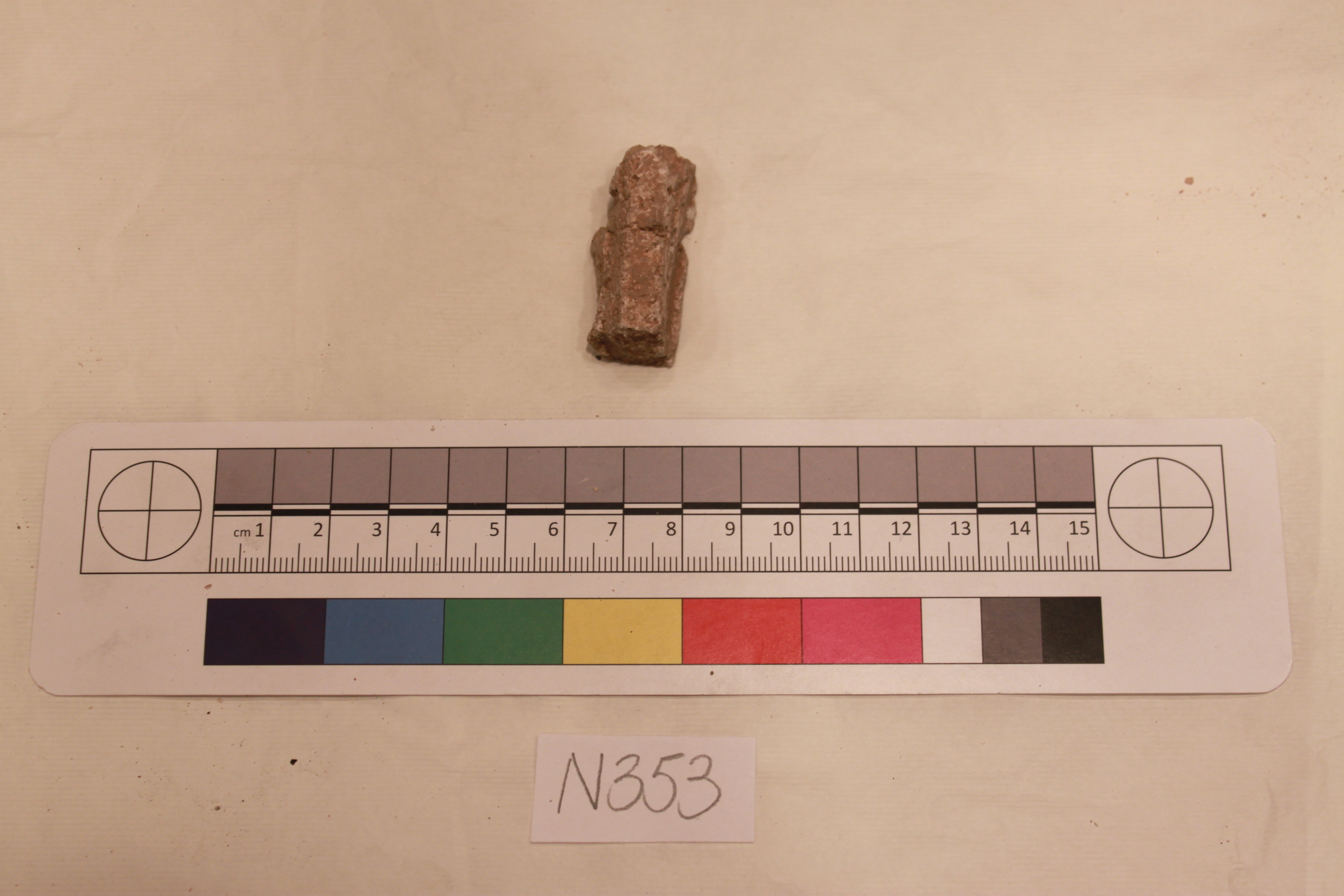
Strategic Heritage Asset Analysis: Carved Stucco Fragment from an Ancient Civilization
Executive Summary
This paper examines a carved stucco fragment originating from an Ancient Civilization, held within the Katherine Fashion Lab heritage research archive as a standalone asset. The fragment—a molded and incised plasterwork surface bearing ornamental relief—represents one of the most strategically versatile material records in the ancient world. Stucco was not merely a finishing medium; it was a technology of transformation, allowing civilizations to render impermanent surfaces with the visual authority of carved stone. For Katherine Fashion Lab, the fragment offers a dual value proposition: a deep well of symbolic and spiritual meaning to inform narrative, and a formal vocabulary of relief, matte texture, and architectural adornment directly translatable into 2026 luxury strategy.
Materiality and Cultural Context
Stucco—lime plaster mixed with sand, marble dust, or organic binders and applied in layers before carving or molding—was the preferred medium of adornment across the ancient world, from the stucco reliefs of the Gandhara region to the molded friezes of the Mediterranean and the elaborate muqarnas of later Islamic architecture. Its economic logic was significant: stucco democratized ornament. A civilization could clad mud-brick, timber, or rough stone in a skin of refined decoration, projecting wealth, piety, and imperial ambition at a fraction of the cost of marble or alabaster.
The fragment under review carries the characteristic evidence of this process: layered application, tooled incision, and a surface patina that records centuries of exposure. Its relief work suggests it once formed part of a larger program—a wall panel, a niche, a temple interior, or a palatial façade. In its original context, it was never intended to be viewed in isolation; it was a component of an immersive visual environment designed to overwhelm and persuade the viewer.
Symbolic Power and Historical Adornment
Carved stucco in the ancient world was rarely decorative in the modern sense. It was communicative infrastructure. Relief panels encoded cosmology, dynastic legitimacy, and ritual narrative. Floral and vegetal motifs—lotus, vine, palmette—signaled abundance and regeneration. Geometric bands ordered space and signaled the threshold between the profane and the sacred. Figurative reliefs, where present, positioned rulers and deities within a hierarchy of scale and placement that viewers read instinctively.
The fragment's symbolic power lies in this duality: it is both ornament and argument. Its carved surface was designed to catch raking light, producing shadow and depth that animated the wall and gave it a quality of living presence. This is a critical insight for luxury strategy. Ancient stucco artisans understood that adornment is not surface—it is atmosphere. The fragment is therefore not a relic of decoration but a relic of experiential design, an early technology of brand environment.
Spiritual Meaning and Ritual Function
Stucco's spiritual significance is inseparable from its material humility. Because it could be applied to any substrate, it was used to consecrate spaces of every economic tier—from imperial sanctuaries to domestic shrines. In many ancient traditions, the application of plaster was itself a ritual act: the smoothing of rough walls preceded consecration, and the carving of sacred motifs transformed a constructed space into a dwelling fit for the divine.
The fragment thus carries what we may term consecrated labor—the accumulated intention of artisans who worked within ritual frameworks. Its spiritual meaning is not merely iconographic but procedural. This distinction matters for the 2026 luxury landscape, where consumers increasingly seek objects and experiences that carry evidence of intentional, slow, and meaningful making rather than purely industrial finish.
Strategic Implications for 2026 High-End Luxury
Three strategic vectors emerge from this fragment for Katherine Fashion Lab.
First, the aesthetics of relief and matte surface. The 2026 luxury cycle is moving away from high-gloss, digitally perfect surfaces toward tactile, matte, and hand-evidenced textures. Carved stucco offers a formal language of low-sheen depth, shadow, and dimensional ornament that translates directly into leather embossing, jacquard relief, molded hardware, and architectural accessories. The fragment is a design brief for tactile authority.
Second, the narrative of transformation. Stucco's core proposition—elevating the ordinary into the monumental—is a powerful brand metaphor. Katherine Fashion Lab can position collections around the idea of surfacing: the application of meaning, craft, and symbolic order onto everyday materials. This aligns with the growing luxury demand for provenance-rich storytelling over logo-driven signaling.
Third, spiritual and ritual resonance. The fragment's association with consecration and sacred space supports a strategy of quiet transcendence—objects and garments designed as personal sanctuaries rather than public spectacles. In a 2026 market defined by digital fatigue and authenticity-seeking, this positioning is defensible and differentiated.
Recommendation
Katherine Fashion Lab should treat the Carved Stucco Fragment as a category-defining heritage asset rather than a supplementary reference. Recommended actions include: commissioning high-resolution photogrammetry to extract relief patterns for textile and hardware development; developing a capsule narrative around "Surfacing" that links ancient stucco technique to modern material innovation; and positioning the fragment within the Lab's standalone research portfolio as a case study in how adornment functions as symbolic power. The fragment is not a fragment. It is a strategic blueprint for luxury that remembers why ornament mattered in the first place.