Katherine Fashion Lab — Couture Analysis Series
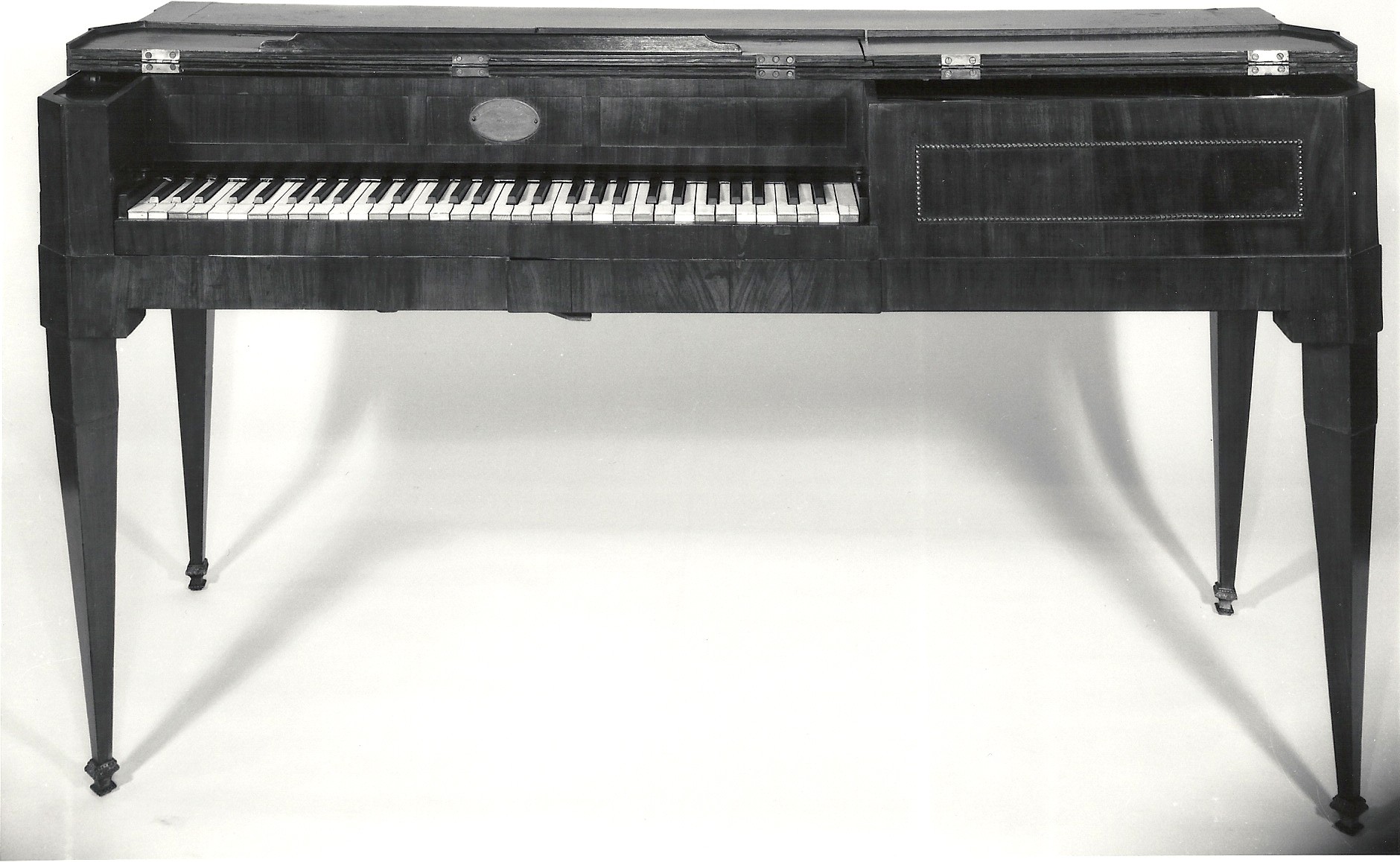
Object of Study: The Austrian Square Piano
Classification: Standalone Study — Historical Instrument as Couture Artifact
Origin: Austria (Viennese School)
Materials: Mahogany, mahogany veneer, brass, iron, ivory, ebony, parchment, various materials
At Katherine Fashion Lab, our analytical practice treats the decorative arts not as passive historical residue but as active systems of design intelligence. The Austrian square piano, examined here as a standalone study, exemplifies how furniture and instrument-making traditions converge into a single object of extraordinary material sophistication. Produced during the late eighteenth and early nineteenth centuries, when Vienna stood at the epicenter of European musical and cabinetmaking culture, the square piano represents a synthesis of acoustic engineering, veneer craft, and ornamental restraint that continues to inform contemporary couture thinking about form, surface, and structural honesty.
Historical Provenance and Cultural Positioning
The square piano emerged from the broader European enthusiasm for domestic music-making, a cultural phenomenon that positioned the instrument as both a functional device and a statement of social refinement. In Austria, and particularly in Vienna, the instrument found its most articulate expression through makers who absorbed the city's dual inheritance: the precision of Germanic mechanics and the ornamental sensibility of Habsburg court culture. Unlike the grand piano, which asserted itself as a monumental object, the square piano occupied a more intimate register. It was furniture as much as instrument, designed to sit within the salon, the study, and the private apartment of the cultivated bourgeoisie and aristocracy alike.
This positioning is critical to our analysis. The square piano was never merely a tool for sound production; it was a carefully calibrated object of interior design, subject to the same aesthetic judgments applied to commodes, writing desks, and card tables. Its proportions were governed by the spatial logic of the domestic room, and its surfaces were treated with the same care as the finest Viennese cabinetry. In this sense, the Austrian square piano anticipates the modern couture principle that an object's functional identity and its visual identity are inseparable.
Material Composition as Design Language
The material inventory of the Austrian square piano reads as a lexicon of luxury and utility. Mahogany and mahogany veneer form the primary structural and decorative envelope, chosen for their density, dimensional stability, and deep reddish-brown figure. Mahogany was not merely a practical selection; it was a statement of access to global trade networks and a marker of refined taste. The veneer work, often executed with book-matched panels, transforms the instrument's case into a continuous field of figured grain, a technique that parallels the couturier's use of directional fabric to sculpt the body.
Brass and iron introduce a contrasting metallic register. Brass appears in hinges, nameplates, and decorative inlay, while iron serves the internal mechanism, including the string plate and tuning pins. The juxtaposition of warm organic wood and cool industrial metal creates a material dialectic that would later echo through modernist furniture and contemporary accessory design. At Katherine Fashion Lab, we read this as an early instance of mixed-material composition, where each element is selected not only for performance but for its capacity to articulate structure and ornament simultaneously.
The presence of ivory and ebony is particularly significant. These materials, sourced through complex and often ethically fraught supply chains, were reserved for the keyboard itself and for fine inlay. Ivory provided the tactile interface between performer and instrument, while ebony offered visual contrast and durability. In couture terms, this is the equivalent of using exotic skins or rare fibers at the point of contact between garment and wearer. The keyboard becomes a zone of intimacy, where material choice directly mediates the sensory experience of performance.
Parchment and various materials complete the inventory. Parchment was frequently used for the nameboard or for decorative panels, offering a smooth, pale surface for inscriptions and painted ornament. The catch-all category of "various materials" acknowledges the reality of historical objects: they are palimpsests of repair, adaptation, and regional variation. Felt, leather, wire, and wood of secondary species all play supporting roles, reminding us that couture analysis must attend to the invisible as well as the visible.
Construction Techniques and Structural Logic
The Austrian square piano is a study in joinery and tension management. The case is typically constructed with dovetail and mortise-and-tenon joints, reinforced by glue and internal bracing. The soundboard, a thin sheet of spruce or similar resonant wood, is tensioned against the strings, creating a system of balanced forces that mirrors the couturier's manipulation of fabric grain and interfacing. The iron plate, where present, distributes the immense tension of the strings, preventing the case from warping under load. This is structural engineering as design philosophy: strength achieved through material intelligence rather than mass.
The veneer work deserves particular attention. Viennese cabinetmakers were masters of the technique, applying thin slices of mahogany to a substrate of pine or oak. The veneer was then polished to a high sheen, often with a French polish of shellac, creating a surface that was both protective and visually seductive. In couture terms, this is the equivalent of a perfectly finished seam or a hand-rolled hem: invisible labor that produces visible elegance. The brass hardware, frequently cast and chased by hand, adds a final layer of ornament that is both functional and decorative.
Ornamentation and the Aesthetics of Restraint
Austrian square pianos are characterized by a distinctive ornamental restraint. Unlike the more exuberant English or French models, which often featured heavy carving and gilded excess, the Viennese instrument favored clean lines, subtle inlay, and a reliance on the natural beauty of the wood. Brass stringing, geometric marquetry, and occasional painted medallions provide focal points without overwhelming the overall composition. This is the aesthetic of the Biedermeier sensibility: domestic, intimate, and quietly confident.
At Katherine Fashion Lab, we interpret this restraint as a form of luxury. True couture does not shout; it whispers through the quality of its materials and the precision of its execution. The Austrian square piano embodies this principle. Its ornamentation is not applied as an afterthought but integrated into the structural and material logic of the object. The result is an instrument that functions as furniture, as sculpture, and as a vehicle for music, without ever sacrificing one identity for another.
Legacy and Contemporary Relevance
The Austrian square piano may no longer occupy the center of the concert stage, but its design intelligence remains profoundly relevant. Contemporary fashion and furniture designers continue to grapple with the same questions that Viennese makers answered: how to balance function and beauty, how to select materials that age with dignity, and how to create objects that reward sustained attention. The square piano's use of mahogany veneer anticipates modern composite techniques; its brass and iron hardware prefigures industrial design's embrace of mixed materials; its ivory and ebony keyboard speaks to the enduring human desire for tactile luxury.
As a standalone study, the Austrian square piano offers Katherine Fashion Lab a rich case for analysis. It is an object that refuses to be reduced to a single category. It is instrument, furniture, and artwork simultaneously. It is a product of global trade and local craft. It is a testament to the idea that couture is not confined to clothing but extends to any object where material, form, and function are brought into deliberate harmony. In this sense, the square piano is not a historical curiosity but a living lesson in design excellence.
Katherine Fashion Lab — Couture Analysis Series
Standalone Study: Austrian Square Piano