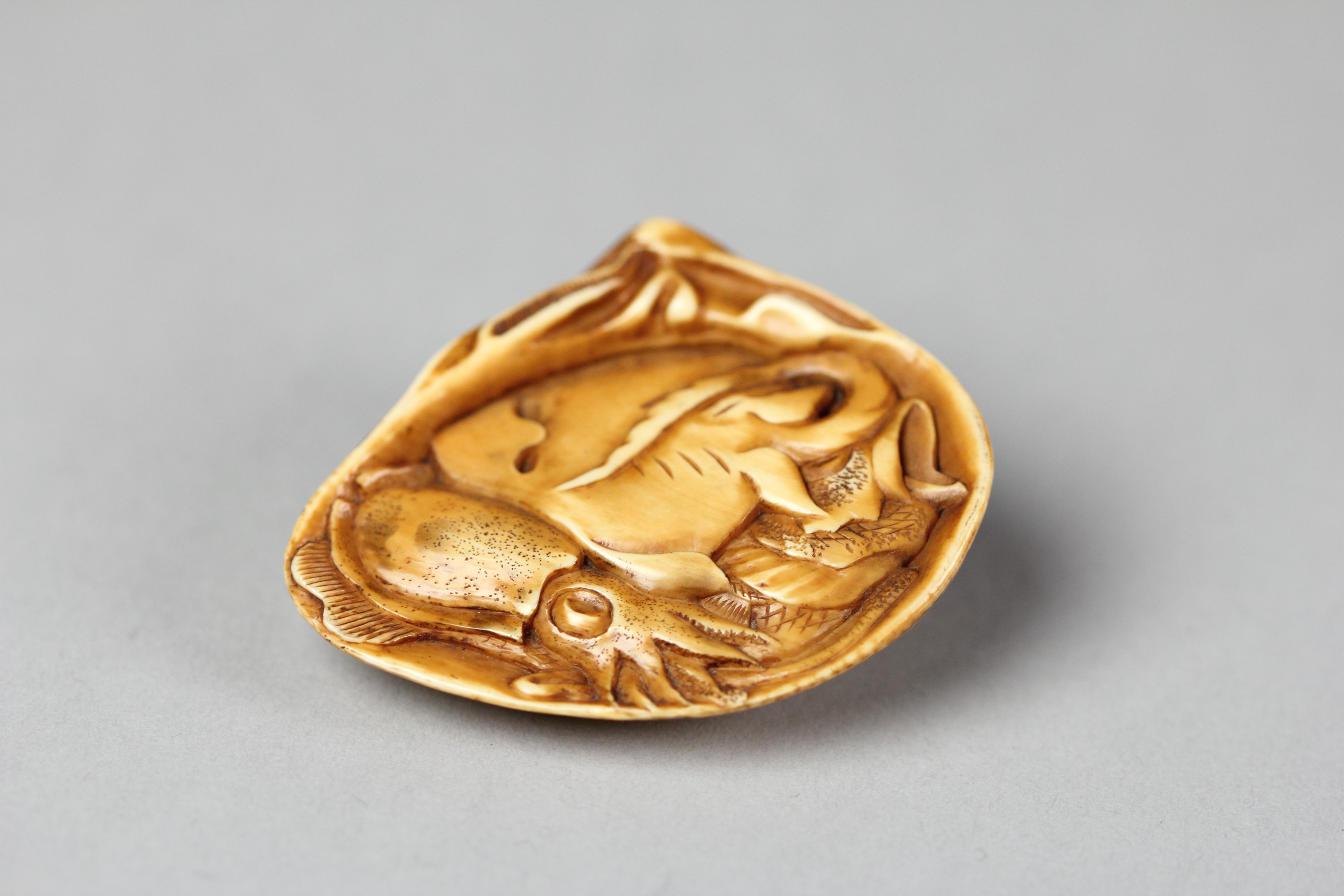
Heritage Analysis: Netsuke of Shell — Japanese Ivory Miniature as Symbolic Capital
Introduction: The Object as Strategic Asset
Within the Katherine Fashion Lab archive, the netsuke of shell occupies a category of objects that resist easy categorization: at once functional fastener, sculptural miniature, and spiritual talisman. Carved from ivory during Japan's Edo period (1603–1868), this small toggle — typically no larger than a few centimeters — anchored the inrō (medicine case) or kinchaku (drawstring pouch) to a kimono sash via a cord. Yet its materiality and iconography carry disproportionate cultural weight. For a 2026 luxury strategy, the netsuke of shell is not merely an antique; it is a compressed narrative of Japanese cosmology, craftsmanship hierarchy, and the aesthetics of concealment. This analysis examines its symbolic power, historical adornment function, spiritual meaning, and implications for high-end positioning.
Symbolic Power: The Shell as Cosmological Vessel
In Japanese visual culture, the shell (kai) operates on multiple symbolic registers. The bivalve shell — particularly the clam or oyster — is associated with the shinju (pearl), a symbol of purity, hidden value, and the moon. In Shinto cosmology, shells were used in divination and purification rites; the kaimyō (posthumous Buddhist name) echoes this association with transition. A netsuke carved as a shell thus condenses several meanings: the protective enclosure of the womb, the treasure concealed within the mundane, and the impermanence of the tide's retreat.
For the Edo-period merchant or samurai who wore it, the shell netsuke signaled erudition. It referenced classical poetry — the Man'yōshū and Kokinshū contain numerous shell metaphors — and demonstrated the wearer's participation in a literate, allusive culture. This is symbolic capital in the Bourdieusian sense: the object's value derived not from ivory's cost alone but from the wearer's ability to decode its references. In a 2026 luxury context, this translates to a consumer who seeks intellectual provenance over logo recognition — the quiet connoisseur who values the story behind the surface.
Historical Adornment: Function, Restraint, and the Art of Concealment
The netsuke emerged from necessity. The kimono had no pockets; the inrō and pouch were suspended from the obi by a cord, and the netsuke served as a counterweight, preventing the cord from slipping. This functional origin is crucial to its aesthetic. Unlike the okimono (decorative figurine), the netsuke was worn, handled, and hidden beneath layers of silk. Its beauty was not for public exhibition but for the intimate knowledge of the wearer and the occasional glimpse during movement.
This aesthetics of concealment aligns with the Japanese principle of iki — a refined, understated sophistication that avoids ostentation. The shell netsuke, with its smooth curves and subtle ukiyo-e-inspired carving, exemplifies this. The ivory's patina — developed through decades of tactile interaction — became a record of the wearer's life. In luxury strategy, this suggests a model of tactile intimacy: objects designed for private pleasure rather than public display. For 2026, as digital saturation drives demand for physical authenticity, the netsuke's haptic history offers a blueprint for high-end accessories that reward touch and time.
Spiritual Meaning: Ivory, Transience, and the Sacred Miniature
Ivory in Japan carried complex spiritual associations. Imported from Southeast Asia and Africa via Nagasaki, it was a luxury material, but its use in netsuke was also practical: it was dense, carvable, and took a high polish. Yet the choice of ivory for a shell netsuke creates a material paradox — organic, animal-derived substance representing a marine organism. This layering resonates with Buddhist notions of mujō (impermanence) and the interconnectedness of all life. The shell, after all, is a discarded exoskeleton; the ivory, a tusk. Both are remnants, transformed by the carver's hand into a new entity.
Many shell netsuke incorporate himotoshi (cord holes) that double as natural openings in the shell's form, blurring the line between function and representation. Some feature inro or sagemono motifs, or depict the shell alongside seaweed, sand, or a small crab — a miniature landscape that invites contemplative viewing. This is not decoration for its own sake; it is a meditative device, a mono no aware (pathos of things) in the palm of the hand. For a luxury brand, this spiritual dimension offers a counter-narrative to excess: the object as a site of mindfulness, a talisman for the modern collector.
2026 Luxury Strategy: From Artifact to Narrative Capital
How should Katherine Fashion Lab translate the netsuke of shell into a 2026 high-end strategy? Three principles emerge:
1. Narrative Scarcity. The netsuke's value lies in its specificity — a single carver, a single shell, a single moment of wear. Luxury in 2026 will be defined by narrative scarcity: not mass exclusivity, but the impossibility of replication. A contemporary collection inspired by netsuke should emphasize one-of-a-kind or limited-edition pieces, each with a documented provenance and symbolic lexicon.
2. Tactile and Concealed Design. The netsuke's genius is that it is felt before it is seen. High-end accessories — small leather goods, jewelry, even tech cases — can adopt this principle: hidden compartments, weighted materials, surfaces that reward touch. The shell motif suggests protective elegance: a case that opens like a bivalve, a clasp that mimics the hinge.
3. Ethical Materiality. Ivory is now restricted under CITES and public opinion. A 2026 strategy must engage with this legacy critically. The netsuke of shell can be reinterpreted in alternative ivories — tagua nut, vegetable ivory, or recycled marine plastics — with full transparency about the original's problematic material. This positions the brand as a steward of heritage, not a perpetuator of harm.
Finally, the shell netsuke teaches the luxury of the small. In an era of oversized logos and digital spectacle, the miniature commands attention through intimacy. Katherine Fashion Lab can build a capsule collection around the netsuke's scale: objects that fit in the palm, that carry centuries of meaning, that ask the wearer to slow down and decode. That is not nostalgia; it is a forward-looking strategy for a consumer who values depth over display.
Conclusion: The Shell as Strategic Compass
The netsuke of shell is a masterclass in compressed meaning. It unites symbolic power (the shell as cosmological vessel), historical adornment (the functional toggle as concealed art), spiritual resonance (ivory and transience), and luxury strategy (narrative scarcity, tactile intimacy, ethical reinvention). For Katherine Fashion Lab, it offers a compass for 2026: design objects that are worn, handled, and known — not merely seen. In the shell's spiral, we find the curve of a brand that respects the past while carving its own future.