Channel Markers (Miotsukushi): From Heian Ritual to 2026 Luxury Signal
Introduction: The Semiotics of the Channel
In the fifty-fourth chapter of The Tale of Genji, Murasaki Shikibu introduces an image of profound economy: the miotsukushi, or channel markers, planted in the shallows of Naniwa Bay to guide vessels through shifting tides. These stakes—wooden, weathered, and unadorned—serve a single function: to mark the navigable path where the water conceals danger. Within the narrative, the markers appear as a poetic metaphor for enduring fidelity and the quiet labor of guidance. For Katherine Fashion Lab, the miotsukushi offers a strategic heritage asset: a symbol of unobtrusive authority, rooted in Heian court culture and materialized in the handscroll medium. This analysis examines the symbolic power, historical adornment, spiritual meaning, and 2026 luxury strategy embedded in this motif, with particular attention to the ivory roller knobs that frame its physical presentation.
Symbolic Power: Guidance Without Spectacle
The miotsukushi’s primary symbolic power lies in its paradoxical visibility. The markers are not monuments; they are functional, repetitive, and submerged for much of the tidal cycle. They do not command the horizon like a lighthouse or a temple gate. Instead, they operate at the threshold of perception—seen only when the water recedes, trusted when it does not. In the Heian court, where aesthetic refinement (miyabi) and emotional restraint (mono no aware) governed social conduct, the channel marker became a vehicle for expressing steadfastness without declaration. Genji’s own exile and return mirror the tide: the marker remains fixed while the waters move. For a luxury brand, this translates into a rare form of prestige—authority that does not announce itself. The miotsukushi suggests that true guidance is structural, not performative; it is embedded in the landscape rather than imposed upon it.
Historical Adornment: The Handscroll and the Ivory Roller
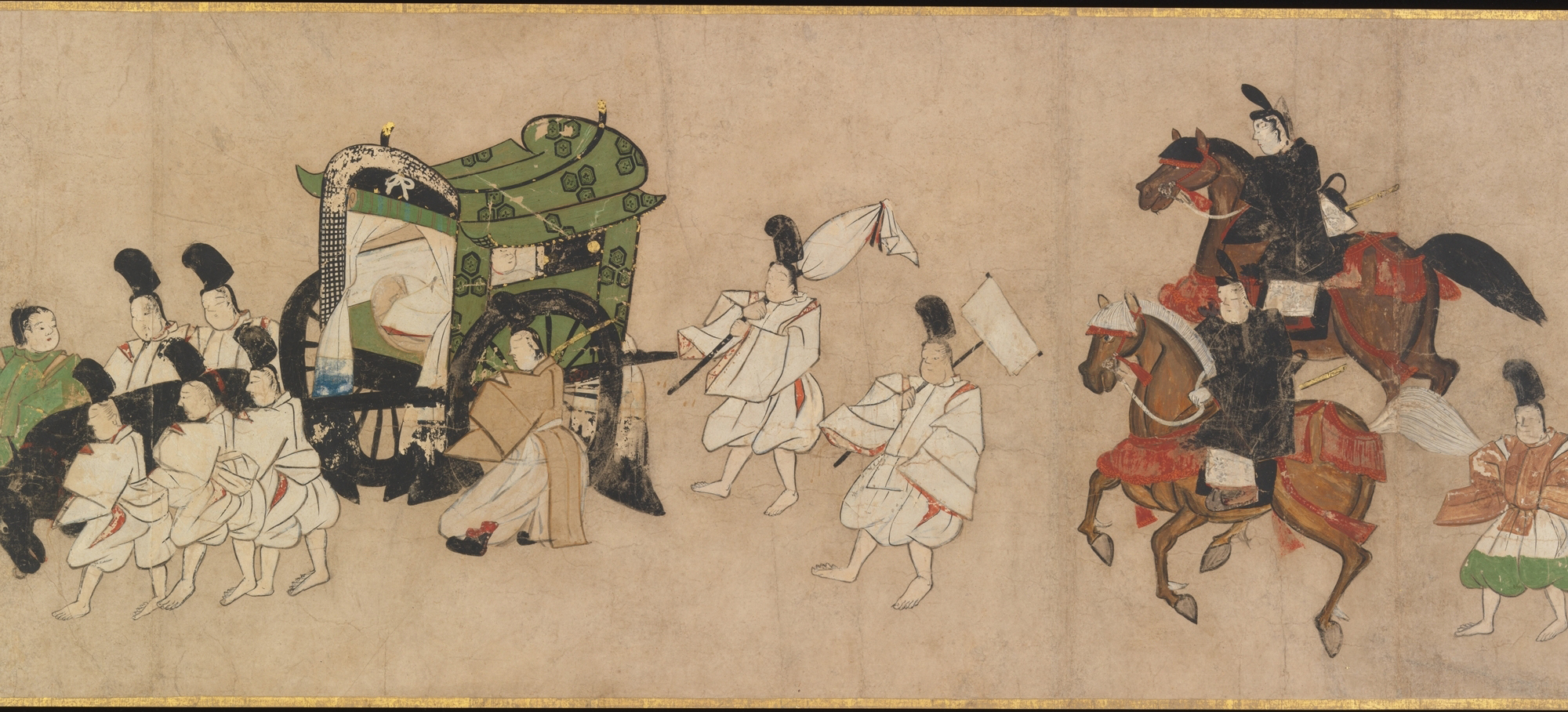
The medium of the handscroll (emakimono) is itself an act of adornment. Ink and color on paper allow the miotsukushi to be depicted not as isolated icons but as part of a continuous visual narrative—shoreline, reeds, water, and distant boats. The viewer unrolls the scroll section by section, experiencing the markers in sequence, much as a traveler would encounter them along a coast. This sequential intimacy is a form of luxury that resists the instantaneous image. The roller knobs, carved from Asian elephant ivory, elevate the object from illustration to ceremonial artifact. In Heian and later Edo-period mounting traditions, ivory knobs were reserved for scrolls of high status, their smooth coolness and dense weight signaling permanence. The elephant—an animal foreign to Japan but known through trade and Buddhist iconography—lends the scroll a cosmopolitan dimension. The ivory is not merely decorative; it is a tactile contract between the viewer and the represented world. To hold the roller is to touch the channel marker’s material cousin: dense, enduring, and shaped by forces beyond the immediate scene.
Spiritual Meaning: The Marker as Vow
In Japanese Buddhist and Shinto contexts, channel markers carry a votive quality. They are often erected as offerings, inscribed with prayers for safe passage, and maintained by local communities as acts of merit. The miotsukushi in Genji resonates with the bodhisattva vow—to remain in the world’s currents until all beings reach the far shore. The marker does not cross the water; it stays. This spiritual resonance gives the motif a devotional gravity that distinguishes it from secular wayfinding. For a luxury house, the spiritual dimension offers a counterweight to the transactional logic of fashion. It suggests that heritage objects can function as vessels of intention, not merely as symbols of taste. The ivory roller knobs, in this reading, are not ornaments but seals—material witnesses to a vow of guidance that outlasts any single tide.
2026 Luxury Strategy: Channel Markers as Brand Architecture
As Katherine Fashion Lab positions itself for 2026, the miotsukushi offers a strategic framework for quiet luxury with deep roots. Three applications emerge:
1. Navigational Identity: The brand can adopt the channel marker as a recurring motif—not as a logo, but as a structural principle. Collections, campaigns, and client experiences can be organized around the idea of marking safe passage through complexity. This resonates with high-net-worth consumers who seek guidance without intrusion in an era of information overload.
2. Material Ethics and the Ivory Question: The presence of elephant ivory in the historical object demands a forward-looking response. For 2026, the strategy should be substitution with reverence: use the ivory roller as a reference point for material innovation—plant-based composites, recycled resins, or certified alternatives that mimic ivory’s density and coolness. The narrative becomes one of preservation through evolution, aligning luxury with ecological responsibility without erasing the past.
3. Sequential Storytelling: The handscroll’s unrolling rhythm can inform digital and physical retail. Rather than presenting a full collection at once, the brand can release chaptered narratives—each a marker in the client’s journey. This builds anticipation and intimacy, two currencies of 2026 luxury.
Conclusion: The Marker and the Tide
The miotsukushi endures because it does not resist the water; it works with it. For Katherine Fashion Lab, this Heian motif is not a relic but a strategic compass. It teaches that symbolic power can be quiet, that adornment can be tactile and ethical, that spiritual meaning can anchor commercial identity, and that the most sophisticated luxury is the kind that helps others find their way. In 2026, the brands that thrive will be those that plant markers—not monuments—and trust the tide to reveal them.