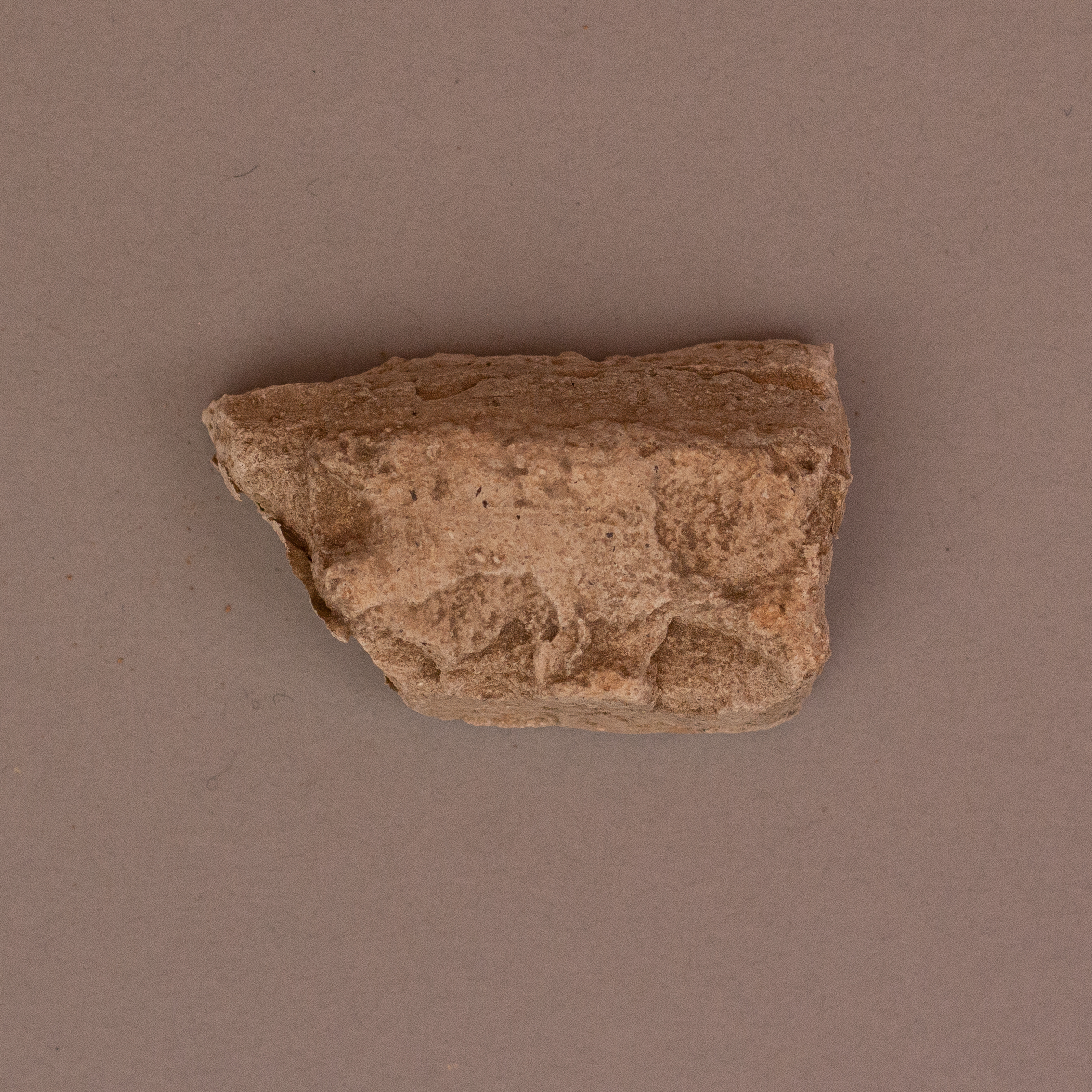
Stucco Fragment: Symbolic Power and the Architecture of Belief in Ancient Civilization
Introduction: The Fragment as Strategic Artifact
Among the most instructive objects surviving from Ancient Civilization is a carved and painted stucco fragment—a modest shard of mortar that once belonged to a larger architectural or devotional surface. For Katherine Fashion Lab, this fragment is not merely an archaeological curiosity but a strategic case study in how material, image, and belief converge to produce enduring symbolic capital. Stucco, a composite of lime, sand, and water, was the ancient world's most versatile medium for translating ideology into visible form. It could be molded into relief, incised with linear detail, and painted in mineral pigments, allowing artisans to render deities, rulers, and sacred narratives with an immediacy that stone and metal could not match. The fragment under analysis therefore represents a critical intersection: the technology of adornment, the grammar of spiritual meaning, and the political economy of display.
Materiality and the Technology of Adornment
Stucco's significance begins with its material properties. Unlike marble or granite, stucco is additive and plastic; it is applied, modeled, and finished by hand. This makes it a medium of intervention, capable of transforming plain walls into surfaces of elaborate symbolic program. In Ancient Civilization, stucco was used to coat temple interiors, palace facades, and funerary chambers, where carved reliefs and painted polychromy created immersive environments. The fragment's surviving surface—whether bearing the curve of a garment, the contour of a face, or the edge of a geometric border—attests to a sophisticated division of labor: plasterers, carvers, and painters worked in sequence to produce a unified visual statement. For luxury strategy, this is a foundational insight. Adornment in the ancient world was never merely decorative; it was a technology of persuasion, binding the viewer to a cosmological order through the senses.
Symbolic Power: Image, Authority, and the Sacred
The symbolic power of the stucco fragment lies in its capacity to encode hierarchy and divinity. In many Ancient Civilizations, stucco reliefs depicted rulers in proximity to gods, a visual formula that legitimized political authority by associating it with the sacred. The fragment may preserve a fragment of that formula: a hand raised in blessing, a crown or headdress, a lotus or rosette, or a stylized eye. Each motif carried a specific semantic charge. The eye, for example, signified divine watchfulness; the rosette, renewal and celestial order; the raised hand, intercession or command. Because stucco was painted, color added another layer of meaning. Pigments such as ochre, cinnabar, and Egyptian blue were not chosen arbitrarily; they corresponded to elemental and spiritual categories—red for vitality and blood, blue for the heavens, white for purity, black for fertility and resurrection. The fragment thus functioned as a compressed symbolic system, legible to initiates and awe-inspiring to the uninitiated.
Historical Adornment and the Body Politic
Stucco's relationship to the body is indirect but profound. The same techniques used to model divine flesh on temple walls were applied to the adornment of the living: stucco-like plasters were used in cosmetic and funerary practices, and the carved reliefs of rulers often depicted them wearing textiles, jewelry, and regalia that mirrored actual court dress. The fragment therefore belongs to a broader history of adornment in which architecture, body, and image were mutually reinforcing. In Ancient Civilization, to be adorned was to be classified—by rank, by gender, by ritual status. The stucco surface translated that classification into permanent form, creating a visual archive of social order. For a contemporary luxury house, this suggests that adornment is never neutral; it is a language of belonging and distinction, and its most powerful expressions are those that connect the wearer or viewer to a larger narrative of meaning.
Spiritual Meaning: The Fragment as Threshold
Spiritually, the stucco fragment occupies a liminal position. It was part of a surface that separated the mundane from the sacred—the outer wall of a sanctuary, the inner face of a tomb, the backdrop of a cult image. Its carved and painted imagery mediated between the human and the divine, offering a point of contact for prayer, offering, and contemplation. Even in fragmentary form, it retains what we might call an aura of threshold: the sense that it once stood at a boundary between worlds. This is precisely the quality that high-end luxury seeks to evoke in 2026: not mere ornament, but access. The most successful luxury objects are those that feel like portals—into heritage, into craft, into a version of the self that is more cultivated, more connected, more complete.
Strategic Implications for 2026 High-End Luxury
For Katherine Fashion Lab, the stucco fragment offers a strategic template for 2026 luxury strategy. First, it validates a return to material intelligence: clients increasingly value objects whose making is legible, whose surfaces reveal the hand of the artisan, and whose materials carry historical depth. Stucco's composite nature—earth, fire, pigment—can inspire capsule collections that foreground tactile, layered surfaces, from embossed leather to hand-painted silks. Second, the fragment supports a narrative of symbolic power. In a market saturated with logo-driven luxury, the deeper opportunity lies in motifs that carry meaning: the eye, the rosette, the hand, the threshold. These can be abstracted into proprietary codes that reward the informed client. Third, the fragment's spiritual dimension aligns with the experiential and ritual turn in luxury. Consumers in 2026 seek products that function as anchors—objects of contemplation, markers of transition, talismans of identity. A collection built around the stucco fragment's logic would not simply sell adornment; it would sell participation in an ancient grammar of belief.
Conclusion: From Shard to Strategy
The stucco fragment is a reminder that luxury's deepest resource is not novelty but continuity. Ancient Civilization used stucco to make power visible, to give form to the sacred, and to adorn the body politic with images of order. Katherine Fashion Lab can translate that inheritance into a 2026 strategy that is materially grounded, symbolically rich, and spiritually resonant. The fragment is small, broken, and mute—yet it speaks to the enduring human need to carve meaning into surfaces and to wear that meaning as a form of belonging. In the hands of a heritage-led luxury house, it becomes not a relic but a blueprint.