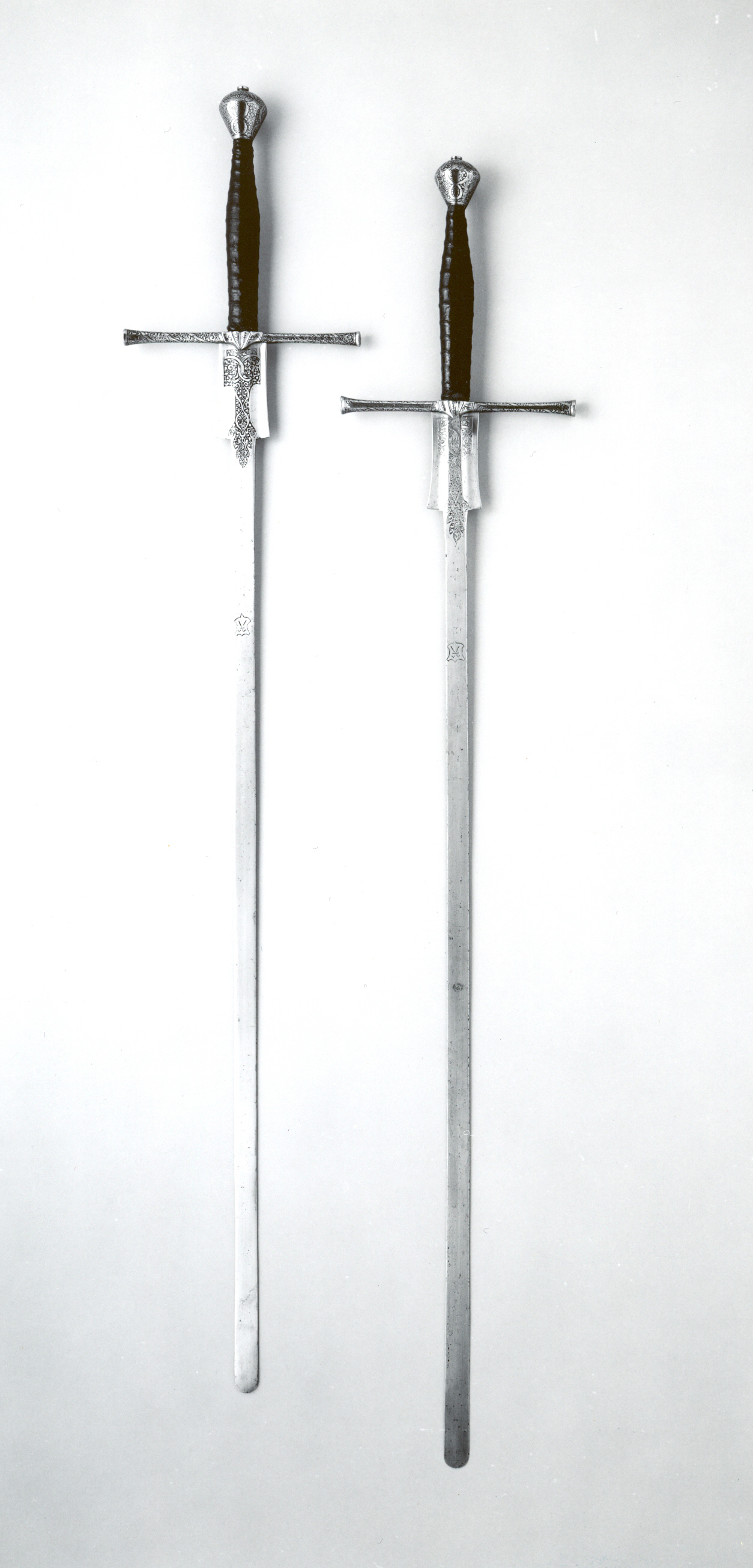
Heritage Analysis: The Munich Practice Sword — Steel, Leather, Wood, and Brass as Instruments of Discipline and Distinction
Within the curatorial framework of Katherine Fashion Lab, the object under examination is a German practice sword (Übungsschwert) originating from Munich, composed of steel, leather, wood, and brass. Unlike the ceremonial parade blade or the battlefield longsword, the practice sword occupies a liminal space in material culture: it is at once a tool of pedagogy, a vessel of martial discipline, and a quiet emblem of civic identity. For a luxury house preparing its 2026 strategic positioning, this object offers a rare convergence of symbolic power, historical adornment, spiritual meaning, and commercial narrative potential. The following analysis evaluates the practice sword not as an antique curiosity but as a strategic asset — a heritage signifier capable of anchoring a high-end collection in authenticity, rigor, and restrained authority.
Historical Context and the Munich Tradition
Munich's relationship with the sword is inseparable from its identity as a center of Bavarian military, academic, and guild culture. From the medieval Fechtschulen (fencing schools) to the nineteenth-century Turnverein movement, the city cultivated a structured tradition of martial practice in which the sword functioned as both instrument and instructor. Practice swords were deliberately unsharpened, weighted to simulate combat, and frequently constructed with a wooden or leather-wrapped grip, a brass pommel, and a steel blade of reduced lethality. This functional restraint is precisely what elevates the object culturally: it represents the triumph of discipline over violence, of technique over brute force.
Munich's artisan guilds, particularly those associated with the armorers and cutlers of the Bavarian court, produced practice weapons with a craftsmanship that blurred the line between utility and ornament. Brass fittings were often engraved; leather scabbards were tooled with geometric or heraldic motifs; wooden grips were selected for grain and balance. The practice sword thus became a site of historical adornment — an object that performed a pedagogical function while simultaneously signaling the wearer's membership in a disciplined elite.
Symbolic Power: The Sword as Moral and Social Signifier
The symbolic power of the sword in Western culture is well documented, but the practice sword introduces a critical nuance. Where the combat sword symbolizes victory and the ceremonial sword symbolizes status, the practice sword symbolizes becoming — the ongoing pursuit of mastery. This distinction is strategically valuable for a luxury brand. In an era when consumers increasingly reject overt displays of wealth in favor of narratives of self-cultivation, the practice sword offers a symbol of earned authority rather than inherited privilege.
In the Munich context, this symbolism was reinforced by the city's academic fencing tradition. Student corporations (Studentenverbindungen) employed practice swords in Mensur training, where controlled confrontation was understood as a rite of character formation. The blade was not meant to kill but to educate; the scar was not a wound but a credential. For Katherine Fashion Lab, this translates into a powerful brand proposition: luxury as a discipline, not a decoration.
Historical Adornment: Materiality as Narrative
The four materials of the Munich practice sword — steel, leather, wood, and brass — form a material hierarchy that is itself a design language. Steel represents precision and modernity; leather represents tactility and the body; wood represents organic tradition and warmth; brass represents permanence and the patina of time. This quartet is remarkably aligned with 2026 luxury sensibilities, which favor material honesty, tactile contrast, and objects that age visibly and gracefully.
Brass, in particular, deserves strategic attention. Unlike gold, which signals ostentation, brass signals utility refined into elegance. Its tendency to oxidize — to develop a living surface — aligns with the luxury market's growing interest in "slow objects" that record their own history. A Katherine Fashion Lab collection that incorporates brass hardware, leather-wrapped elements, and steel structural forms would be engaging in a direct material dialogue with the Munich practice sword, without resorting to literal reproduction.
Spiritual Meaning: Discipline, Liminality, and the Inner Citadel
Beyond the martial and the social, the practice sword carries a spiritual dimension rooted in the European monastic and chivalric traditions. The sword in Christian iconography is often a symbol of the Word, of discernment, and of the inner struggle against vice. The practice sword intensifies this meaning: it is the sword of the novitiate, the tool of the unformed self. In Munich's fencing halls, the repetitive drills of the practice sword functioned as a form of embodied meditation — a physical rosary of parries and thrusts.
For a luxury brand in 2026, this spiritual resonance offers a counter-narrative to the anxiety of disposability. The practice sword suggests that true luxury is not the possession of the perfect object but the practice of becoming worthy of it. This is a message that resonates with a generation of consumers seeking meaning, ritual, and self-improvement through their purchases.
2026 High-End Luxury Strategy: From Artifact to Architecture
The strategic application of the Munich practice sword for Katherine Fashion Lab should follow three principles. First, translation over replication: the sword's proportions, material hierarchy, and functional restraint should inform silhouettes, hardware, and accessories without producing costume. A leather-wrapped handle may become a bag strap; a brass pommel may become a clasp; a steel blade may become a linear architectural detail in a garment.
Second, narrative specificity: the brand should own the Munich provenance, collaborating with Bavarian archives and artisans to produce a limited-edition capsule that includes a heritage publication, a material study, and a small number of objects that embody the practice sword's ethos. This is not merchandising; it is curatorial commerce.
Third, ritual integration: the practice sword's spiritual dimension should be activated through brand experiences — salons, fencing demonstrations, or atelier workshops — that position Katherine Fashion Lab as a custodian of disciplined luxury. The goal is not to sell a sword but to sell the practice of discernment.
Conclusion
The Munich practice sword is a deceptively modest object. It lacks the glamour of the coronation sword and the drama of the battlefield blade. Yet precisely because of its restraint, it offers a sophisticated heritage platform for Katherine Fashion Lab. Its materials — steel, leather, wood, and brass — are the materials of enduring luxury. Its symbolism — discipline, becoming, and earned authority — is the symbolism of the next luxury consumer. Its spiritual meaning — the inner citadel — is the meaning that 2026 demands. Handled with curatorial intelligence, the practice sword can become not a relic but a blueprint: a heritage object that teaches a luxury house how to practice its own craft with rigor, restraint, and quiet power.