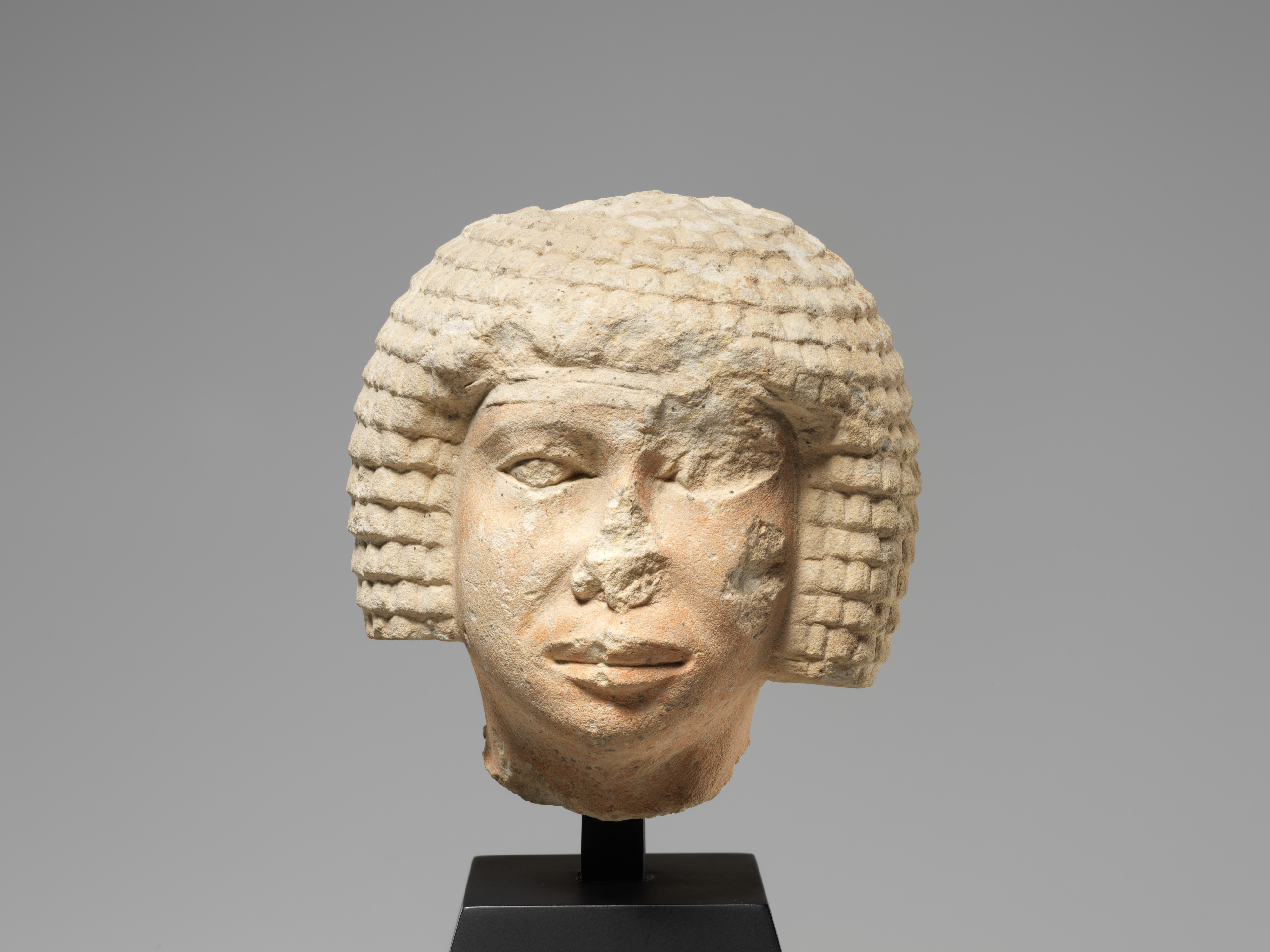
Heritage Asset Analysis: Male Head with a Short Wig, Possibly Pehenptah
Object Overview and Material Distinction
The Male Head with a Short Wig, Possibly Pehenptah represents a rare class of limestone portraiture from Ancient Egypt's Old Kingdom, tentatively dated to the Fifth Dynasty (circa 2465–2323 BCE). Carved from fine-grained limestone and retaining traces of original polychrome paint, the sculpture captures a male subject wearing a close-cropped wig—a style that, in Egyptian iconographic convention, signals administrative rank, ritual purity, and proximity to the royal court. The attribution to Pehenptah, a documented official of the period, remains scholarly conjecture rather than certainty, but this ambiguity itself constitutes a strategic asset: the object occupies a liminal space between named historical actor and universal archetype of ancient masculine authority.
From a curatorial standpoint, the limestone medium is significant. Unlike the harder granites and schists reserved for royal statuary, limestone was the preferred material for non-royal elite portraiture—private tombs, mortuary chapels, and administrative contexts. This distinction positions the object within a broader narrative of decentralized power: the visual language of kingship, adapted and appropriated by the bureaucratic class that sustained the Egyptian state.
Symbolic Power and the Grammar of the Short Wig
The short wig (often termed the "close-fitting" or "cap" wig) is not merely a grooming convention but a densely encoded symbol. In Old Kingdom relief and statuary, wig type functioned as a precise social marker. Long, layered wigs with intricate striations belonged to goddesses, queens, and certain high officials; the short wig, by contrast, communicated disciplined masculinity, professional competence, and ritual cleanliness. Priests shaved their heads for purity; officials wore close wigs to signal that same purity within a courtly rather than sacerdotal context.
The head's facial features—alert eyes, defined cheekbones, a firm but not aggressive jawline—participate in what Egyptologists call the "reserve head" aesthetic: a restrained, forward-looking gaze that projects eternal vigilance. This was not portraiture in the modern sense but a functional vessel for the ka (vital force) and ba (personality). The sculpture was designed to serve the deceased in the afterlife, ensuring that the senses remained intact and the identity persisted across the threshold of death.
Paint traces, though fragmentary, likely included ochre for skin tone, black for wig and eye cosmetics, and white for linen garments now lost. Each pigment carried cosmological weight: black (kem) signified fertility, regeneration, and the silt of the Nile; red-brown (desher) evoked the desert, virility, and the sun's power. The painted surface was therefore not decoration but ontological technology—a means of animating stone into a living presence.
Historical Adornment and the Politics of Self-Presentation
In Fifth Dynasty Egypt, the state was undergoing a subtle transformation. Royal pyramid construction was declining in scale relative to the Fourth Dynasty, while the cults of solar deities and the influence of provincial elites were rising. Officials like Pehenptah—if the attribution holds—operated within a system where personal monumentality became a vehicle for political legitimacy. Commissioning a limestone head was an act of strategic self-fashioning, a claim to permanence in a culture obsessed with the conquest of time.
The wig's texture, often rendered with fine parallel incisions, mimicked human hair while transcending its mortality. It was adornment as immortalizing technology. The same logic governed the use of kohl, amulets, and pleated linen: each element of the elite Egyptian wardrobe was a device for managing spiritual risk and projecting social capital. For a modern luxury house, this is the central historical insight: adornment in Ancient Egypt was never superficial. It was a contract with eternity.
Spiritual Meaning and the Afterlife Economy
Egyptian funerary practice operated on an elaborate economy of ma'at—cosmic order, truth, and balance. A sculpted head served multiple ritual functions: it could act as a substitute if the mummified body was destroyed, a focal point for offerings, or a residence for the ka during festival processions. The short wig, by covering the natural head, performed a kind of ritual standardization, stripping away individual idiosyncrasy to align the deceased with the eternal archetype of the "justified official."
This tension between individuality and archetype is precisely what makes the object compelling for contemporary heritage strategy. The face is specific enough to suggest a real person, yet generic enough to represent a class, a moment, a civilization. It is both portrait and prototype—a duality that luxury brands have long exploited in their own iconography of the "timeless" yet "personal" object.
Strategic Implications for 2026 High-End Luxury
As Katherine Fashion Lab positions itself within the heritage luxury segment, the Pehenptah head offers a blueprint for narrative-led product development. Three strategic vectors emerge:
1. Adornment as Spiritual Technology. The 2026 luxury consumer, particularly in the post-wellness economy, seeks objects that promise transformation rather than mere decoration. A jewelry or accessory line inspired by the short wig's symbolic purity—clean lines, ritual repetition, materials that age with dignity—can frame adornment as a daily practice of alignment and intention.
2. The Liminal Icon. The object's uncertain attribution is a feature, not a bug. Luxury marketing in 2026 thrives on open-ended provenance narratives that invite the client to co-author meaning. A campaign built around "the official whose name we almost know" speaks to the contemporary obsession with authenticity, ambiguity, and the archaeology of identity.
3. Material Honesty and the Ethics of Permanence. Limestone is humble, local, and durable. It does not shout. In an era of synthetic excess, the Pehenptah head models a luxury of restraint, provenance, and material truth. A Katherine Fashion Lab collection rooted in this ethic would prioritize traceable stone, hand-carved detail, and paint techniques that reference ancient polychromy without pastiche.
Finally, the object reminds us that power in ancient Egypt was worn. It was carved, painted, and placed upon the body and its substitutes. For a fashion house, this is the ultimate heritage argument: adornment is not peripheral to civilization. It is the interface between the human and the eternal. The Pehenptah head, silent for four millennia, still speaks that language—and the 2026 luxury market is listening.