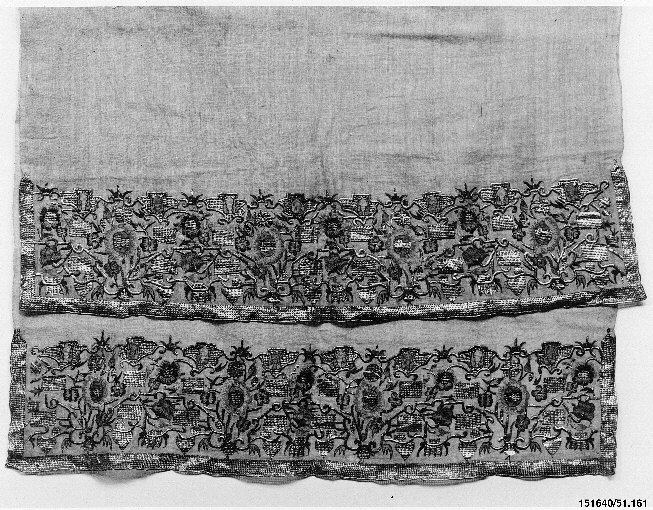
Towel as Couture Object: A Standalone Study in Cotton, Silk, and Metal-Wrapped Thread
The towel occupies a peculiar position within the hierarchy of textile artifacts. It is, by conventional measure, a utilitarian object—absorbent, unglamorous, and destined for the linen closet rather than the vitrine. Yet within the framework of global heritage textile practice, the towel reveals itself as a legitimate subject of couture analysis, an object whose material composition, embroidery, and ceremonial function intersect with the same aesthetic and technical traditions that govern high fashion. This standalone study examines the towel not as a domestic commodity but as a culturally encoded artifact, one that merits the same close reading we afford to a kimono, a shawl, or a bridal veil.
Katherine Fashion Lab approaches this object through a single, disciplined lens: the towel as a site of material convergence. Cotton forms its structural body; silk and metal-wrapped thread form its ornamental language. The tension between these registers—the humble and the precious—is precisely what makes the towel a compelling case for couture analysis.
Material Foundation: Cotton as Structural Ground
Cotton is the towel's foundational grammar. Its cellulose fiber offers absorbency, tensile strength, and a tactile neutrality that has historically positioned it as the democratic textile—accessible, washable, and endlessly reproducible. In the context of global heritage, however, cotton is never merely functional. Hand-spun and hand-woven cotton carries the fingerprint of its maker: irregular weft density, subtle slubs, and a slightly uneven hand that machine-loomed fabric cannot replicate.
In heritage towel traditions—from Anatolian peşkir to Ottoman havlu, from Japanese tenugui to Indian angavastram—cotton serves as the structural canvas upon which social meaning is embroidered. The weave itself becomes a text: a plain weave signals modesty and utility, while a more complex structure—herringbone, rib, or twill—signals ceremonial intent. The cotton ground is not passive; it is the substrate that determines how light, weight, and drape behave around the human body.
Silk and Metal-Wrapped Thread: The Ornamental Register
If cotton provides the towel's body, silk and metal-wrapped thread provide its voice. Silk embroidery introduces luminosity, fineness, and a chromatic range that cotton cannot achieve. Metal-wrapped thread—typically a silk or cotton core wound with flattened silver or gold wire—introduces light-reflective dimensionality, transforming the towel from a flat plane into a surface that shifts with the viewer's movement.
This combination is not decorative accident. In Ottoman and Persian traditions, metal-wrapped thread embroidery on cotton toweling signaled status, ceremony, and gift exchange. A peşkir embroidered with gilt thread was not used to dry hands; it was presented to honored guests, draped over shoulders at weddings, or included in bridal trousseaux. The metal thread carried economic weight—literally and symbolically—while the silk carried aesthetic refinement. Together, they elevated a utilitarian cotton ground into an object of social performance.
From a couture perspective, this material hierarchy mirrors the logic of haute couture itself: a base fabric (often humble) is transformed through surface intervention—embroidery, beading, appliqué—into something whose value is no longer determined by function alone. The towel, in this reading, is a proto-couture object, an early demonstration of the principle that ornament can override utility.
Technique as Cultural Memory
The embroidery techniques found on heritage towels are themselves archives of knowledge. Counted-thread embroidery, couching, chain stitch, and surface satin stitch each carry regional signatures. In Greek kentima traditions, metal thread is couched in parallel rows to create geometric bands; in Indian zardozi, metal-wrapped thread is raised and padded to create sculptural relief; in Turkish tel kırma, metal strips are folded and stitched to create interlocking patterns.
Each technique encodes a specific relationship between hand, tool, and material. The embroiderer's tension control determines whether metal thread lies flat or lifts; the direction of stitch determines how light travels across the surface. These are not minor details—they are the technical DNA of the object. For the couture analyst, they reveal that the towel is not a blank surface but a structured argument about skill, patience, and cultural continuity.
Form, Function, and the Couture Threshold
The towel's form—rectangular, flat, often fringed or hemmed—is deceptively simple. Yet this simplicity is precisely what allows it to function as a canvas for excess. Unlike a garment, which must conform to the body, the towel is free to be entirely ornamental. It can be embroidered edge-to-edge without compromising wearability. It can carry metal thread without discomfort. It can be displayed, draped, folded, or hung as a standalone textile object.
This is where the towel crosses the couture threshold. When embroidery covers the entire surface, when metal thread is applied in dense, labor-intensive patterns, when the cotton ground is selected for its fineness rather than its absorbency, the object ceases to be a towel in the functional sense. It becomes a textile statement—one that participates in the same economy of prestige, gift, and display as a couture gown.
Conclusion: The Towel as Legitimate Study
Katherine Fashion Lab's standalone study of the towel is not an exercise in irony. It is a methodological claim: that couture analysis must attend to objects that have been marginalized by the Western hierarchy of dress. The towel—cotton ground, silk and metal-wrapped thread embroidery, global heritage provenance—is a complete textile system. It demonstrates material hierarchy, technical mastery, cultural memory, and social function. It deserves the same rigor we apply to the corset, the train, or the embroidered bodice.
To study the towel is to study the politics of the utilitarian—who decides what is precious, what is disposable, and what is worthy of preservation. In the hands of heritage embroiderers, the towel was never merely a towel. It was a carrier of meaning, a surface for memory, and a quiet argument for the dignity of the everyday. That argument, made in cotton and silk and metal thread, remains legible today.