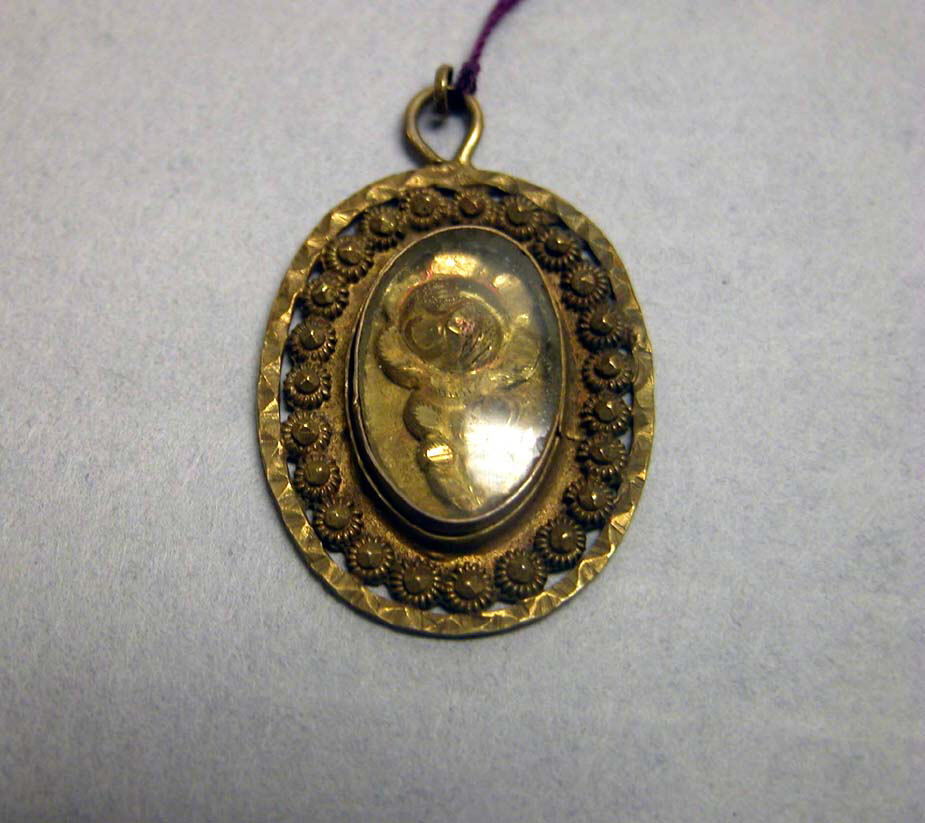
Heritage Asset Dossier: The Philippine Gold Pendant as a Strategic Luxury Archetype
Introduction: Object, Provenance, and Research Mandate
This analysis examines the Philippine gold pendant as a heritage asset within the Katherine Fashion Lab portfolio framework. The object class encompasses pre-colonial and early colonial pendants recovered from Philippine archaeological contexts—most notably the Surigao and Ayala Museum assemblages, the Bolinao burial finds, and the tenth-to-thirteenth-century goldwork associated with Butuan and Cebu trading networks. The medium is gold, worked through repoussé, granulation, filigree, and lost-wax casting. The pendant occupies a dual register: it is simultaneously a personal ornament and a metaphysical instrument. Our mandate is to translate this duality into a defensible luxury strategy for 2026, anchored in the research context of 《Mirror with Split-Leaf》—the study of the polished silver mirror with gold-inlaid palm frondage on one face, and the stone sarcophagus relief narrating life on the other.
Symbolic Power: The Pendant as Condensed Cosmology
Philippine gold pendants were rarely decorative in the modern sense. They functioned as condensed cosmologies. The recurring motifs—the naga or serpent, the bird-and-boat configurations of the Butuan tradition, the stylized kalasag shield forms, and the granulated lingling-o derivatives—encoded protection, lineage, and passage. The serpent motif, shared across Austronesian maritime cultures, signified the underworld and the continuity of ancestral power. The bird motif, often paired with a vessel, signified the soul's journey. A pendant worn at the throat was thus a portable threshold: it mediated between the wearer's body and the unseen order.
This is the first point of correlation with the 《Mirror with Split-Leaf》 study. The mirror's polished face reflects the living world; its inlaid gold leafwork asserts human craft over raw reflection. The sarcophagus relief, by contrast, narrates the dead. The Philippine pendant performs the same split: its obverse, the gold surface facing outward, is an assertion of status and beauty; its reverse, often left rough or inscribed with a single glyph, is a private contract with the spirit world. The pendant is a mirror with a hidden face.
Historical Adornment: Gold as Social Stratum and Trade Currency
Archaeological evidence from the University of the Philippines and the National Museum indicates that gold pendants were concentrated in the datu and babaylan strata. The babaylan, predominantly female ritual leaders, wore gold pendants as instruments of office—not merely markers of rank. The weight, alloy purity, and complexity of granulation correlated with the wearer's ritual authority. This is a critical distinction for luxury strategy: the pendant was not a passive badge but an active tool. It was worn to perform.
Trade context reinforces this. Philippine goldwork from the tenth to thirteenth centuries circulated through the Srivijaya and Champa networks, with Chinese and Vietnamese ceramics appearing in the same burial assemblages. The pendant was therefore both indigenous in symbolic grammar and cosmopolitan in material supply. It was a luxury object before the concept of luxury was codified in European terms. This historical fact underwrites a 2026 positioning that is neither folkloric nor derivative, but sovereign.
Spiritual Meaning: The Pendant as Contract and Vessel
The spiritual function of the Philippine pendant must be stated precisely. It was not a talisman in the amuletic sense of warding off generic harm. It was a contractual object. The babaylan's pendant, often containing a small cavity or a sealed granule, was understood to hold a fragment of ancestral bone, ash, or resin. The gold exterior protected the interior relic. The wearer's body became the reliquary's second skin.
This reading aligns with the sarcophagus face of the 《Mirror with Split-Leaf》 study. The stone relief narrates life because the tomb is the final pendant: the body is the relic, the sarcophagus is the gold, and the relief is the public story. The Philippine pendant miniaturizes this entire funerary architecture into a wearable scale. For Katherine Fashion Lab, this is the spiritual proposition: a pendant is a tomb you can wear, and a mirror you can turn inward.
2026 High-End Luxury Strategy: The Split-Face Principle
The strategic translation must be disciplined. The 2026 luxury market rewards objects with a defensible narrative and a verifiable material chain. The Philippine gold pendant offers both, but only if we resist the temptation to flatten it into tropical ornament.
First, adopt the split-face design principle. Every pendant in the Katherine Fashion Lab 2026 collection should present two distinct faces: a polished, high-finish obverse suitable for public display, and a deliberately unfinished, engraved, or sealed reverse. The reverse is not a defect; it is the contract. This directly operationalizes the 《Mirror with Split-Leaf》 correlation—light and stone, reflection and narrative, in one object.
Second, enforce material sovereignty. Use Philippine-sourced gold where traceability permits, and document the alloy lineage. The granulation technique, which requires no solder and demands extraordinary hand control, should be a signature craft marker. It is visually distinct from European filigree and cannot be replicated by machine stamping at the same quality threshold.
Third, price on ritual authority, not weight. The historical pendant derived value from the office it conferred, not from bullion content. The 2026 collection should be positioned as instruments of office for the modern wearer—founders, custodians, and cultural stewards. Limited editions should be numbered and accompanied by a provenance dossier that names the motif, its Austronesian lineage, and its specific spiritual function.
Fourth, control the narrative channel. The pendant should be introduced through museum and academic partnership before retail. The 《Mirror with Split-Leaf》 research context provides the intellectual scaffolding: a published study, a curated exhibition, and a collector's monograph. Retail follows scholarship, not the reverse.
Conclusion: The Pendant as Strategic Reliquary
The Philippine gold pendant is not a motif to be borrowed. It is a complete luxury architecture: material, ritual, trade, and memory compressed into a wearable scale. Its historical resonance with the 《Mirror with Split-Leaf》 study is not incidental—both objects split the visible from the narrated, the polished from the entombed. For Katherine Fashion Lab in 2026, the strategic imperative is to honor that split. The pendant must remain a contract, not a commodity. The wearer must remain an office-holder, not a consumer. And the gold must remain a vessel, not a surface.