Diverse Figure e Paesi: A Standalone Study in Seventeenth-Century Etched Costume
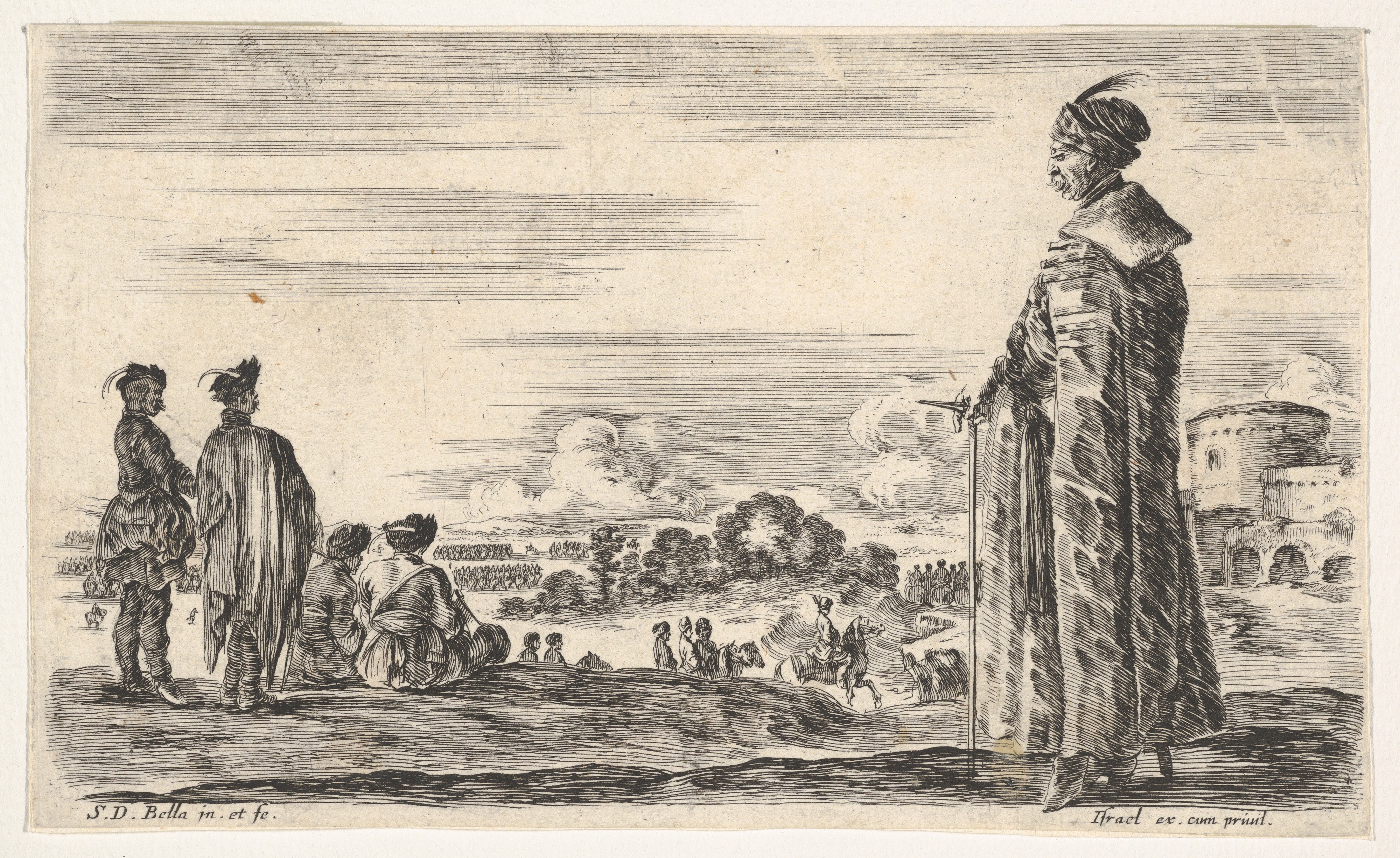
Within the vast corpus of seventeenth-century European printmaking, the etching series known as Diverse figure e paesi ("Various Figures and Lands") occupies a distinctive position. Neither pure topography nor formal portraiture, these plates function as ethnographic costume studies filtered through the disciplined hand of an accomplished etcher. The sheet under examination here presents a Polish man in a long robe, positioned at the right of the composition in strict profile, facing left toward a receding assembly of other Polish men and groups of horsemen, with a castle anchoring the right background. As a standalone study, the print rewards close material and compositional analysis that situates it at the intersection of costume documentation, landscape convention, and the print market's appetite for foreign subjects.
Compositional Architecture and the Logic of the Profile
The dominant figure is rendered in uncompromising profile, a choice that carries both practical and rhetorical weight. In the etching technique, profile allows the artist to describe the silhouette of the żupan—the long, ankle-length robe characteristic of Polish noble dress—with maximum clarity. The contour line becomes the primary vehicle of information: the fall of the fabric, the suggestion of a belted waist, the distinctive cut of the sleeves, and the cap or headgear that signals Eastern European rather than Western European identity. By turning the figure to the left, the artist opens the composition toward the narrative depth of the plate, where the secondary groups of Polish men and horsemen unfold in diminishing scale.
This leftward orientation is not incidental. It establishes a directional pull that leads the viewer's eye from the foreground protagonist, through the middle-ground figures, toward the distant castle at right. The castle functions as a compositional counterweight: while the figure faces left, the architectural mass balances the right edge, preventing the composition from sliding into empty space. This is a classic solution in etched landscape, but here it serves a specific ethnographic purpose—the castle implies a Polish or Eastern European setting without requiring the artist to commit to a specific identifiable site.
The Etching Needle: Materiality and Technical Economy
The choice of etching as the medium is fundamental to the print's character. Unlike engraving, which demands deliberate, laborious incisions into the copper plate, etching allows the artist to draw through a wax ground with a needle, producing lines of remarkable freedom and spontaneity. In this sheet, the etcher exploits that freedom to suggest the texture of the long robe through rapid, parallel hatching, while the background horsemen are indicated with abbreviated strokes that prioritize silhouette over detail. The result is an image that reads clearly at a distance yet rewards close inspection with its varied line quality.
The material economy of etching also shaped the print's function. These plates were typically produced in series and sold as bound sets or individual sheets to collectors, antiquarians, and Grand Tour travelers. A standalone study such as this one would have circulated as a portable specimen of foreign costume, valuable both as entertainment and as a reference for painters and stage designers. The etching needle's relative speed meant that an artist could produce numerous variants of similar figures, and indeed the Diverse figure e paesi series is characterized by its repetitive yet subtly differentiated treatment of recurring ethnic types.
Ethnographic Ambition and Its Limits
The presence of multiple Polish men and horsemen in the background transforms the sheet from a simple costume study into a miniature ethnography. The artist is not merely depicting one man but constructing a visual argument about a group: their dress, their mounted military culture, and their architectural environment. The horsemen in particular evoke the enduring European fascination with Polish cavalry, a reputation cemented by the winged hussars and their role in seventeenth-century warfare. Yet the print stops short of documentary precision. The castle is generic, the faces are stereotyped, and the costumes, while plausible, are filtered through the conventions of the series rather than direct observation.
This tension between ethnographic ambition and artistic convention is precisely what makes the sheet valuable to the contemporary viewer. It records not what Polish dress objectively was, but how a European printmaker and their market imagined it. The long robe, the profile stance, and the mounted retinue together form a visual shorthand for "Polishness" that would have been legible to a seventeenth-century audience without any accompanying text. As a standalone study, the print thus operates on two levels: as a technical demonstration of etching and as a cultural artifact of early modern image-making.
Provenance, Rarity, and the Standalone Sheet
Prints from series such as Diverse figure e paesi survive in varying states, and the standalone sheet occupies an ambiguous position in collections. Removed from its original bound context, it loses the sequential logic that governed the series but gains the autonomy of a framed image. Collectors and institutions have long treated such sheets as independent works, evaluating them on the strength of their impression, the quality of the paper, and the clarity of the plate mark. The plate mark itself—the indentation left by the copper plate under the rolling press—becomes a material signature of authenticity, a physical trace of the etching process that no reproduction can fully simulate.
For Katherine Fashion Lab, this sheet offers a rich case study in how historical dress is mediated through print. The long robe is not simply clothing; it is a compositional device, a marker of identity, and a commercial product. By examining the etching's line work, its spatial organization, and its ethnographic claims, we recover not only a garment but the visual culture that framed it. The Polish man in profile, facing left toward his compatriots and horsemen, remains suspended between documentation and imagination—a fitting emblem for the entire enterprise of early modern costume printmaking.