Heritage Asset Analysis: The Adams Vase — American Gilded Age Symbolism and 2026 Luxury Strategy
Introduction: A Gilded Age Masterwork in Context
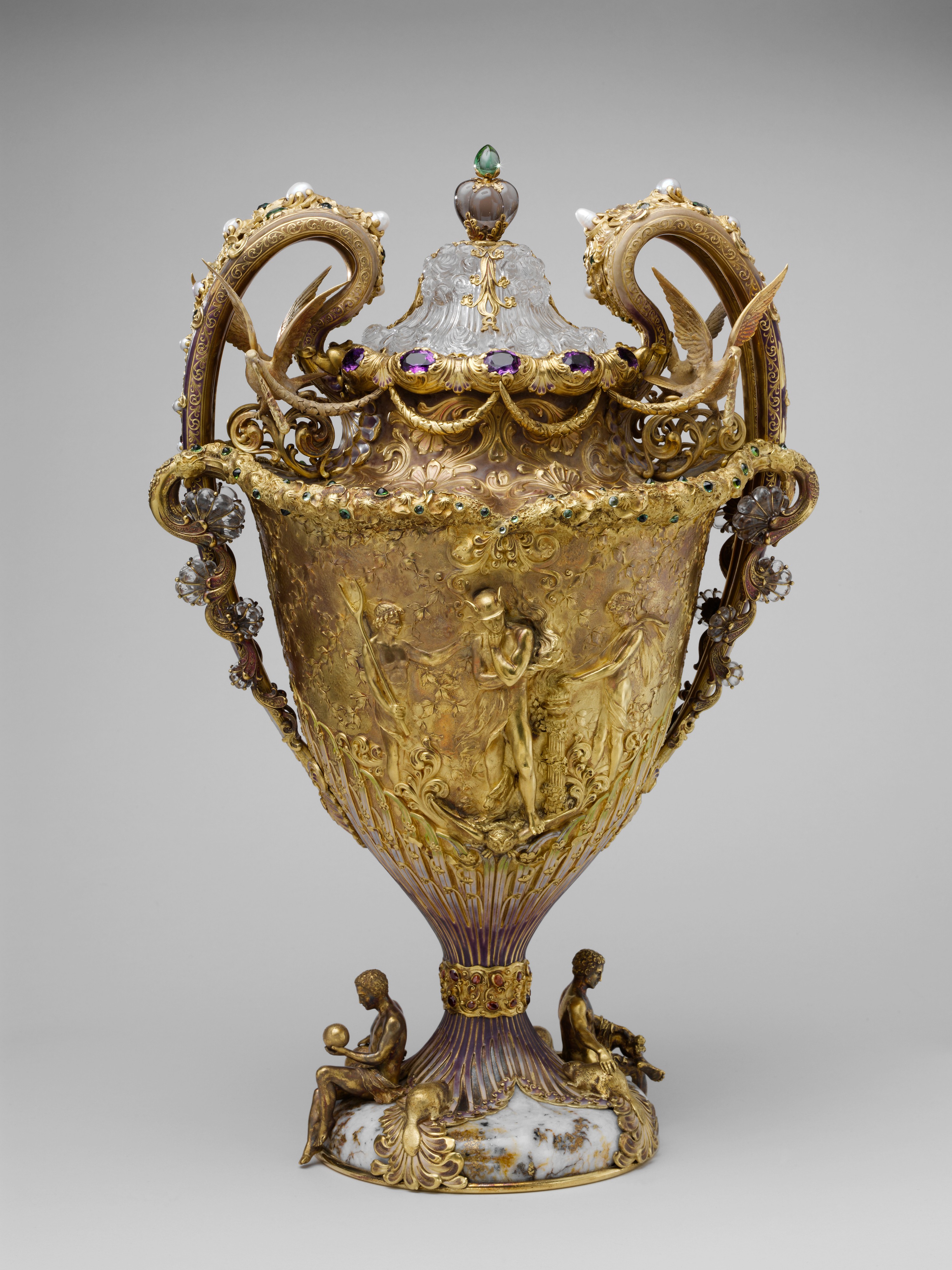
The Adams Vase stands as one of the most technically ambitious and symbolically dense objects of the American Gilded Age, commissioned from Tiffany & Co. and today held within the permanent collection of the Metropolitan Museum of Art. Executed in gold and set with amethysts, spessartites, tourmalines, freshwater pearls, quartzes, rock crystal, and enamel, the vase represents a convergence of American industrial wealth, revivalist ornamentation, and a distinctly national symbolic program. For Katherine Fashion Lab, the Adams Vase is not merely a historical artifact; it is a strategic case study in how material complexity and narrative layering generate enduring luxury value. This analysis examines the vase through four lenses — symbolic power, historical adornment, spiritual meaning, and 2026 high-end luxury strategy — to extract actionable heritage intelligence for contemporary positioning.
Symbolic Power: The Vase as an American Allegory
The Adams Vase is, at its core, a monument to American self-fashioning. Commissioned by Edward Dean Adams, a financier and railroad executive, the object was designed to project a cultural lineage that the young republic could claim as its own. The vase's ornamentation draws on classical and Renaissance vocabularies — acanthus scrolls, putti, and emblematic figures — yet recombines them into a narrative of American progress, commerce, and continental ambition. In this sense, the vase operates as a form of soft power: it converts private wealth into public cultural authority, asserting that American patronage could rival European courts in both refinement and ambition.
For Katherine Fashion Lab, this dynamic is directly transferable. The symbolic power of the Adams Vase lies not in any single motif but in its aggregate density — the way every surface is inscribed with meaning. Contemporary luxury consumers, particularly in the 2026 market, are similarly drawn to objects that reward sustained attention. The strategic lesson is that symbolic layering, when executed with editorial discipline, creates a defensible narrative moat that fast-fashion imitators cannot replicate.
Historical Adornment: Materials as Social Signifiers
The vase's material composition is itself a historical document. Gold, the traditional medium of sovereignty and permanence, forms the structural body. Amethysts, spessartites, and tourmalines introduce chromatic variation and rarity; freshwater pearls and rock crystal add luminosity and translucency; enamel provides painterly detail. Each material carried specific associations in the late nineteenth century: amethyst signified temperance and nobility, tourmaline was prized for its color range and was increasingly sourced from American mines in Maine and California, and freshwater pearls represented a distinctly American natural resource.
This material program was not decorative whim but strategic adornment — a deliberate encoding of national resource wealth into an object of private luxury. The vase thus functioned as a portable inventory of American gemological and mineralogical capacity, a statement that the United States could supply the raw materials of global luxury.
For 2026 strategy, this suggests a powerful positioning axis: provenance of material as narrative. Brands that can trace their stones, metals, and enamels to specific geographies and histories — and articulate why those origins matter — will command premium pricing and cultural authority. The Adams Vase demonstrates that material sourcing is not a supply-chain footnote but a heritage asset in its own right.
Spiritual Meaning: Secular Devotion and the Ritual Object
While the Adams Vase is not a religious artifact, it participates in a form of secular spirituality common to the Gilded Age: the elevation of art and craft to a quasi-sacred status. The vase's form echoes the amphora and the chalice, vessels historically associated with libation, offering, and consecration. Its dense ornamentation invites contemplative viewing, transforming the act of appreciation into a ritual of connoisseurship.
This spiritual dimension is critical for Katherine Fashion Lab's 2026 strategy. In an era of digital saturation, luxury consumers increasingly seek objects that function as anchors of presence — items that slow the gaze and reward embodied attention. The Adams Vase's spiritual meaning is not doctrinal but experiential: it creates a space for reverence. Brands that can design objects with comparable ritual gravity — whether through tactile complexity, weight, or symbolic density — will capture the growing market for what might be termed "secular devotion" in luxury.
2026 High-End Luxury Strategy: Lessons from the Adams Vase
Three strategic imperatives emerge from this heritage analysis.
First, embrace maximalist narrative architecture. The Adams Vase succeeds because it is legible at multiple scales: from a distance, it reads as a unified gold form; up close, it reveals gemstones, enamel, and figural detail. Katherine Fashion Lab should design collections with comparable scalar storytelling — pieces that communicate a clear silhouette while rewarding close inspection with hidden motifs, engraved references, or material surprises.
Second, treat material provenance as a strategic asset. The vase's use of American tourmaline and freshwater pearl was a deliberate assertion of national capability. In 2026, as consumers scrutinize supply chains for ethical and environmental legitimacy, provenance will become a primary driver of desirability. Katherine Fashion Lab should develop a transparent, narrative-rich sourcing framework that positions each material as a character in a larger story.
Third, cultivate ritual and reverence. The Adams Vase is not a disposable object; it is an heirloom in waiting. Luxury strategy for 2026 must prioritize ceremonial design — objects that invite slow engagement, that feel weighted and intentional, and that resist the logic of the feed. This means investing in craftsmanship that is legible to the hand as well as the eye, and in communication that frames acquisition as stewardship rather than consumption.
Conclusion: Heritage as Forward-Looking Strategy
The Adams Vase is a reminder that the most durable luxury objects are those that compress history, material, and meaning into a single form. For Katherine Fashion Lab, its relevance is not nostalgic but strategic. By studying how the vase mobilizes symbolism, adornment, spirituality, and material provenance, the brand can construct a 2026 positioning that is simultaneously rooted in heritage and oriented toward the future. The task is not to replicate the vase but to internalize its logic: that luxury, at its highest level, is the art of making meaning visible — and permanent.