Abstract
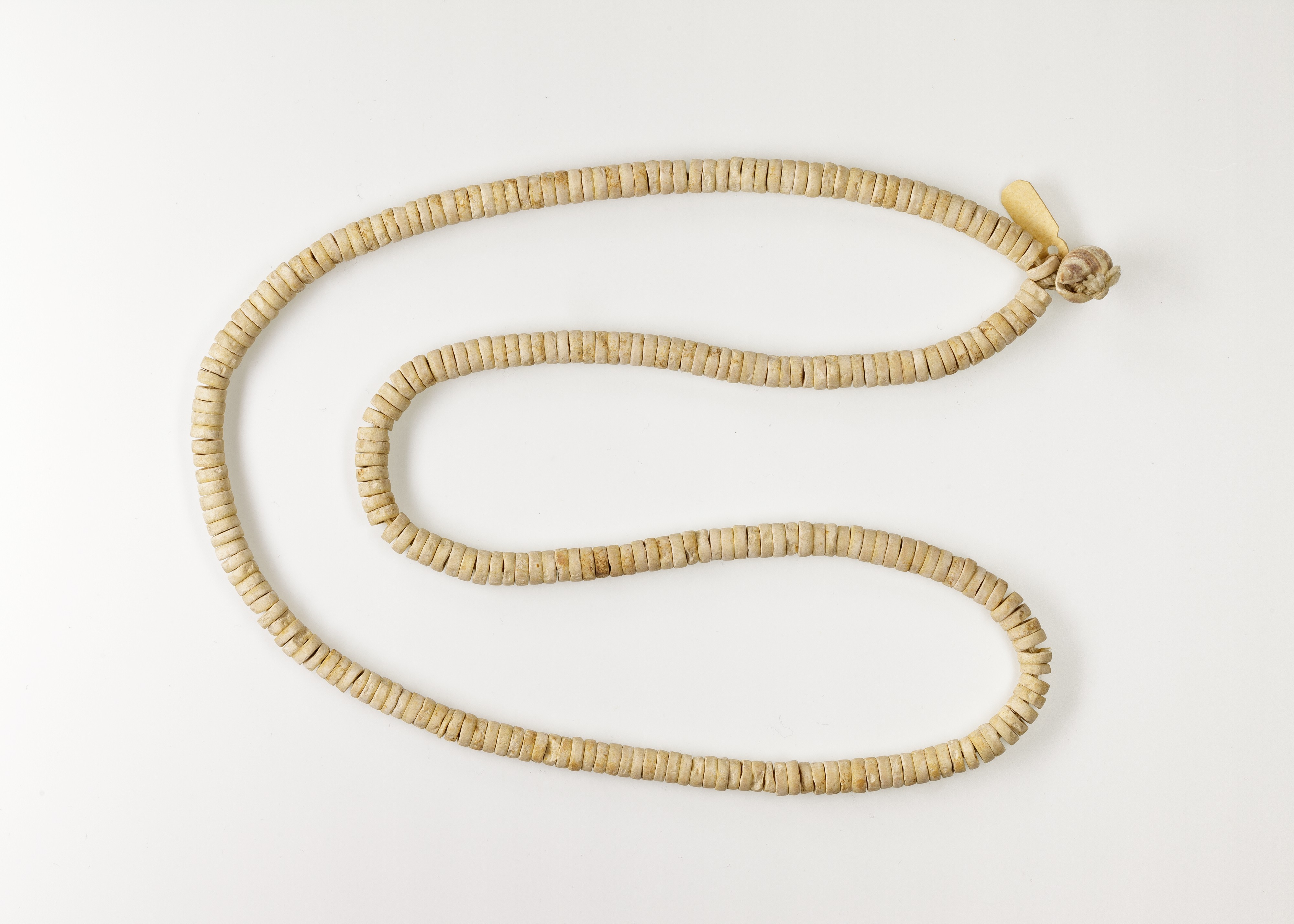
This heritage analysis examines the shell necklace as a foundational artifact of ancient civilizations, tracing its symbolic power, historical adornment functions, spiritual meaning, and strategic relevance to Katherine Fashion Lab's 2026 high-end luxury positioning. Shell necklaces emerged independently across multiple ancient cultures—from the Indus Valley and Mesopotamia to coastal Africa, Oceania, and the pre-Columbian Americas—because they encoded universal human concerns: protection, status, fertility, and connection to the sacred. For a luxury house operating in an era of provenance-driven consumption, the shell necklace offers a compelling strategic asset: a material narrative that is simultaneously ancient and contemporary, humble and precious, local and global.
Symbolic Power: The Shell as Cosmic and Social Marker
In ancient civilizations, the shell was never merely decorative. Its symbolic power derived from its dual origin—born of the sea yet often found far inland, carried by trade routes that predated written language. This movement across geographies transformed the shell into a signifier of connectivity, wealth, and cosmological order.
Protection and Fertility
Across cultures, shell necklaces were worn as amulets. In ancient Egypt, cowrie shells were associated with Hathor, goddess of love, fertility, and protection; they were placed in tombs and worn by women to ensure rebirth. In West Africa, cowrie shells became a currency and a symbol of spiritual authority, often strung into necklaces for royalty and priests. The spiral form of many shells was read as a metaphor for life cycles, the womb, and the eternal return—giving the necklace a talismanic function that transcended ornamentation.
Status and Exchange
Shell necklaces also served as elite status markers. In the Indus Valley Civilization (c. 2600–1900 BCE), conch shell bangles and necklaces were excavated from high-status burials, indicating access to long-distance trade networks. In the Pacific Northwest and Polynesia, shell necklaces were ceremonial regalia, exchanged during marriages, alliances, and chiefly investitures. The shell's rarity—particularly when sourced from distant waters—created a natural scarcity that reinforced social hierarchy. This dynamic is directly analogous to modern luxury's reliance on controlled distribution and artisanal provenance.
Historical Adornment: Craft, Trade, and Identity
The shell necklace's historical trajectory reveals sophisticated supply chains and craft specialization. Ancient Mesopotamian texts from the third millennium BCE reference "fish-eye" shells imported from the Persian Gulf, fashioned into necklaces for temple offerings. In the Aegean, the Minoans carved triton shells into pendants and beads, often combined with gold and semi-precious stones. In the Americas, the Spiro Mounds of Oklahoma yielded shell necklaces engraved with cosmological motifs, demonstrating that shell adornment was not a peripheral craft but a central expression of cultural identity.
Technological and Artistic Innovation
Shell necklace production required drilling, grinding, polishing, and stringing—techniques that predated metalworking in many regions. The craftsperson was both technician and shaman, transforming a raw organic material into a wearable object of meaning. This dual role resonates with Katherine Fashion Lab's emphasis on atelier craftsmanship and narrative-driven design.
Gender, Ritual, and Everyday Life
Shell necklaces were worn by men and women, children and elders, in daily life and in rites of passage. In ancient Nubia, shell necklaces were buried with infants as protective charms. In Aboriginal Australian cultures, shell necklaces (such as those from the Kimberley region) were used in coming-of-age ceremonies and traded across vast distances. The necklace thus functioned as a portable archive of identity—a quality that luxury consumers in 2026 will increasingly seek as they reject mass-produced anonymity.
Spiritual Meaning: The Necklace as Threshold Object
The shell necklace occupies a liminal space between body and world, water and land, life and afterlife. In many ancient traditions, the neck was considered the seat of the soul or the breath of life. Adorning it with shell was an act of consecration. In ancient China, shell necklaces (often made from cowrie or mother-of-pearl) were placed in elite tombs during the Shang Dynasty, signifying the deceased's passage to an ancestral realm. In Mesoamerica, shell necklaces were associated with Quetzalcoatl, the feathered serpent, and with the wind god Ehecatl—breath, speech, and spirit.
This spiritual dimension is not merely historical curiosity. It explains why shell necklaces retain emotional resonance today: they are tactile, organic, and imbued with the memory of the sea. For a luxury brand, this translates into a product that carries what anthropologists call "inalienable wealth"—objects that cannot be fully commodified because they embody relationships and meanings.
2026 High-End Luxury Strategy: From Heritage to Market Position
Katherine Fashion Lab's 2026 strategy must navigate a luxury landscape defined by three forces: provenance transparency, experiential retail, and cultural sustainability. The shell necklace is uniquely positioned to address all three.
Provenance as Product
Consumers in 2026 will demand verifiable sourcing. A shell necklace collection should document the origin of each shell—whether from sustainable aquaculture, reclaimed archaeological contexts, or ethical wild harvest—and the cultural lineage of its design. This is not mere compliance; it is storytelling that justifies premium pricing. The ancient trade routes that carried shells across continents can be reimagined as modern supply chain narratives, linking the wearer to a global heritage of adornment.
Cultural Sustainability and Ethical Collaboration
Luxury brands face increasing scrutiny for cultural appropriation. The shell necklace offers an opportunity for genuine collaboration with source communities—Pacific Islander, West African, or Indigenous American artisans—who can co-create collections and share in revenue. This model aligns with the "heritage partnership" trend predicted for 2026, where luxury houses act as cultural custodians rather than extractors.
Design Language for 2026
The shell necklace should be reinterpreted through a minimalist, architectural lens: oversized cowrie pendants in brushed gold, mother-of-pearl inlay on recycled silver, or shell beads combined with lab-grown diamonds. The palette should evoke the sea without literal kitsch—bone, pearl, sand, and deep indigo. The necklace should be gender-fluid, stackable, and designed for layering, reflecting the post-pandemic desire for versatile, meaningful adornment.
Marketing and Narrative
Campaigns should focus on the shell's dual nature: ancient amulet and modern luxury object. Editorial content can explore the archaeology of shell necklaces, while experiential activations—such as pop-ups in coastal heritage sites or museum partnerships—can immerse consumers in the material's story. Influencer collaborations should prioritize cultural educators and artisans over traditional celebrities, reinforcing authenticity.
Conclusion
The shell necklace is not a trend; it is a civilizational artifact. Its symbolic power, historical depth, and spiritual resonance provide Katherine Fashion Lab with a rare strategic asset: a product that is both timeless and timely. By treating the shell necklace as a heritage platform rather than a seasonal item, the brand can claim a distinctive position in the 2026 luxury market—one defined by provenance, partnership, and profound meaning. The shell remembers the sea; the necklace remembers the wearer. Katherine Fashion Lab can remember both.