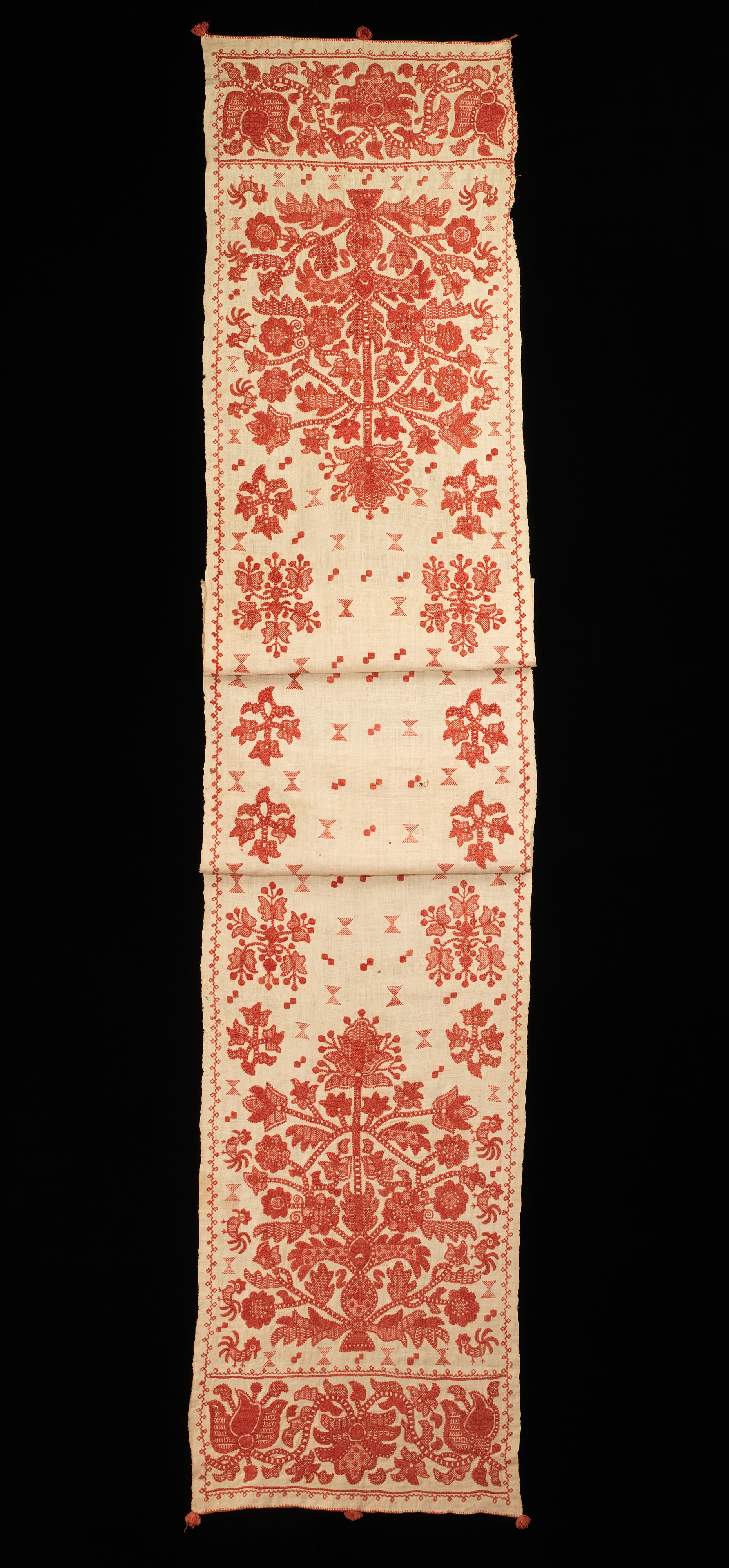
The Towel as Textile Artefact: A Couture Analysis of Linen and Cotton in Global Heritage
Within the disciplined vocabulary of couture, few objects carry as much unexamined cultural weight as the towel. It is the textile most intimately encountered and least critically appraised — a daily interface between body and fibre, moisture and absorption, ritual and routine. At Katherine Fashion Lab, we approach the towel not as a household commodity but as a legitimate object of material study, one whose construction, fibre composition, and regional provenance encode centuries of textile intelligence. This standalone analysis examines the towel through the dual lenses of linen and cotton, tracing its evolution across global heritage traditions and arguing for its reconsideration within the broader discourse of wearable and functional luxury.
The Fibre Question: Linen and Cotton as Structural Opposites
To understand the towel is to understand the tension between two of civilization's oldest cultivated fibres. Linen, derived from the bast of the flax plant, is among the earliest textiles engineered by human hands; archaeological evidence places flax weaving in the Nile Valley and across the Fertile Crescent millennia before the common era. Its defining characteristics — high tensile strength, rapid moisture wicking, natural lustre, and a cool hand — made it the preferred cloth for ritual purification and bodily care in Egyptian, Mesopotamian, and later Mediterranean cultures. Linen does not merely absorb; it conducts moisture away from the skin and releases it quickly, a property that has made it indispensable in hot, arid climates where bacterial proliferation in damp cloth poses genuine risk.
Cotton, by contrast, is a seed fibre whose global diffusion followed a different and later trajectory. Cultivated independently in the Indus Valley, the Andes, and sub-Saharan Africa, cotton offered a softer hand, greater loft, and superior pliability. Where linen is crisp and structured, cotton is yielding and voluminous — qualities that translate directly into the tactile experience of drying. The terry-loop construction, widely credited to nineteenth-century European textile innovation but with antecedents in looped-pile weaving across Anatolia and Central Asia, exploits cotton's natural crimp to maximize surface area and moisture uptake.
Global Heritage: Regional Expressions of a Universal Object
The towel's global heritage is not monolithic; it is a constellation of regional solutions to a shared human need. In the hammam traditions of the Ottoman world, the peştemal — a flat-woven linen or cotton wrap — served simultaneously as towel, garment, and modesty cloth. Its fringed edges and striped ground were not decorative accidents but structural decisions: flat weave dries faster than looped pile, and the absence of pile reduces the surface area available to mildew in humid bathhouse conditions.
In Japan, the tenugui represents a parallel philosophy. Woven from cotton in a plain weave, often around thirty-four by ninety centimetres, it is thin, quick-drying, and endlessly adaptable — worn as a headband, used as a washcloth, or folded into a carrying cloth. The tenugui embodies a distinctly Japanese textile ethic: minimal material, maximal function, with dyed patterns that reward the eye without compromising utility.
Across West Africa, hand-woven cotton strip cloth — produced on narrow horizontal looms and joined into larger panels — has long served bathing and ceremonial functions. The density of the weave and the deliberate variation in indigo and kente-derived patterning transform the towel into a marker of status and identity. Meanwhile, in the Nordic tradition, linen sauna textiles and cotton pefletti demonstrate how fibre selection responds to extreme thermal environments: linen's resistance to heat degradation and its non-linting surface make it the rational choice where cotton might scorch or shed.
Construction as Couture: Weave, Weight, and Hand
Couture analysis demands attention to construction, and here the towel rewards close reading. GSM (grams per square metre) is the primary metric of density: a lightweight 300–400 GSM linen or linen-cotton blend suits warm climates and rapid drying, while a 600–900 GSM cotton terry delivers the plush, enveloping hand associated with luxury hospitality. The pile height and loop twist of terry cloth determine absorbency and durability in inverse relation to softness — tightly twisted, low loops are robust and fast-drying; loosely twisted, high loops are sumptuous but slower to dry and more prone to compression.
Selvedge finishing, dobby borders, and jacquard-woven bands are not merely ornamental. A dobby border stabilizes the edge against fraying, while a jacquard band can indicate provenance or house identity — the textile equivalent of a couture label. In linen towels, the wet-spun versus dry-spun distinction matters: wet-spun flax yields a smoother, stronger yarn with a subtle sheen, whereas dry-spun linen retains a more rustic, textured surface that softens with each wash.
The Case for Curatorial Attention
Why should a fashion laboratory concern itself with the towel? Because the towel is where textile science, cultural memory, and daily ritual converge most intimately. It is the object against which every claim of fibre performance is tested — absorbency, drying time, hand-feel, longevity — without the distractions of silhouette or trend. To study the towel is to study the fundamentals of cloth itself.
At Katherine Fashion Lab, we regard the towel as a legitimate heritage artefact and a design problem of genuine sophistication. The linen and cotton towel, in its many regional iterations, demonstrates that utility and refinement are not opposites but collaborators. A well-constructed towel is a small architecture of fibre and weave, engineered to serve the body and shaped by the hands of a specific place and people. It deserves the same curatorial rigour we reserve for any garment — and perhaps more, given how often it touches the skin.