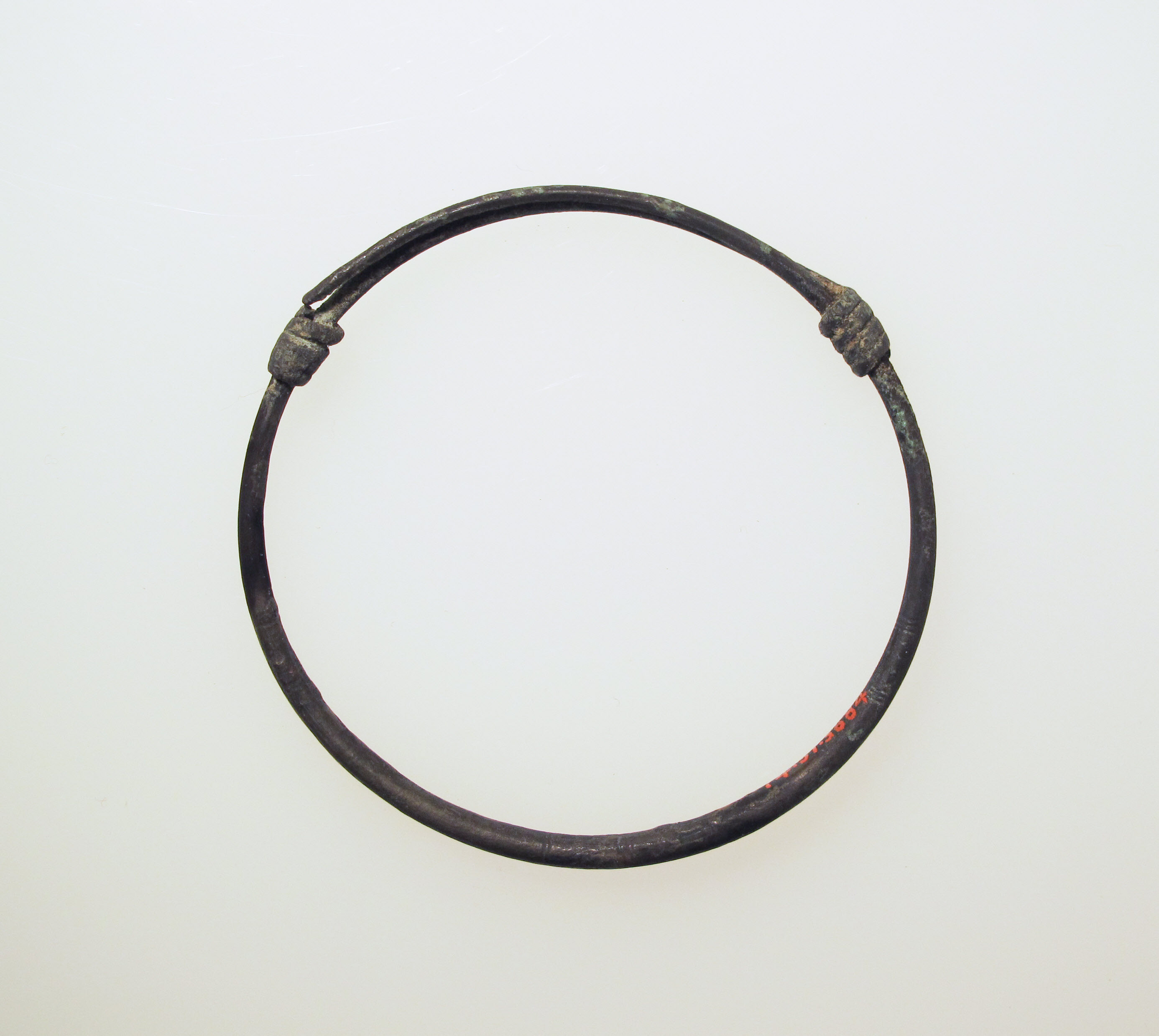
Heritage Asset Analysis: The Ancient Silver Bracelet as a Strategic Luxury Platform
Within the curatorial framework of Katherine Fashion Lab, the ancient silver bracelet is not treated as a decorative artifact but as a compressed archive of human meaning-making. Across the great river-valley civilizations — Mesopotamia, the Indus Valley, Egypt, and the Aegean — the bracelet emerged independently yet convergently as a band of worked silver fastened to the wrist. Its persistence across four millennia and multiple continents signals something deeper than ornament: the bracelet is one of the earliest technologies for encoding identity, status, protection, and covenant on the human body. For a 2026 luxury strategy, this civilizational depth constitutes a proprietary narrative asset that few categories can match.
Symbolic Power: The Wrist as Sovereign Territory
The wrist occupies a unique position in the ancient symbolic imagination. It is the pivot of action — the point where intention becomes gesture, where the hand executes the will. To encircle the wrist with silver was, in the ancient mind, to govern the boundary between self and world. In Mesopotamian royal iconography, broad silver and electrum bracelets signified delegated authority; the wearer acted not merely for himself but as an extension of the sovereign or the divine. The bracelet thus functioned as a portable seal of legitimacy, a wearable mandate.
Silver amplified this symbolism through its material properties. Unlike gold, which ancient cultures associated with solar permanence, silver was linked to the moon, to reflection, and to liminal states — night, dream, transition. A silver bracelet therefore carried a dual charge: the structural authority of the band and the lunar, intuitive power of the metal. This duality — command and receptivity, law and mystery — is precisely the tension that contemporary luxury consumers seek in objects that feel both powerful and personal.
Historical Adornment: From Votive Offering to Heirloom Currency
Archaeological evidence from the Royal Cemetery of Ur, the Indus sites of Mohenjo-daro, and New Kingdom Egyptian tombs reveals that silver bracelets circulated in three distinct registers. First, as votive offerings: bracelets were placed in temples and graves as pledges to deities, their silver value converting prayer into durable matter. Second, as diplomatic currency: bracelets were exchanged between courts, their weight and workmanship communicating political rank with precision. Third, as heirlooms: bracelets passed between generations, accumulating memory and binding lineages across time.
This triple function — sacred, political, familial — explains the bracelet's remarkable endurance. It was never merely fashionable. It was contractual. To wear an ancient silver bracelet was to participate in an economy of obligation and belonging. For Katherine Fashion Lab, this history suggests that the bracelet is uniquely suited to a luxury proposition built on transgenerational value rather than seasonal novelty.
Spiritual Meaning: Apotropaic Function and the Enchanted Band
Across ancient cultures, the closed circle of the bracelet carried apotropaic force. The unbroken ring was understood as a microcosm of cosmic order — the circuit of the sun, the cycle of seasons, the continuity of life. To place such a ring on the wrist was to place the wearer inside that order, shielded from chaos. Egyptian wedjat motifs, Mesopotamian cylinder-seal impressions, and Indus script amulets all appear on or beside silver wrist ornaments, confirming their role as protective instruments.
Silver's antimicrobial properties, empirically observed in antiquity though not scientifically named, reinforced this reputation. Water stored in silver vessels remained pure; silver worn against the skin was believed to draw out illness and ill fortune. The bracelet thus became a therapeutic object — a wearable ritual of purification. In an era of wellness-driven luxury, this historical resonance offers a credible, non-invented foundation for positioning silver bracelets within the spiritual-self-care market.
2026 Luxury Strategy: Positioning the Ancient Silver Bracelet
The 2026 high-end landscape is defined by three consumer imperatives: provenance transparency, emotional durability, and quiet authority. The ancient silver bracelet addresses all three with unusual efficiency. Its provenance is civilizational rather than merely artisanal — a distinction that elevates it above trend-driven jewelry. Its emotional durability is encoded in its form: a closed circle resists obsolescence because it signifies completion. Its quiet authority derives from silver's subdued luminosity, which signals discernment rather than display.
Katherine Fashion Lab should therefore position the silver bracelet not as a category extension but as a heritage platform. Strategic recommendations follow. First, develop a signature band whose proportions are derived from museum-documented ancient examples, with scholarly citations embedded in the brand narrative. Second, articulate the lunar-silver symbolism in campaign language, distinguishing the line from solar-gold competitors. Third, introduce a votive commissioning ritual — clients inscribe an intention, archived by the maison — converting purchase into participation. Fourth, pursue museum and archaeological partnerships that lend third-party validation without diluting brand authorship. Fifth, price at the accessible-luxury threshold to capture the rising cohort of educated, symbol-literate consumers who seek meaning over logo.
The ancient silver bracelet is not a relic to be revived but a grammar to be spoken fluently. Its symbolic power, historical depth, and spiritual charge constitute a strategic asset of rare coherence. For Katherine Fashion Lab, the opportunity is to steward this inheritance with scholarly rigor and commercial precision — transforming four thousand years of human intention into a 2026 luxury proposition that feels, to its wearer, both inevitable and new.