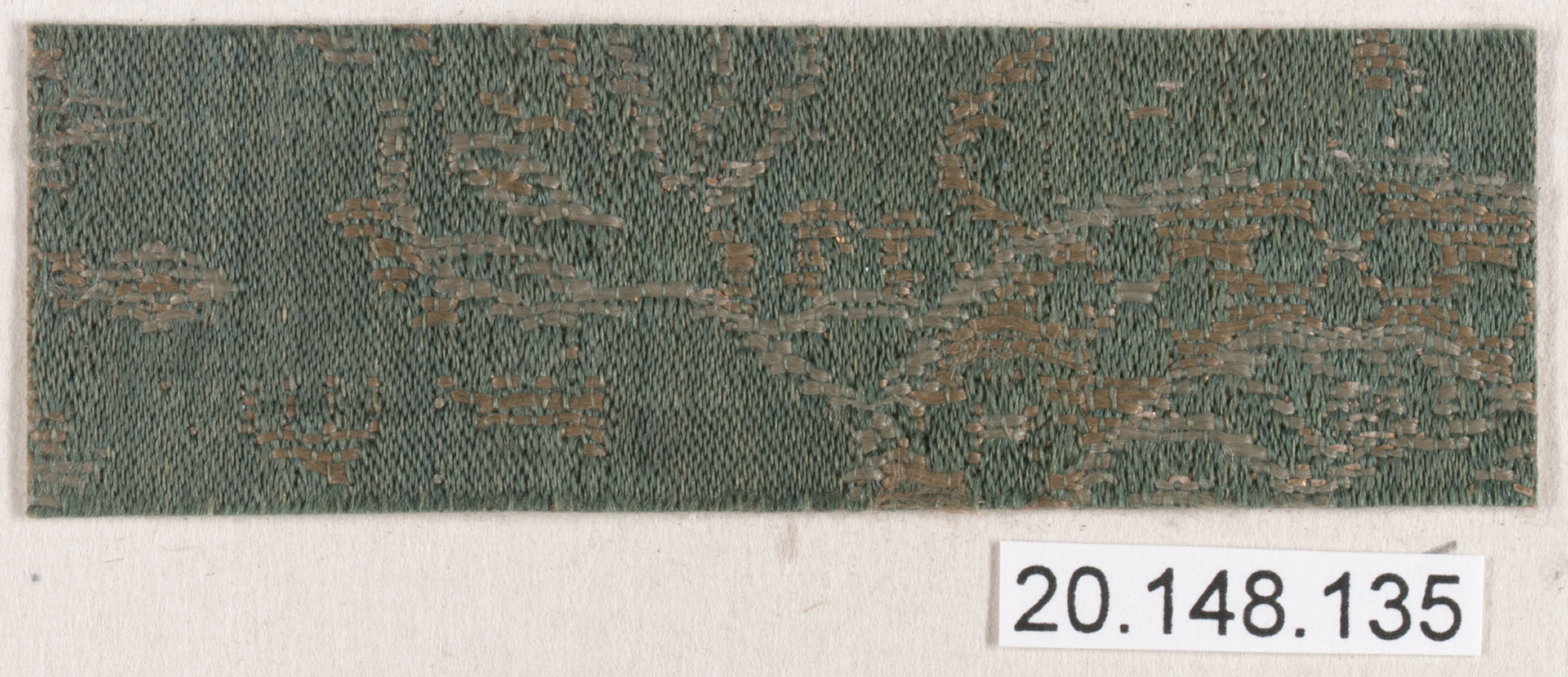
Heritage Asset Analysis: The Japanese Silk Nishiki (錦) – Compound-Weave Silk as a Vehicle of Symbolic Power and 2026 Luxury Strategy
Introduction: The Strategic Value of a Woven Cosmos
Within the Katherine Fashion Lab portfolio, the Japanese nishiki (錦)—a compound-weave silk textile often translated as "brocade"—represents a heritage asset of exceptional strategic depth. Unlike surface-printed or embroidered textiles, nishiki encodes meaning within its structural architecture: pattern, colour, and metallic thread are interwoven at the loom, making the garment itself a permanent document of cosmology, rank, and patronage. For 2026 luxury strategy, this distinction matters. The modern high-end consumer is not merely purchasing fabric; they are acquiring a legible system of meaning. Nishiki offers exactly that: a textile whose symbolic grammar can be decoded, authenticated, and repositioned for a market that rewards provenance and narrative density.
Historical Adornment: From Court Ritual to Samurai Display
The lineage of Japanese compound-weave silk extends from continental weaving traditions introduced during the Kofun and Asuka periods (roughly 3rd–8th centuries CE), refined through the imperial court's shozoku regulations and the Buddhist temple economy. By the Heian period, silk textiles functioned as instruments of statecraft: gifts of cloth to temples and foreign envoys signalled both wealth and metaphysical authority. The shōsōin repository at Tōdai-ji preserves 8th-century compound-weave fragments whose technical sophistication still challenges modern replication.
During the Muromachi and Momoyama periods, nishiki moved from liturgical and court contexts into the visual language of military elites. Kosode and dōfuku garments woven with gold-thread nishiki became markers of daimyō status, while the rise of the Nishijin weaving district in Kyoto consolidated production into a controlled luxury supply chain. This is a critical precedent for Katherine Fashion Lab: nishiki has always operated as a regulated scarcity good, with guild structures, sumptuary laws, and patronage networks determining who could wear what. The textile was never merely decorative; it was a wearable licence.
Symbolic Power: Decoding Motifs and Structural Meaning
The symbolic power of nishiki lies in its layered iconography. Common motifs include:
Dragons (ryū) — associated with imperial authority, rain, and cosmic order; frequently rendered in gold thread against deep indigo or crimson ground.
Phoenix (hōō) — a symbol of virtuous rule and renewal, often paired with paulownia or bamboo.
Shippō and karakusa (scrolling vine) — geometric and botanical patterns signalling continuity, protection, and the entanglement of worldly and spiritual realms.
Kumo (clouds) and waves — liminal zones between mortal and divine, used to frame figures or sacred objects.
Because these motifs are woven rather than printed, they possess a physical permanence that aligns with Japanese aesthetic values of mono no aware (the pathos of impermanence) paradoxically materialised in durable cloth. The textile becomes a relic in the original sense: a thing that remains. For luxury strategy, this creates a powerful tension—an object that embodies both temporal fragility and structural endurance.
Spiritual Meaning: Silk as Offering and Vessel
In Shinto and Buddhist contexts, silk was a sacred medium. Nusa (offerings of cloth) were presented at shrines to purify and petition; temple banners (ban) and Buddhist priests' kesa were woven from precious silks, with nishiki reserved for high ceremonial occasions. The compound weave's density and weight gave it a tactile gravity appropriate to ritual: it did not flutter like plain silk but held its form, suggesting stability, authority, and the presence of the sacred. This spiritual dimension is not a decorative footnote—it is the origin of the textile's prestige economy. When a 2026 luxury house positions nishiki, it is implicitly invoking a lineage in which cloth was a conduit between human and divine, patron and protected.
Technical Distinction: Why Compound Weave Matters
Nishiki is typically a compound weave, meaning multiple warp and weft systems interlace to create pattern, ground, and often a supplementary metallic weft in a single construction. This differs fundamentally from embroidery or printing: the image is co-extensive with the fabric's structure. Damage to the surface is damage to the pattern; conservation requires loom-level expertise. For Katherine Fashion Lab, this technical reality supports a strategy of verifiable craftsmanship. In a market increasingly sceptical of surface-level storytelling, compound weave offers material proof of complexity—a quantifiable input of skill, time, and specialised equipment.
2026 Luxury Strategy: Repositioning Nishiki for the High-End Market
Three strategic vectors emerge for 2026:
1. Provenance-led authentication. Partner with Nishijin workshops and conservation laboratories to certify fibre, dye, and weave structure. The luxury consumer of 2026 expects blockchain-verifiable or museum-grade documentation; nishiki's guild history provides a ready-made chain of custody narrative.
2. Symbolic personalisation. Rather than generic motifs, offer clients a curated lexicon—dragon for authority, phoenix for renewal, wave for resilience—woven into limited-edition pieces. This transforms the garment into a heraldic object, aligning with the "quiet luxury" demand for understated but deeply coded status signals.
3. Spiritual and wellness adjacency. Position nishiki within the broader luxury turn toward ritual, mindfulness, and tangible heritage. A compound-weave silk garment can be framed as a vessel—an object that carries intention, made slowly, worn deliberately. This resonates with the 2026 consumer's fatigue with disposability and appetite for objects that justify their price through meaning as much as material.
Conclusion: A Heritage Asset with Structural Integrity
Japanese nishiki is not a decorative curiosity but a strategic heritage asset. Its compound-weave construction, symbolic density, spiritual lineage, and history of regulated prestige make it uniquely suited to a luxury market that rewards depth over display. For Katherine Fashion Lab, the opportunity is to treat nishiki not as a motif to be borrowed but as a system to be stewarded—preserving its technical integrity, decoding its symbolic grammar, and repositioning it for a 2026 clientele that seeks garments capable of carrying meaning across time. In an era of ephemeral trends, the compound weave endures. That is its power, and its commercial promise.