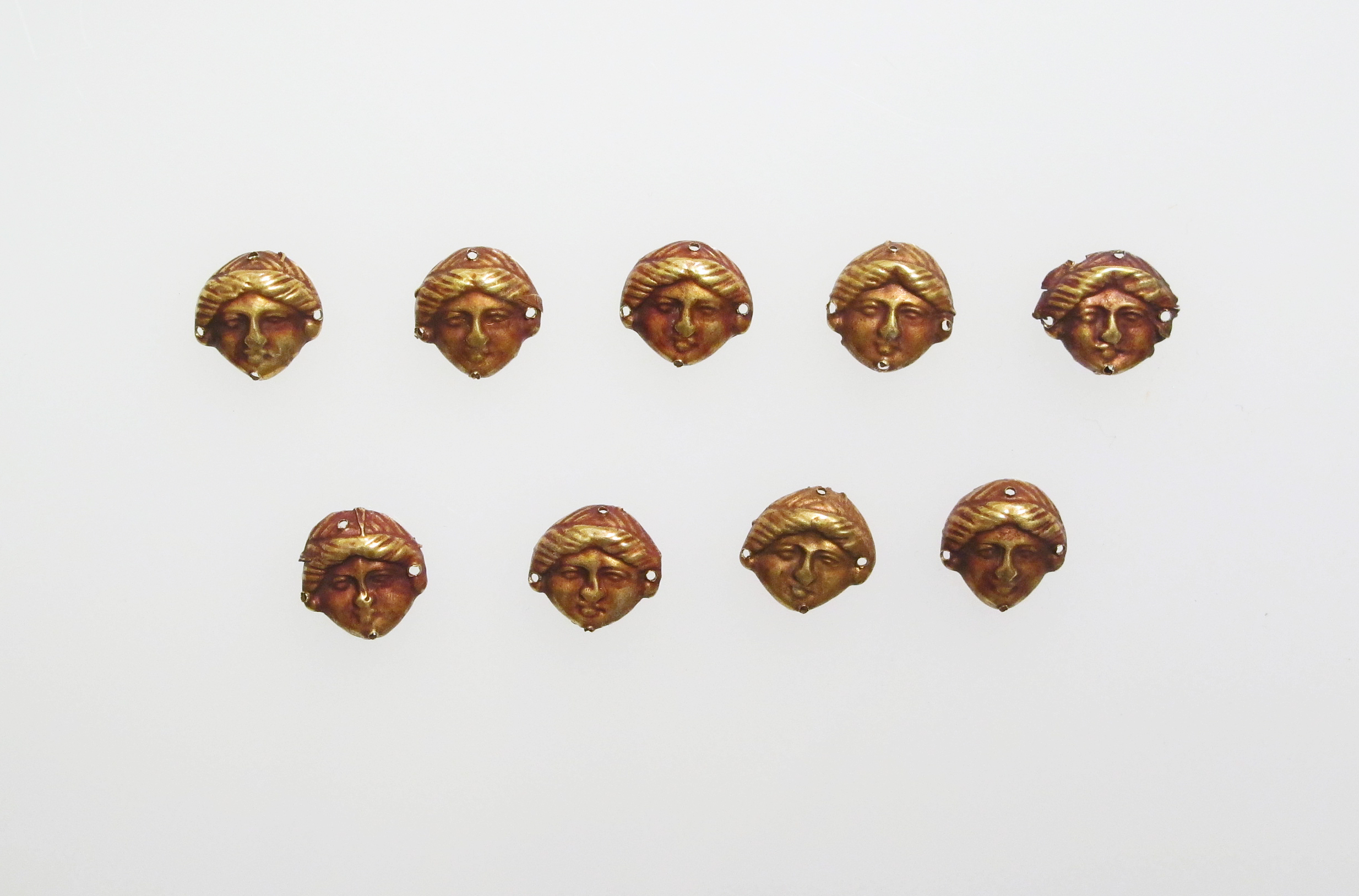
Executive Summary: The Electrum Female Head Bead as a Heritage Asset
Within the Katherine Fashion Lab portfolio of strategic standalone research, few artifacts present as compelling a convergence of material rarity, gendered symbolism, and civilizational depth as the Greek electrum bead ornaments fashioned in the form of a female head. These miniature masterworks, produced primarily during the Archaic and early Classical periods (circa 700–450 BCE), occupy a liminal position between jewelry, votive offering, and sculptural micro-portrait. For a luxury house positioning itself at the intersection of heritage authority and contemporary desirability, the electrum female head bead offers a rare strategic asset: an object whose symbolic density can be translated into product narrative, brand mythology, and differentiated market positioning ahead of the 2026 luxury cycle.
Materiality and the Authority of Electrum
Electrum—a naturally occurring alloy of gold and silver, often with trace copper—was among the most prized materials of the ancient Greek world. Its pale, luminous hue, neither the warm saturation of pure gold nor the cool austerity of silver, carried associations of solar and lunar duality. Lydian and Ionian workshops, particularly in Asia Minor, pioneered electrum coinage, and the material became synonymous with sovereign value. When Greek artisans selected electrum for female head beads, they were not merely choosing a durable medium; they were embedding the object within a discourse of monetary and sacred power.
For Katherine Fashion Lab, the material narrative is directly transferable. Electrum's dual-metal composition anticipates the modern luxury consumer's appetite for hybridity—pieces that resist singular categorization. A 2026 capsule or high-jewelry line referencing electrum's chromatic ambiguity could position the brand between traditional gold heritage and the cooler, more cerebral aesthetics of contemporary fine jewelry. The strategic recommendation is to treat electrum not as a historical footnote but as a proprietary material signature, potentially revived through responsible alloy innovation or narrated through archival-inspired gold-silver blends.
Iconography of the Female Head: Symbolic Power and Spiritual Meaning
The female head as a motif in Greek bead ornaments is far from decorative. In Archaic Greek culture, the female visage functioned as an apotropaic device—a protective image warding off evil—and as a conduit to divine intercession. Beads shaped as female heads frequently depict characteristics associated with goddesses: the veiled crown of Hera, the abundant hair of Demeter, or the archaic smile of Kore/Persephone. Worn as part of a necklace or diadem, these beads placed the wearer under the aegis of feminine divinity.
Spiritually, the head bead operated as a portable altar. Each miniature face condensed the presence of a goddess into an object small enough to rest against the throat or collarbone—anatomical sites of speech, breath, and vulnerability. This intimate placement suggests a belief in the talismanic transfer of power from image to body. The bead was not a representation of the divine; it was a functional vessel for it.
This symbolic architecture offers Katherine Fashion Lab a rich framework for 2026 storytelling. In an era of secular spirituality and personalized ritual, the female head bead can be repositioned as a talisman for the modern wearer—a piece that carries intention, protection, and lineage. Marketing language should avoid New Age cliché while embracing the artifact's original function: adornment as spiritual technology. The strategic angle is to present the bead not as a charm but as a heritage instrument of agency.
Historical Adornment and the Politics of Display
Greek bead ornaments in the form of female heads were not confined to private devotion. They appeared in sanctuaries as dedications, in tombs as grave goods, and in domestic contexts as markers of status. Their distribution across the Mediterranean—from Rhodes to Etruria—demonstrates a cross-cultural appetite for Greek micro-sculpture. The beads were often strung with gold foil, amber, or carnelian, creating a chromatic hierarchy that signaled the wearer's access to trade networks and artisan skill.
For a luxury brand, this history validates the bead as a cosmopolitan object. It was never provincial. It traveled, it was imitated, and it was prized by non-Greek elites. Katherine Fashion Lab can leverage this cosmopolitanism in its 2026 global strategy, positioning a bead-inspired collection as a bridge between Hellenic heritage and contemporary international taste. The historical adornment context also supports a narrative of layering—beads worn in multiples, mixed with other materials—which aligns with current maximalist and stackable jewelry trends without sacrificing scholarly integrity.
Strategic Implications for 2026 High-End Luxury
The 2026 luxury landscape will reward brands that can demonstrate deep provenance without appearing archival or inert. The electrum female head bead offers three strategic pillars:
First, rarity as narrative. Electrum is no longer mined at ancient scale. A modern collection can use this scarcity to justify limited editions and bespoke commissions, framing each piece as a contemporary relic.
Second, feminine authority. The female head bead is not a passive beauty object. It is a symbol of divine protection and social power. For a house targeting women who collect art and jewelry as expressions of self-sovereignty, this iconography is directly resonant.
Third, micro-sculpture as luxury differentiator. In a market saturated with logo-driven design, the female head bead represents the opposite: miniature figuration requiring master craftsmanship. Katherine Fashion Lab can position a 2026 atelier series around the revival of micro-sculptural beadwork, emphasizing hand-finishing, lost-wax casting, and gemstone inlay.
Furthermore, the bead's original function—worn close to the body—supports a tactile, intimate luxury experience. In an increasingly digital retail environment, physical intimacy with the object becomes a premium. The bead invites touch, rotation, and close inspection, making it ideal for in-person clienteling and private viewing events.
Conclusion and Recommendation
The Greek electrum female head bead is more than a historical curiosity. It is a condensed artifact of material wealth, gendered spirituality, and cross-cultural adornment. For Katherine Fashion Lab, it provides a defensible heritage platform for a 2026 high-end collection that speaks to rarity, feminine power, and artisanal micro-sculpture. The recommendation is to commission a standalone research dossier, acquire or license high-resolution archival imagery, and develop a capsule narrative titled "Electrum Veil" or "Head of the Goddess"—positioning the brand as the contemporary custodian of a forgotten luxury language. The bead is small. Its strategic potential is not.