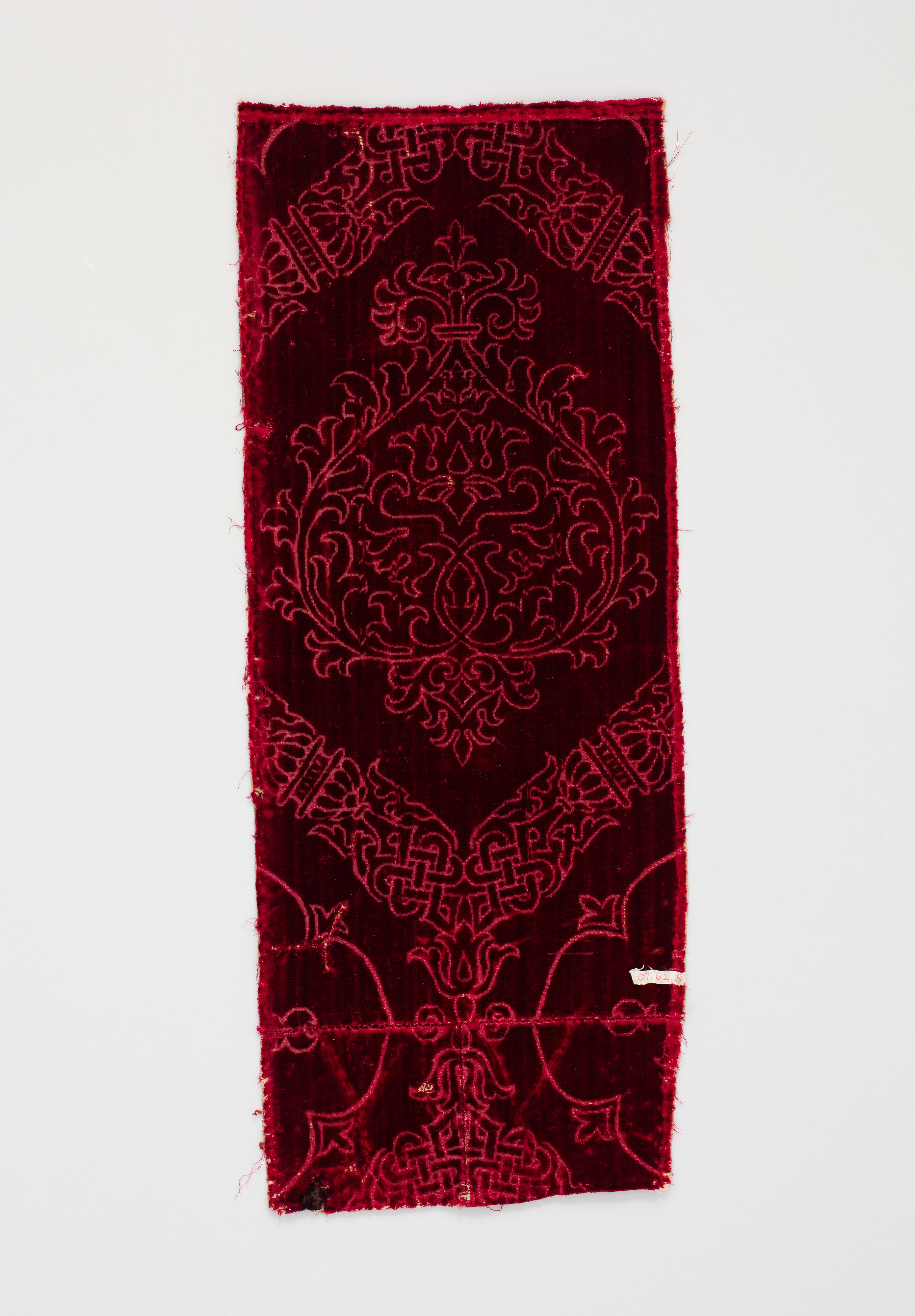
Piece as Protagonist: A Standalone Study in Silk and Global Heritage
In the lexicon of haute couture, the term piece carries a weight that transcends mere garment classification. It denotes a singular creation—an object of dress whose value is derived not from its place within a seasonal narrative, but from its intrinsic material and technical integrity. At Katherine Fashion Lab, we approach the piece as an autonomous artifact: a self-sufficient statement whose meaning is generated by its construction, its provenance, and the cultural memory embedded in its fabric. This standalone study examines one such piece, realized in silk, whose origins trace a global heritage of textile exchange, migratory craftsmanship, and cross-cultural aesthetic synthesis. The analysis that follows treats the garment as a closed system—a world unto itself—while acknowledging that no couture object exists in isolation from the histories that produced it.
The Ontology of the Piece: Autonomy and Intent
To speak of a couture piece is to invoke a category distinct from the ensemble, the collection, or the look. A piece is conceived as a totality. Its silhouette, seam architecture, and surface treatment are not modular components awaiting recombination but inseparable elements of a unified thesis. In this sense, the piece operates as a form of material argument: it proposes a resolution to the tension between structure and fluidity, between the body's geometry and the fabric's will. The silk piece under consideration embodies this dialectic with unusual clarity. Silk, as a fiber, possesses a dual nature—it is at once tensile and yielding, capable of holding a sculpted line while surrendering to gravity with liquid ease. A couture piece that selects silk as its primary medium therefore commits to a negotiation: the designer must impose intention upon a material that resists rigidity without sacrificing the precision that defines the atelier's craft.
The standalone study format is particularly suited to this subject. By removing the piece from the context of a runway narrative or a commercial collection, we allow its internal logic to become legible. We can examine the placement of darts, the bias of the cut, the finish of the hem, and the treatment of the shoulder line as decisions that answer only to the piece's own coherence. This is not to deny the influence of external references—far from it. Rather, it is to insist that those references have been fully metabolized into the object, leaving no residue of quotation or pastiche.
Silk as Carrier of Global Heritage
The material history of silk is, in itself, a narrative of global heritage. Originating in ancient China, sericulture traveled along the Silk Roads not as a simple commodity but as a vector of technique, symbolism, and social meaning. By the time silk reached the courts of Persia, Byzantium, and later Renaissance Italy and France, it had accumulated layers of cultural signification: imperial luxury, sacred vestment, diplomatic gift, and eventually, couture substrate. A contemporary piece executed in silk thus inherits this entire genealogy. It cannot be read as neutral fabric. Every fold carries the memory of its passage across civilizations.
For Katherine Fashion Lab, this heritage is not decorative context but operational reality. The silk selected for this piece—whether a charmeuse, a crepe de chine, a taffeta, or a duchesse satin—is chosen for its specific behavior under the needle and on the body. The weight and drape of the fabric determine the possible cuts; the weave determines the permissible seams; the finish determines the interaction with light. In a standalone piece, these material constraints become the primary creative grammar. The designer does not impose a pre-existing silhouette onto the silk; rather, the silk's own properties propose a range of forms, and the couturier selects among them with the precision of a sculptor choosing a block of marble.
Construction as Cultural Translation
The global heritage of this piece extends beyond the fiber itself to the techniques of its assembly. Couture construction is never culturally pure. The bias cut, popularized by Madeleine Vionnet in early twentieth-century Paris, owes a debt to the analysis of classical Greek drapery; the kimono sleeve derives from Japanese garment architecture; the mandarin collar and frog closure enter Western couture through sustained engagement with Chinese dress. A piece that claims global heritage must therefore be honest about its hybridity. It must acknowledge that its seams are palimpsests.
In this standalone study, the piece's construction reveals a deliberate synthesis. The shoulder is built with a lightness that recalls the unstructured lines of South Asian antariya and uttariya, yet the internal corselet provides the architectural support associated with European tailoring. The neckline is finished with a hand-rolled edge—a technique refined in French ateliers but also present in the fine hemming traditions of Indian and Japanese textiles. The result is not a collage of references but a coherent garment whose logic is internal. Each technique has been selected because it serves the piece's central proposition: that silk can be both shelter and sculpture.
Standalone Significance and the Future of the Piece
Why insist on the standalone study? Because the contemporary fashion system—driven by seasonal cycles, algorithmic trend prediction, and the relentless demand for novelty—tends to dissolve the piece into the collection. The singular object is subordinated to the narrative arc of a show, the commercial logic of a drop, the visual grammar of a campaign. The standalone study reverses this hierarchy. It treats the piece as the primary text and the collection as commentary. It asks what a garment knows that a trend cannot.
For Katherine Fashion Lab, this approach is both methodological and ethical. It respects the labor embedded in the piece—the hours of hand-finishing, the iterative fitting, the patient adjustment of grain and tension. It also respects the global heritage that the piece carries, refusing to reduce that heritage to a marketing tag. A silk piece, properly made, is a document. It records the state of the atelier's skill, the availability of materials, the aesthetic priorities of its moment, and the long conversation between cultures that makes couture possible. To study it as a standalone object is to read that document with the attention it deserves.
In conclusion, the piece examined here demonstrates that autonomy and heritage are not opposed. A garment can stand alone precisely because it is saturated with the histories of its material and making. Silk, as the carrier of a global textile memory, provides the ideal medium for such a study. The couturier's task is not to erase that memory but to give it form—to cut, drape, and finish a piece that is at once entirely itself and entirely the product of a world in motion. That is the standard to which Katherine Fashion Lab holds every piece it creates.