Executive Summary: The Scarab as a Strategic Heritage Asset
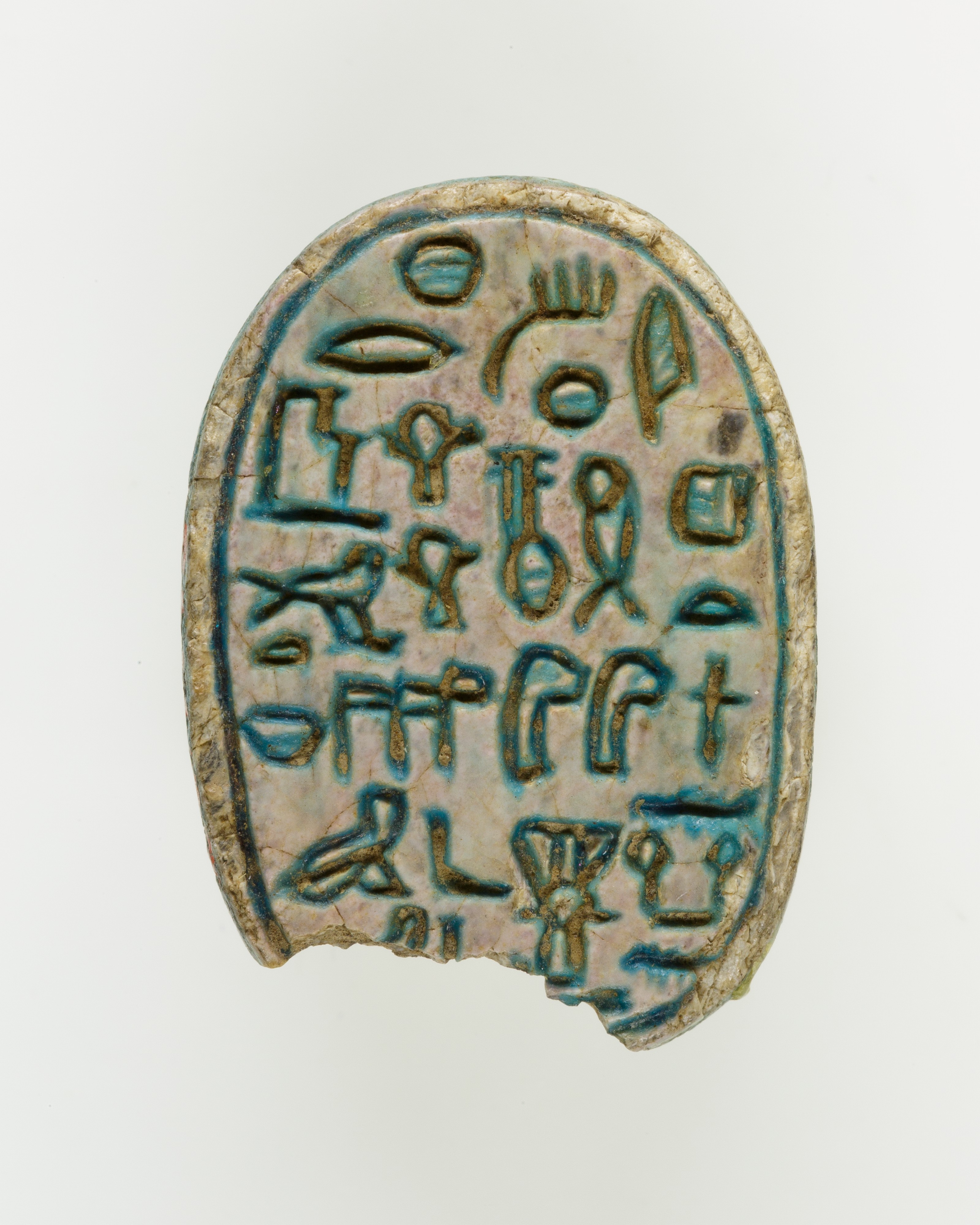
This strategic standalone research paper, prepared for the leadership of Katherine Fashion Lab, presents a heritage analysis of the Scarab of an Official, a bright blue glazed steatite artifact from an ancient civilization. Moving beyond mere aesthetic appreciation, this document decodes the object as a dense nexus of symbolic power, historical adornment, and spiritual meaning. Our analysis positions the scarab not as a relic, but as a dynamic blueprint for a 2026 high-end luxury strategy. By distilling its core principles—authority through symbolism, transformative identity, and sacred materiality—Katherine Fashion Lab can architect a collection that transcends seasonal trends to offer narratives of enduring power and personal metamorphosis, directly engaging the evolving values of the ultra-high-net-worth consumer.
Deconstructing the Artifact: A Tripartite Analysis of Power
The bright blue glazed steatite scarab, specifically designated to an "Official," is a masterclass in encoded communication. Its value lies not in raw material cost, but in the sophisticated layering of meaning it carries. For Katherine Fashion Lab's strategic purposes, we analyze it through three interdependent lenses: symbolic, sartorial, and spiritual.
Symbolic Power: The Badge of Authority
The scarab (dung beetle) is a paradox transformed into a universal symbol. In ancient Egyptian cosmology, it observed the celestial phenomenon of the sun being rolled across the sky, mirroring its earthly action of rolling a ball of dung. This act of creation from waste led to its association with Khepri, the god of the rising sun, rebirth, and transformation. For an "Official," wearing this symbol was a direct claim to these potent forces. It signaled not just administrative duty, but a divinely sanctioned role in the cyclical renewal of order (Ma'at). The scarab was a wearable seal, often inscribed with the owner's name and titles on its base, functionally authenticating documents and metaphorically authenticating the wearer's place in a cosmic hierarchy. Its power was narrative, embedding the individual's identity within a story of eternal return and sanctioned authority.
Historical Adornment: The Amulet as Exoskeleton
This object exemplifies adornment as functional armor for identity. Worn as a ring, pendant, or incorporated into a broad collar, the scarab was not merely decorative jewelry; it was an integral component of elite uniform. Its placement on the body was strategic—close to the heart for protection, on the hand for action, or at the throat for speech. The choice of bright blue glazed steatite is critically significant. The vibrant, lapis-like blue evoked the heavens and the life-giving Nile, colors of divinity and fertility. Steatite, a soft stone easily carved, when glazed and fired, achieved a hard, luminous finish. This process of transformation—from dull stone to radiant amulet—mirrored the transformative promise of the scarab itself. The adornment thus became a permanent, polished statement of one's refined and elevated state, a piece of the divine order made tangible and wearable.
Spiritual Meaning: The Engine of Metamorphosis
At its core, the scarab was a metaphysical technology. In funerary contexts, a "heart scarab" was placed over the deceased's heart to silence it during the weighing-of-the-heart ceremony, ensuring a favorable judgment. This underscores its role as a guardian of identity and facilitator of passage. For the living official, it served a parallel function: it was a constant reminder and catalyst for personal rebirth and ethical conduct. It promised safe passage through life's challenges and bureaucratic complexities under the eye of the divine. The spiritual meaning is one of cyclical assurance: decay leads to renewal, effort leads to rebirth, and earthly duty is connected to cosmic balance. The amulet provided psychological and spiritual resilience, an ancient precursor to the modern luxury concept of "talismanic" pieces that offer the wearer confidence and a sense of destiny.
Strategic Translation: A 2026 Luxury Framework for Katherine Fashion Lab
The 2026 luxury consumer seeks depth, provenance, and personalized mythologies. They purchase not just products, but legacies and transformative experiences. The Scarab of an Official provides a foundational code for a high-end strategy that is intellectual, immersive, and identity-defining.
Collection Architecture: From Amulet to Ecosystem
Katherine Fashion Lab should develop a capsule ecosystem titled, for instance, "The Official's Seal." This is not a literal reproduction, but a philosophical translation. Key pillars include:
Material Alchemy: Emulate the scarab's transformative journey. Source sustainable, raw materials (organic cottons, uncut stones, rough metals) and subject them to proprietary, artisanal processes—unique glazing techniques on ceramic components, laser-fused composites that mimic steatite's transformation, or fabrics woven with threads that change hue in sunlight. The narrative of transformation must be embedded in the material story.
Symbolic Encoding: Integrate the scarab's form and function abstractly. A clutch bag with a clasp mechanism that rotates like a scarab rolling its sphere; a tailored jacket with a hidden, seal-like embroidery on the interior lining, personalized with the client's initials in a custom glyph system; timepieces with a case back engraved with a micro-sculpture of a scarab, visible only to the wearer. The symbolism becomes an intimate, modern secret.
The "Official" Silhouette: Develop a sartorial language of authoritative elegance. Think structured, minimalist lines that echo ceremonial dress—architectural coats, columnar dresses, and precision tailoring. The "adornment" (jewelry, bags, belts) should integrate seamlessly, acting as the functional seal or badge that completes and personalizes the uniform of power.
Client Engagement: Curating the Ritual of Acquisition
The purchase must feel like an initiation. The strategy should involve:
Personal Glyphing Service: A core service where clients co-create a personal symbol (a modern "cartouche") with a resident designer, which is then integrated into their piece(s). This directly mirrors the inscribed base of the original scarab, transforming the object into a true seal of individual identity.
Narrative Immersion: Accompany each piece with a curated "dossier"—a hand-bound book detailing the historical research of the original scarab, the specific materials used, and the story of its transformation. This elevates the product to an artifact with documented provenance.
The Metamorphosis Narrative: Market the collection around key life transitions: assuming a leadership role, a significant personal rebirth, or defining a legacy. Position Katherine Fashion Lab as the curator of tools for these modern rites of passage, providing the "armor" and "talisman" for the journey.
Conclusion: Sealing a Future Legacy
The Scarab of an Official offers Katherine Fashion Lab a profound strategic advantage: a heritage narrative that is inherently about the future—about rebirth, transformation, and the perpetuation of identity. By deconstructing its layers of symbolic power, historical adornment, and spiritual meaning, the Lab can architect a 2026 luxury strategy that moves beyond conspicuous consumption. The goal is to create a modern hieroglyphics of luxury—where every piece is a sealed statement of authority, a catalyst for personal metamorphosis, and a connection to an eternal narrative of renewal. In doing so, Katherine Fashion Lab does not merely reference history; it, like the scarab, rolls the past into a new sphere of meaning, positioning itself as the official seal for a new generation of transformative power.