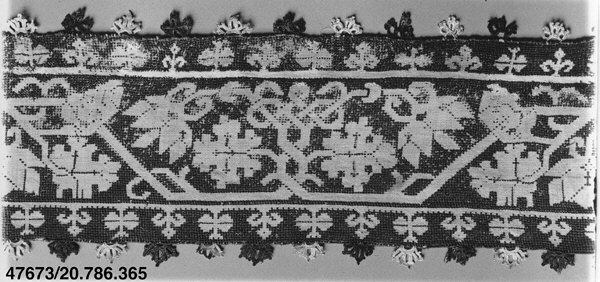
Border as Epistemic Threshold: Drawnwork and the Architecture of Liminality
The border has long functioned as couture’s most charged semiotic device—a site where garment and body negotiate sovereignty. In this standalone study for Katherine Fashion Lab, we examine the border not as decorative adjunct but as epistemic threshold: a constructed edge that simultaneously separates and connects, conceals and reveals. When executed in drawnwork—the ancestral technique of removing warp and weft threads to create openwork lattices—the border becomes a meditation on absence, a structural argument that what is taken away can generate more meaning than what remains. Drawing from global heritage traditions spanning Eastern European merezhka, Andean deshilado, and Filipino calado, this analysis positions drawnwork borders as couture’s most sophisticated articulation of liminality: the threshold state between presence and void, self and other, tradition and rupture.
Technique as Philosophical Proposition
Drawnwork is not embellishment; it is subtractive architecture. Unlike embroidery, which adds material to a surface, drawnwork begins with removal. The artisan counts threads, extracts them with surgical precision, then binds the remaining intersections into geometric or floral lattices. This process inverts the logic of accumulation that governs most luxury production. Where haute couture typically valorizes addition—layers of tulle, cascades of beadwork, meters of hand-rolled hem—drawnwork proposes that absence can be the most expensive material of all. The labor is not in what is added but in what is meticulously taken away, and in the structural integrity that must be maintained despite that subtraction.
This technique originated independently across multiple global heritage sites: in Ukraine, merezhka bordered ritual cloths; in Mexico and Guatemala, deshilado framed garments for ceremonial use; in the Philippines, calado transformed piña fabric into translucent webs. Each tradition developed distinct pattern vocabularies—geometric in Slavic contexts, floral in Iberian-influenced regions, organic in Southeast Asian—yet all share a foundational principle: the border is where the garment becomes vulnerable, and therefore where it must be most rigorously constructed. The edge is the point of maximum exposure, the place where the textile meets the world.
The Border as Couture’s Critical Edge
In contemporary couture, the border has undergone a semiotic inflation. It is no longer merely a finishing technique but a theoretical statement about belonging and exclusion. A drawnwork border on a gown’s neckline or hemline announces that the garment is not a closed system. It breathes. It admits light. It acknowledges the body beneath not as content to be covered but as presence to be negotiated. This is couture’s most radical proposition: that the edge is not where the garment ends but where it begins its relationship with the wearer.
Consider the drawnwork border as a form of textile porosity. In an era of seamless digital fabrication and 3D-knitted monobloc garments, drawnwork insists on the handmade void. Each removed thread is an act of authorial decision. Each remaining lattice is a commitment to structure. The border becomes a manifesto against homogeneity, a refusal of the seamless surface that characterizes so much industrial fashion. When Katherine Fashion Lab examines drawnwork borders, we are examining not nostalgia but resistance: the insistence that couture’s future may lie in ancestral subtractive logics rather than additive excess.
Global Heritage and the Politics of the Edge
Drawnwork’s global heritage complicates any singular origin narrative. The technique appears in Ukrainian vyshyvanka traditions, in Palestinian tatreez adjacent practices, in Italian punto tirato, in Spanish deshilados. This polygenesis is not incidental; it suggests that the border—and specifically the drawn border—responds to a universal human preoccupation with thresholds. Every culture that developed drawnwork was grappling with the same question: how does a community mark its edge? How does a garment mark the body’s edge? How does a technique mark the edge between craft and art?
For couture, this global heritage demands ethical articulation. A drawnwork border cannot be extracted from its cultural contexts without acknowledgment. The technique carries the labor histories of women who counted threads by candlelight, who passed patterns through generations without written notation, who understood that the edge is where meaning is most concentrated. Contemporary couture houses that employ drawnwork—whether through atelier artisans or through collaborations with heritage communities—must engage this history not as ornament but as epistemic inheritance.
Standalone Study: Drawnwork Border as Couture Object
This standalone study proposes that the drawnwork border be considered a couture object in its own right—not a component of a garment but a self-sufficient articulation of technique, heritage, and philosophy. A border removed from its garment context becomes a textile drawing, a line of inquiry rendered in thread and void. It asks: what is the minimum necessary to constitute a border? What is the maximum meaning that can be extracted from absence?
In the Katherine Fashion Lab framework, this study operates as a methodological provocation. It suggests that couture analysis must move beyond the garment as totality and attend to its edges—the places where technique, culture, and body intersect. The drawnwork border, with its global heritage and its subtractive logic, offers a model for thinking about couture not as accumulation but as precision. Not as surface but as threshold. Not as object but as event.
The border, in drawnwork, is never merely a line. It is a negotiation. It is the place where the garment decides how much of the world it will admit, and how much of itself it will withhold. In that decision—repeated across cultures, across centuries, across the entire global heritage of textile practice—lies couture’s most enduring and most under-examined proposition: that the edge is not the end, but the beginning of meaning.