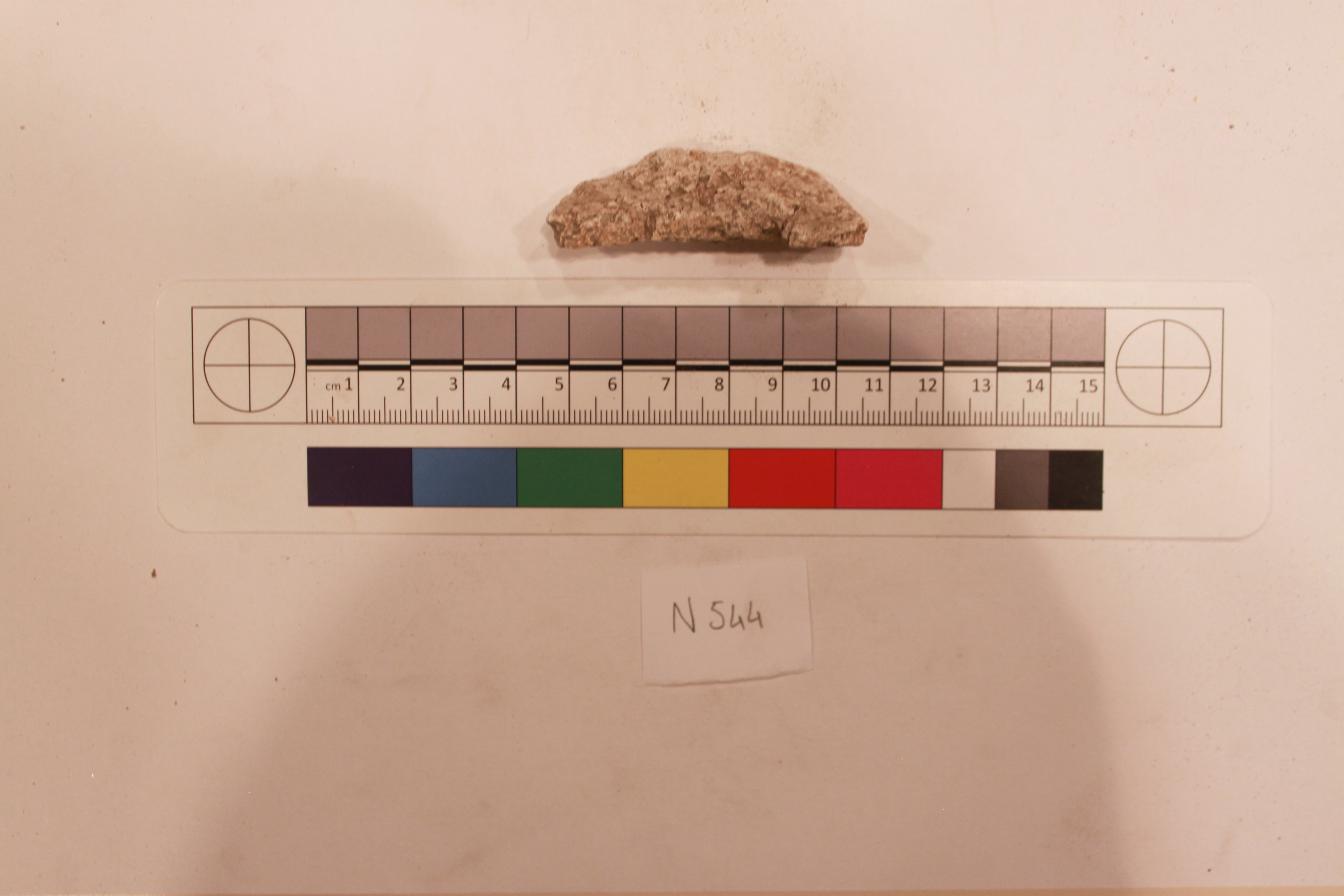
Heritage Analysis: Carved Stucco Fragment from an Ancient Civilization
Introduction: The Strategic Value of a Fragment
Within the Katherine Fashion Lab archive, the carved stucco fragment occupies a position of unusual strategic importance. It is not a complete relief, nor a monumental frieze, but a broken surface bearing the residue of deliberate human inscription. For an institution operating at the intersection of cultural heritage and high-end luxury, such fragments are not merely archaeological curiosities; they are compressed repositories of symbolic capital. The stucco fragment, executed in a malleable material that hardens into permanence, embodies the paradox at the heart of luxury: softness transformed into endurance, ornamentation elevated into ideology. This analysis examines the fragment through four lenses—symbolic power, historical adornment, spiritual meaning, and 2026 luxury strategy—to establish its relevance for the Lab's forward-looking portfolio.
Materiality and the Technology of Symbolic Power
Stucco, in the ancient world, was never a neutral medium. Unlike marble, which signaled imperial permanence, or bronze, which conveyed martial prestige, stucco was a material of transformation. It could be applied to brick, wood, or rubble, then carved while still moist to produce surfaces of astonishing refinement. This technological affordance made stucco a vehicle for symbolic power that was both accessible and aspirational. Elites and religious institutions could commission elaborate stucco programs without the logistical burden of quarrying and transporting stone. The fragment in question, with its carved contours, likely formed part of an architectural or devotional program in which surface decoration communicated status, cosmology, or dynastic legitimacy.
The symbolic power of such fragments lies in their indexical quality. They do not merely represent a culture; they are physical witnesses to it. Each incision marks the intersection of a patron's intention, an artisan's skill, and a community's belief system. For Katherine Fashion Lab, this indexicality is the foundation of provenance-driven storytelling. A luxury object that can trace its visual language to a carved stucco tradition is not simply designed; it is archaeologically anchored.
Historical Adornment: From Architectural Surface to Wearable Code
Historical adornment in stucco traditions rarely operated in isolation. Carved surfaces frequently mimicked textiles, metalwork, or botanical forms, creating a visual vocabulary that migrated across media. A stucco fragment may preserve a pattern that once appeared on garments, wall hangings, or ceremonial regalia. This cross-material translation is directly relevant to contemporary luxury, where the boundaries between architecture, fashion, and object design are increasingly porous.
The fragment's carved motifs—whether geometric, vegetal, or figural—can be read as an early form of branding. Repetition, symmetry, and controlled variation were not merely aesthetic choices; they were mnemonic devices that reinforced collective identity. In the 2026 luxury landscape, where consumers seek authenticity and narrative depth, such motifs offer a legitimizing lineage. A handbag clasp derived from a stucco rosette, or a jacquard woven from a fragment's interlace pattern, becomes more than a product; it becomes a citation.
Spiritual Meaning and the Ritual Function of Surface
In many ancient civilizations, stucco was applied to sacred architecture because it could receive paint, gilding, and carving with equal fidelity. The surface thus became a site of ritual transformation. A carved stucco fragment may have originally framed a deity, demarcated a sanctuary, or absorbed the smoke of offerings. Its spiritual meaning is not incidental to its aesthetic value; the two are inseparable. The act of carving was often accompanied by consecration, and the finished surface was understood to mediate between human and divine realms.
For Katherine Fashion Lab, this spiritual dimension introduces a ethical and experiential layer. Luxury in 2026 is increasingly expected to offer not only beauty but also meaning—what industry analysts term "soulful consumption." A garment or accessory that engages with the spiritual function of an ancient stucco tradition must do so with reverence and scholarly rigor, avoiding the pitfalls of appropriation. The fragment's original context, even if partially lost, provides a framework for respectful reinterpretation: not copying the sacred, but translating its principles of mediation, threshold, and transformation.
2026 Luxury Strategy: Fragment as Strategic Asset
Looking toward 2026, the high-end luxury market is defined by three converging pressures: the demand for provenance, the scarcity of authentic heritage assets, and the imperative to demonstrate cultural stewardship. The stucco fragment addresses all three. As a standalone research subject, it offers a contained yet rich source of design intelligence. Its materiality suggests a palette of matte, tactile surfaces—plaster, lime, mineral finishes—that align with the quiet luxury aesthetic. Its carved forms provide a library of motifs that can be scaled from architectural detail to jewelry. Its spiritual associations support narrative campaigns centered on ritual, protection, and continuity.
Strategically, the fragment can anchor a capsule collection, a limited-edition object series, or a digital archive initiative. The key is to treat it not as decoration but as a strategic asset: a node in a network of meaning that connects ancient craft to contemporary desire. Katherine Fashion Lab's role is to curate that connection with the precision of a curator and the discipline of an MBA. The fragment does not need to be restored to speak; it needs to be read, translated, and positioned. In doing so, the Lab converts a broken surface into a durable source of brand equity—proving that in luxury, as in archaeology, the smallest fragment can carry the weight of an entire civilization.