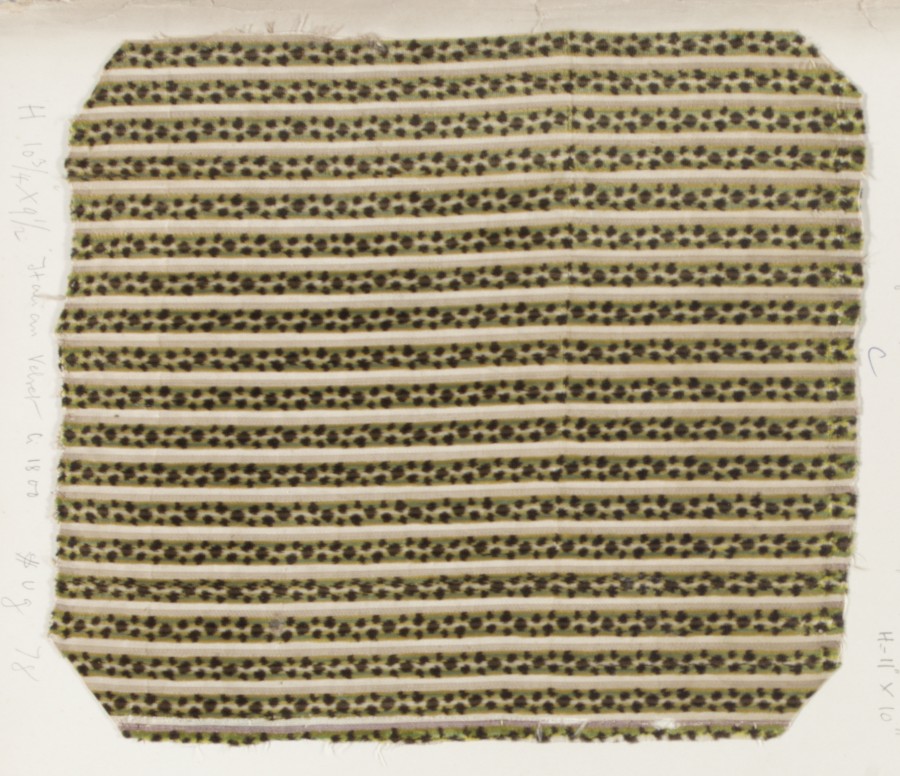
Fragment as Method: A Standalone Study in Silk and Global Heritage
The contemporary couture landscape is increasingly defined by a paradox: the more globalized its supply chains and visual references become, the more valuable the singular, irreducible object appears. Within this tension, Fragment—a standalone study developed by Katherine Fashion Lab—positions itself not as a garment in the conventional sense, but as an epistemological proposition. It asks what happens when couture abandons the logic of the complete silhouette and instead organizes itself around the partial, the residual, and the retrieved. The answer, articulated through the medium of silk and the context of global heritage, is a work that treats incompleteness as a deliberate compositional principle rather than a deficiency to be corrected.
This analysis examines Fragment across four axes: its conceptual origin in global heritage, its material logic in silk, its construction as a standalone study, and its position within the broader trajectory of couture's engagement with cultural memory. The objective is not to catalog influences but to interrogate how a single material—silk—can function as both archive and argument.
Origin: Global Heritage as Critical Framework
The term "global heritage" is frequently deployed in fashion discourse as a euphemism for appropriation, a way of lending cosmopolitan legitimacy to the extraction of motifs from marginalized traditions. Fragment resists this reading by refusing to synthesize. Its references are not blended into a seamless pastiche but held in productive tension, each fragment retaining the specificity of its origin. The silk itself becomes the connective tissue: a fiber with its own contested history, cultivated across China, India, Byzantium, and later France, each culture developing distinct sericultural and weaving traditions that transformed the material's meaning.
By working with silk as the singular material, Katherine Fashion Lab invokes this layered history without flattening it. The fabric is not a neutral ground but an active participant in the work's argument. When silk is cut, frayed, or left with raw edges, the gesture carries the weight of every tradition that has treated the fiber as a sign of refinement—and every tradition that has been excluded from that designation. Fragment's heritage is thus not decorative but dialectical: it stages the encounter between preservation and loss, between the museum and the marketplace.
Material: Silk as Archive and Instrument
Silk's technical properties make it uniquely suited to a study of fragmentation. Its tensile strength allows for extreme fineness; its drape permits structures that would collapse in stiffer fibers; its capacity to take dye and hold luster means that even a small fragment can carry a disproportionate visual charge. In Fragment, these properties are exploited to create a work that reads simultaneously as relic and as proposition.
The construction employs what might be termed strategic discontinuity. Panels of silk are joined not along conventional seam lines but at irregular intervals, leaving visible gaps where the underlying structure is exposed. These gaps are not accidents; they are the work's primary expressive device. They recall the boro textiles of Japan, where patched indigo fragments accumulate meaning through repair, and the kantha traditions of Bengal, where running stitches transform worn cloth into narrative. Yet Fragment does not imitate these traditions. It abstracts their logic—the logic of the fragment as a unit of memory—and applies it to a different material and a different context.
The color palette reinforces this abstraction. Rather than reproducing the saturated hues associated with heritage textiles, Fragment works with a restrained range: undyed ivory, oxidized silver, and a deep charcoal achieved through multiple dye baths. The result is a work that feels archaeological, as if recovered rather than made. The silk's natural luster provides the only ornamentation, catching light along the raw edges and creating a shimmer that moves with the wearer—or, in the case of the standalone study, with the viewer's position.
Context: The Standalone Study as Critical Form
Fragment is explicitly not a commercial garment. It is a standalone study, a category that in couture practice occupies a liminal space between the toile and the finished piece. Historically, the study has been treated as preparatory—a step toward a final object. Katherine Fashion Lab reverses this hierarchy. The study becomes the terminal form, and the finished garment, were it to exist, would be the derivative.
This inversion has methodological consequences. Without the pressure to resolve into a wearable silhouette, Fragment can pursue its inquiry into fragmentation without compromise. The work can be asymmetric where symmetry would be more flattering; it can expose construction where concealment would be more conventional; it can leave edges unfinished where finishing would signal completion. The standalone study thus functions as a kind of critical couture—a practice that uses the techniques and materials of high fashion to interrogate the assumptions on which high fashion rests.
Synthesis: The Fragment as Whole
What emerges from this analysis is not a contradiction but a redefinition. Fragment does not argue against wholeness; it argues that wholeness can be constituted through acknowledged partiality. The silk holds the work together—literally, through its fiber and weave, and figuratively, through its historical density. The global heritage invoked is not a backdrop but a field of tension. The standalone study is not a preliminary but a conclusion.
In an industry that often mistakes accumulation for depth, Fragment proposes a different economy: one in which the fragment is not what remains after the whole has been broken, but what precedes the whole and makes it possible. For Katherine Fashion Lab, this is the central insight of the work—that couture's future may lie not in the production of more complete objects, but in the rigorous, material-specific study of the parts from which completeness is imagined.