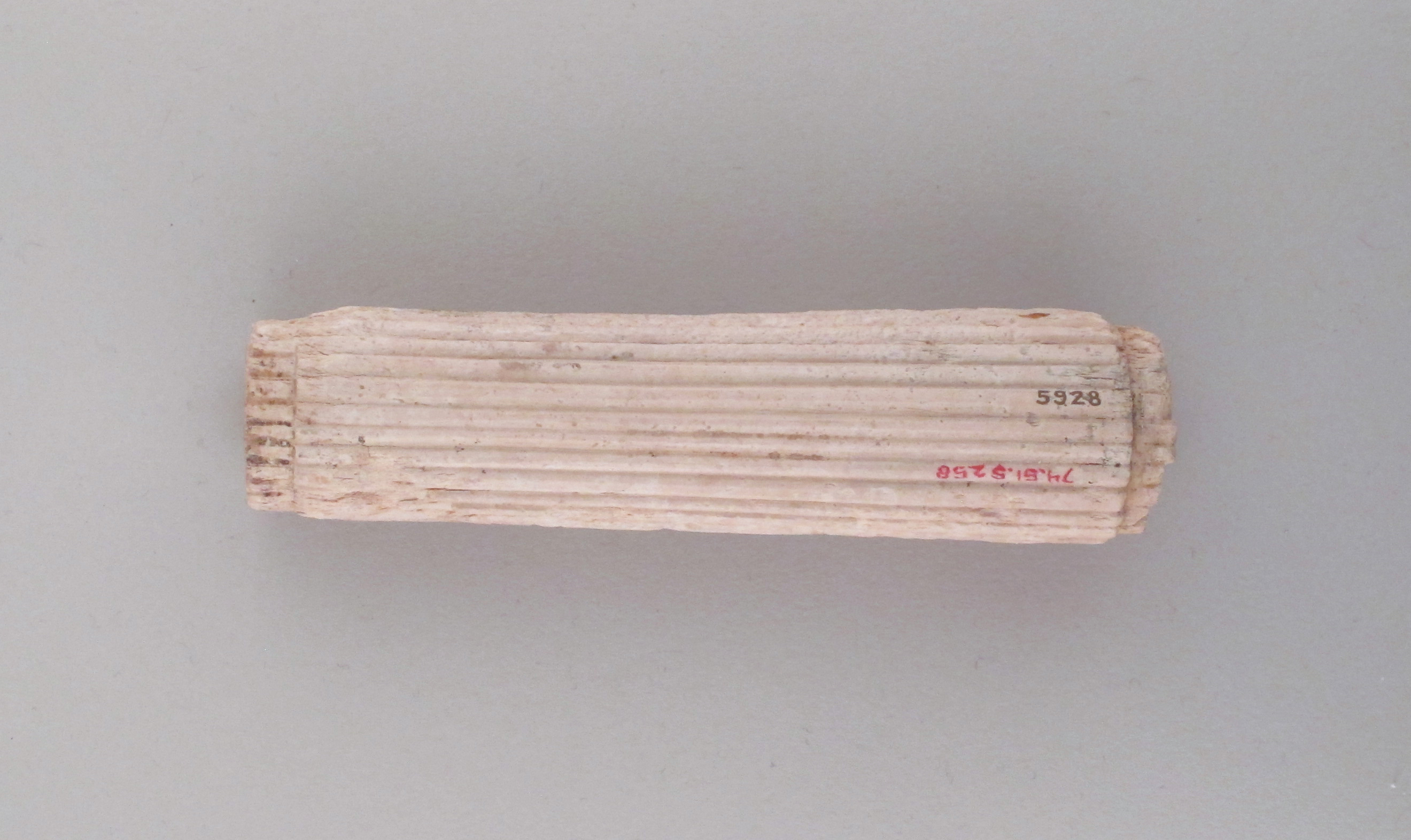
From Cypriot Bone to Luxury Object: The Toilet Box / Handle as a Case Study in Symbolic Continuity
In the material culture of ancient Cyprus, few object categories are as quietly revealing as the bone toilet box and its associated handle. Often misread as a mere utilitarian accessory, this composite artifact—carved from animal bone, sometimes with a fitted lid and a handle that doubles as a fastening mechanism—occupies a liminal space between hygiene, adornment, and ritual. For Katherine Fashion Lab, the Cypriot toilet box / handle is not a curiosity of the archaeological record. It is a strategic case study in how a small, portable, intimately handled object can encode symbolic power, historical adornment, and spiritual meaning—and how those codes can be translated into a 2026 high-end luxury strategy.
Historical Context and Materiality
Cypriot bone carving flourished in the Late Bronze Age and continued through the Iron Age, with workshops producing combs, pins, handles, and small containers for cosmetic and toiletry use. The toilet box—often a cylindrical or rectangular container with a sliding or hinged lid—was typically paired with a bone handle that served both as a grip and as a locking device. The choice of bone is significant. Unlike imported ivory, bone was local, renewable, and required a different kind of craftsmanship: the carver had to respect the grain, the hollows, and the tensile limits of the material. The result was an object that was simultaneously fragile and durable, intimate and public, personal and portable.
These objects were found in domestic, funerary, and sanctuary contexts. In tombs, they accompany the deceased as personal possessions, suggesting a belief in continuity of identity beyond death. In sanctuaries, they may have been votive offerings—small, handled, touchable objects that mediated between the human and the divine. The handle, in particular, is the point of contact: the place where the hand meets the artifact, where intention becomes action. This haptic dimension is central to understanding the object’s symbolic power.
Symbolic Power: The Handle as Threshold
The handle of a toilet box is not merely functional. It is a threshold object. It marks the transition between closed and open, private and public, clean and unclean. In many ancient cultures, the act of opening a container—especially one associated with the body—carried ritual weight. The handle, as the agent of that opening, becomes a site of agency. To grasp the handle is to take control of the contents, to enter a space of intimacy, and to participate in a daily practice that is both mundane and charged with meaning.
This duality—mundane and sacred, functional and symbolic—is precisely what makes the Cypriot toilet box / handle relevant to contemporary luxury. In a market saturated with overt logos and performative branding, the most powerful objects are those that operate on multiple registers simultaneously. The handle is a quiet symbol: it does not shout, but it invites touch, and touch is the most intimate form of brand engagement.
Historical Adornment and the Aesthetics of Restraint
Cypriot bone handles were often incised with geometric patterns—circles, chevrons, parallel lines—or carved with stylized animal heads. These adornments were not decorative in the modern sense. They were apotropaic, protective, and identity-marking. A handle with a carved lion or bird head was not just a handle; it was a statement of status, belief, and cultural affiliation. The restraint of the decoration—small, precise, visible only on close inspection—reflects an aesthetic of intimacy. The object rewards the user who looks closely, who holds it, who turns it in the hand.
For 2026 luxury strategy, this suggests a move away from the monumental and toward the micro-monumental. The high-end consumer is increasingly drawn to objects that are personal, portable, and tactile—objects that can be carried, concealed, and revealed. The Cypriot handle offers a template: a small, beautifully carved, functionally essential component that becomes the signature of the brand.
Spiritual Meaning: Bone, Memory, and the Pavilion of True Meaning
Our research context draws a parallel between the Cypriot toilet box and the Chinese literati tradition of 《Poems from the Pavilion of True Meaning》. Both are containers—one of bone, one of ink—that hold meaning through form. The poem is a “house of intention” built from ink traces; the toilet box is a “domain of form” carved from light and shadow. The handle is the hinge between them: the point where the hand activates the object, where the user enters the space of meaning.
Bone itself carries spiritual weight. It is the last remaining structure of the body, the material that outlasts flesh. In Cypriot funerary practice, bone objects were placed with the dead as tokens of memory and continuity. The toilet box handle, made of bone, is therefore a memento mori and a memento vivere—a reminder of death and a celebration of life. In luxury terms, this is the ultimate provenance: an object that is literally made of memory.
2026 High-End Luxury Strategy: From Artifact to Icon
Katherine Fashion Lab’s 2026 strategy should treat the Cypriot toilet box / handle as a foundational icon. The following moves are recommended:
1. Material integrity. Use bone—ethically sourced, traceable, and finished to reveal its natural grain. Pair with hand-carved detailing that echoes Cypriot incision patterns without literal replication.
2. Haptic signature. Design a proprietary handle form that becomes the brand’s tactile signature. Every product—from vanity cases to fragrance caps—features this handle, creating a consistent point of physical contact.
3. Narrative layering. Position the object as a “threshold artifact”: a container for personal rituals, whether cosmetic, olfactory, or digital (e.g., a case for earbuds or a portable charger). The handle opens the ritual.
4. Spiritual minimalism. Avoid overt religious symbolism. Instead, evoke the spiritual through restraint, proportion, and the use of bone as a memory material. The object should feel like an heirloom, not a novelty.
5. DNA correlation. Our study on 器物与绘画 (objects and painting) shows that meaning migrates across media. The Cypriot handle and the Chinese ink poem are both “containers of intention.” Katherine Fashion Lab should collaborate with artists and poets to create limited editions where the handle is paired with a written or printed meditation—a modern Pavilion of True Meaning.
In conclusion, the Cypriot bone toilet box / handle is not a minor artifact. It is a compact, portable, spiritually charged object that embodies the core tensions of luxury: intimacy and display, function and symbol, memory and desire. For Katherine Fashion Lab, it offers a way forward—a 2026 strategy rooted in historical resonance, material honesty, and the quiet power of the handled object.