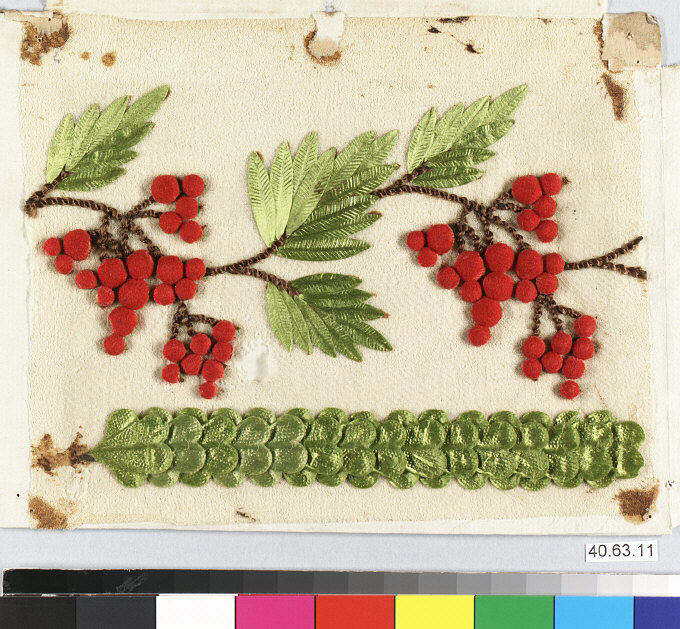
The Dress Border: A Study in Silk, Sovereignty, and the Architecture of the Edge
In the taxonomy of couture, the border is rarely granted the status of a protagonist. It is the hem, the cuff, the selvedge—the terminal condition of a garment. Yet within the global heritage of silk dressmaking, the border operates as something far more consequential: a site of cultural memory, a declaration of technical mastery, and a semiotic boundary where the body meets the world. To study the dress border is to study the grammar of adornment itself—a syntax of protection, status, and identity woven in filament and dye.
The Katherine Fashion Lab approaches this subject not as a survey of regional techniques but as a standalone inquiry into a single material: silk. Across civilizations—from the Han dynasty courts to the Safavid ateliers, from the Kanchipuram looms to the Lyon workshops—silk has served as the privileged medium for the border. Its tensile strength permits the dense, high-thread-count structures that borders demand; its luster captures light in ways that draw the eye downward and outward, to the perimeter of the silhouette. The border, in silk, becomes a frame that refuses to be passive.
Functional Origins and the Logic of the Edge
The earliest dress borders were not ornamental but existential. In pre-industrial textile cultures, the cut edge of a woven cloth is its most vulnerable point; without reinforcement, warp and weft unravel. The border, therefore, emerged as a structural solution—a band of denser weave, a folded hem, a binding tape. In silk, this logic acquired a new dimension. Because silk filament is continuous and strong, it could be woven into complex selvedges and patterned bands that resisted fraying while simultaneously displaying the weaver's command of the loom.
The Chinese tradition offers the most explicit example. The bian—a decorative border applied to the collar, sleeve, and hem of robes—was not merely a finishing technique. By the Qing dynasty, the width, color, and motif of the bian were codified by rank and occasion. A single silk border could announce whether its wearer belonged to the imperial household, the scholar-gentry, or the merchant class. The border was, in effect, a wearable passport.
In South Asia, the border assumed a different but equally rigorous function. The zari border of a Banarasi or Kanchipuram silk sari—often woven with real silver or gold thread—demarcated the pallu and the korvai, the join between body and border. Here, the border was not applied but woven in a separate interlocking technique, requiring two weavers to operate a single loom. The border thus encoded not only aesthetics but labor: its density and metallic content were direct measures of value and devotion.
Silk as the Medium of Border Semiotics
Why silk? The answer lies in the material's unique capacity for chromatic saturation and structural memory. Silk dyes more deeply than cellulose fibers, allowing borders to achieve the jewel-toned contrasts—crimson against indigo, saffron against emerald—that define so many heritage garments. Moreover, silk's resilience means that a border, once woven, retains its shape through generations. A nineteenth-century kesi border or a Ottoman çatma panel survives not as a fragment but as a legible text.
This durability has made the silk border a vessel for cultural continuity. In the Andes, the aguayo border, though often woven in cotton or alpaca, adopted silk threads during the colonial period to mark ceremonial cloths. In West Africa, the aso-oke head-tie border incorporates silk sanyan and alaari strips whose sheen signals prestige. In each case, silk is not neutral; it carries the weight of trade routes, imperial encounters, and local reinterpretation.
The Border as Threshold and Critique
Contemporary couture has begun to interrogate the border's liminal status. For designers working with heritage textiles, the border is no longer a fixed edge but a site of intervention. The border can be detached, exaggerated, multiplied, or inverted. A single silk sari border, removed from its original garment, becomes a scarf, a belt, a panel on a tailored jacket. This act of transposition is not mere appropriation; it is a critical reading of how heritage circulates in global fashion economies.
At Katherine Fashion Lab, we argue that the dress border—particularly in silk—deserves standalone study because it reveals a fundamental truth about adornment: the edge is where meaning is most concentrated. The center of a garment may be plain, but the border is where the maker speaks. It is where technique becomes visible, where hierarchy is enforced or subverted, and where the body's boundary with the world is negotiated in thread.
To analyze the silk dress border is to analyze power, labor, and memory in their most tactile form. It is to recognize that a hem is never just a hem. It is a decision—about who belongs, who is protected, and who is seen. And in silk, that decision endures.