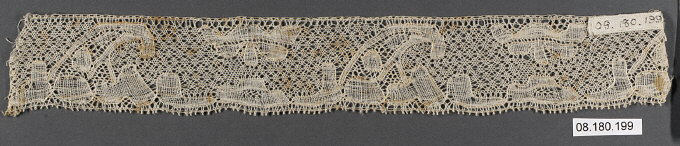
Fragment: A Deconstructive Lens on Global Heritage
In the rarefied ateliers of haute couture, the concept of the "fragment" is often viewed with suspicion—a rupture in the narrative of perfection, a flaw in the seamless whole. For Katherine Fashion Lab, however, the fragment is not an end but a profound beginning. It is the foundational unit of a new sartorial language, a deliberate deconstruction that allows for a more nuanced, layered, and intellectually rigorous reconstruction. This standalone study, centered on the exquisite materiality of bobbin lace, posits the fragment as the critical interface between global heritage and future-facing couture. By isolating and examining a singular, heritage-rich technique, we engage in a deep material dialogue, exploring how a single, intricate artifact of human craftsmanship can become a universe of aesthetic and conceptual possibility.
Bobbin Lace: The Archetypal Fragment, Woven in Time
Bobbin lace itself is a testament to the power of the fragment. It is born not from a single, continuous thread, but from the meticulous interplay of dozens—sometimes hundreds—of individual threads, each wound on its own bobbin. The lacemaker’s craft is an exercise in orchestrated fragmentation: crossing, twisting, and pinning threads point-by-point to coalesce into a breathtaking, airy whole. Its origins are a palimpsest of global exchange, with early centers in Italy (Venetian gros point), Flanders (Binche, Brussels), and later, profound interpretations in Normandy, England, and Slovenia. Each region’s lace became a fragment of its cultural identity, encoding local flora, religious iconography, and social hierarchies within its knotted syntax.
For this study, Katherine Fashion Lab does not merely use bobbin lace; we interrogate it as a conceptual framework. We examine the spaces between the threads—the negative space as a positive formal element. We isolate a single motif, a "fragment" of a traditional pattern, and subject it to a process of analytical magnification. This act of isolation liberates the motif from its historical context, allowing it to be re-contextualized, scaled, distorted, or multiplied. A single, delicate rosette from Chantilly lace might be enlarged to the scale of a garment’s entire bodice, its voids becoming windows to the skin beneath, transforming its function from embellishment to architecture.
Material Metamorphosis: From Heirloom to Hypothesis
The treatment of the lace fragment is where heritage is not preserved but evolved. We engage in a series of transformative processes that challenge the material’s inherent properties while honoring its structural intelligence.
Structural Re-engineering: Traditional bobbin lace is fragile, two-dimensional, and often intended for a flat application. Our laboratory techniques introduce three-dimensional molding. Fragments are starched and shaped over custom forms, creating rigid, sculptural pauldrons or hip projections that defy their delicate origins. Alternatively, we impregnate lace with silicone or bio-resins, granting it a pliable, leather-like durability that allows it to be gathered, pleated, or draped in ways its creators never envisioned.
Contextual Dislocation: A fragment of stark, geometric Maltese lace might be juxtaposed against the fluid drape of technical silk jersey. A length of intricate, floral Bucks Point lace could be layered over modern, laser-cut neoprene, creating a dialogue between hand-pinned precision and digital ablation. This clash of contexts—heritage craft against industrial material—forces a re-evaluation of both, charging the fragment with new meaning.
The Archaeology of Repair: Embracing the Japanese philosophy of kintsugi, we treat breaks or "fragments of fragments" not as losses but as sites of narrative. Tears are mended with filaments of gold wire or contrasting threads, making the history of the object—its fragility and its survival—visibly integral to its beauty. This process creates a temporal palimpsest, where the moment of creation, the passage of time, and the contemporary intervention are all legible in a single glance.
The Whole in the Part: A Couture Philosophy
This focused study on the bobbin lace fragment ultimately articulates a broader couture philosophy for Katherine Fashion Lab: that depth is achieved not through accumulation, but through intensive exploration of a singular, potent idea. A single, perfectly realized fragment can carry more conceptual weight than an entire garment of undifferentiated complexity.
In application, this means a gown may feature a solitary, monumental lace fragment—a vast, engineered collar that rises like a cathedral window—while the rest of the garment is rendered in austere, monolithic fabric. The fragment becomes the focal narrative, the wearer’s jewel. Conversely, a garment might be composed entirely of disparate lace fragments—snippets of Venetian reticella, Cluny lace tape, and contemporary 3D-printed lace analogs—united by a monochromatic thread or a unifying structural grid. This assemblage speaks to a global, non-hierarchical heritage, where fragments from different epochs and geographies converse on equal footing.
The ultimate power of the fragment lies in its incompleteness. It invites the viewer—and the wearer—to participate in the completion of its story. It suggests a world beyond the seams of the garment, a history that precedes it, and a future that will reinterpret it. It moves couture away from the presentation of a closed, perfect object and towards the offering of an open, evocative artifact.
Conclusion: The Fragment as Future
For Katherine Fashion Lab, the study of "Fragment" through the medium of bobbin lace is a strategic declaration. In a world saturated with visual noise and rapid, disposable trends, we champion the focused, the deliberate, and the deeply considered. By deconstructing global heritage to its constituent, brilliant parts, we find the seeds of genuine innovation. The bobbin lace fragment, with its echoes of countless hands and histories, becomes a microcosm of our approach: honoring the intelligence of the past not through replication, but through rigorous, respectful, and radical re-imagination. It is in these meticulously examined fragments that we discover the blueprint for a couture that is both timeless and unequivocally of the moment.