Heritage Analysis: The Snuffbox as Vessel of Power, Memory, and Ritual
Introduction: The Object as Strategic Artifact
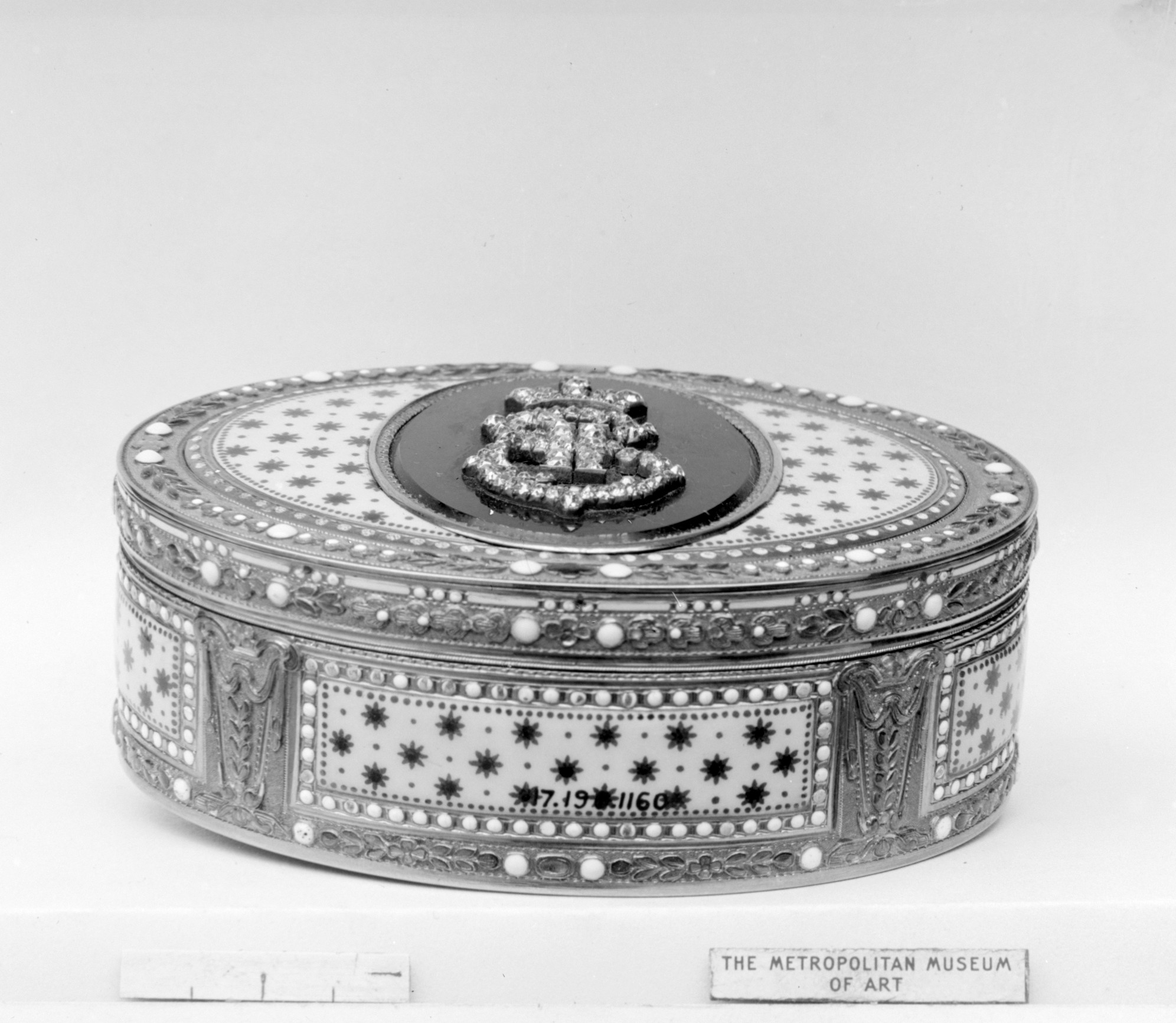
Within the Katherine Fashion Lab archive, the snuffbox occupies a paradoxical position. It is simultaneously a utilitarian container and a ceremonial object, a private possession and a public declaration of status. Originating from an ancient civilization whose goldsmithing and enameling traditions predate the modern luxury lexicon, this snuffbox—crafted in gold, enamel, diamonds, and glass—represents a convergence of material mastery and symbolic density. For the 2026 luxury landscape, it offers a strategic blueprint: how to transform a functional object into a heritage asset that carries spiritual, political, and aesthetic capital across millennia.
Symbolic Power: The Container as Sovereign Statement
In the ancient civilization from which this snuffbox derives, the act of containing was never neutral. To hold a substance—whether aromatic, medicinal, or ritual—was to exercise control over its access, distribution, and meaning. The snuffbox, therefore, functioned as a miniature throne: a portable locus of authority. Gold, the incorruptible metal, signaled permanence and divine right. Enamel, applied through repeated firing, demonstrated mastery over transformation—raw material turned into luminous surface. Diamonds, sourced through trade networks that spanned continents, embedded cosmic hardness into the object’s very structure. Glass, often overlooked in luxury hierarchies, here served as a transparent witness, allowing the contents to be seen while protecting them from profane touch.
This layering of materials was not decorative excess. It was a strategic grammar of power. Each element communicated a distinct message: gold for sovereignty, enamel for cultural refinement, diamonds for inviolable value, glass for controlled revelation. The snuffbox thus operated as a diplomatic instrument, a gift between rulers, a token of alliance, and a portable reliquary of personal prestige.
Historical Adornment: The Body Extended by the Object
In the ancient world, adornment was not confined to the body. The snuffbox extended the wearer’s physical presence into space. Carried in the hand, presented at court, or passed between intimates, it became an appendage of identity. Unlike a crown or a scepter, which announced power from a distance, the snuffbox invited proximity. It required touch. It demanded intimacy. This tactile dimension made it a vehicle for both seduction and diplomacy.
Historical records from comparable civilizations—from the Mughal courts to pre-Columbian Mesoamerica—reveal that small precious containers were often buried with their owners, suggesting a belief in their spiritual efficacy beyond death. The snuffbox was not merely a status symbol; it was a soul companion. Its enamel scenes might depict mythological narratives, its diamond settings arranged in cosmological patterns, its glass windows offering a glimpse of the sacred substance within. To own such an object was to participate in a lineage of adornment that linked the mortal body to immortal narratives.
Spiritual Meaning: The Inhalation of the Divine
The act of using a snuffbox—opening it, taking a pinch, inhaling—was in many ancient cultures a ritual of incorporation. The substance, whether tobacco, powdered herbs, or ceremonial incense, was believed to carry spiritual properties. The box that held it was therefore a threshold object: a boundary between the profane world and the sacred interior. Gold and diamonds, associated with solar deities and incorruptibility, sanctified the contents. Enamel, often blue or green, evoked water, sky, and regeneration. Glass, fragile yet protective, symbolized the veil between worlds.
For Katherine Fashion Lab, this spiritual dimension is not a historical curiosity. It is a strategic asset. In an era of secular luxury, consumers increasingly seek objects that offer meaning beyond material value. The snuffbox, reinterpreted, can become a talisman for the modern ritual—a vessel for intention, memory, or mindfulness. Its spiritual heritage provides a narrative depth that no newly designed accessory can replicate.
2026 High-End Luxury Strategy: From Relic to Relevance
The 2026 luxury market will be defined by three forces: provenance, personalization, and planetary consciousness. The snuffbox heritage analysis yields actionable strategic directions.
First, provenance as product architecture. The ancient snuffbox’s value derived from its chain of custody—who made it, who owned it, who gifted it. Katherine Fashion Lab should design limited-edition snuffboxes with embedded digital provenance, using blockchain to record each transfer. The physical object remains gold and enamel; the digital layer ensures that its history is as incorruptible as its materials.
Second, personalization as ritual. The snuffbox was always personal—its contents chosen by the owner, its enamel scenes commissioned to reflect private mythology. For 2026, the Lab can offer bespoke enamel commissions, where clients co-create the visual narrative with master artisans. The glass window becomes a customizable aperture, revealing not snuff but a personal relic: a lock of hair, a fragment of meteorite, a micro-engraved message.
Third, planetary consciousness as material ethics. Ancient gold and diamonds were often extracted through unsustainable means. The 2026 snuffbox must invert this legacy. Katherine Fashion Lab should source only recycled gold and lab-grown diamonds, while using enamel pigments derived from non-toxic minerals. The glass should be reclaimed or hand-blown from recycled sources. This transforms the object from a symbol of extraction into a symbol of regeneration—a spiritual upgrade consistent with its original ritual function.
Fourth, the snuffbox as gateway to a collection. The object’s small scale makes it an accessible entry point for new luxury clients, while its heritage depth appeals to connoisseurs. A snuffbox can anchor a narrative universe: a fragrance line inspired by ancient inhalants, a jewelry series that echoes its enamel patterns, a digital experience that simulates the opening ritual. The snuffbox is not a standalone product; it is a strategic nucleus.
Conclusion: The Curatorial Mandate
The ancient snuffbox is not a relic to be admired behind glass. It is a living template for how luxury objects can carry power, adornment, and spirit across time. For Katherine Fashion Lab, the mandate is clear: excavate the symbolic grammar of the past, translate it into ethical and experiential terms for 2026, and position the snuffbox as a vessel not of snuff, but of meaning. In a market saturated with novelty, heritage is the ultimate differentiator. The snuffbox, with its gold, enamel, diamonds, and glass, offers a blueprint for luxury that is at once ancient and urgently contemporary.