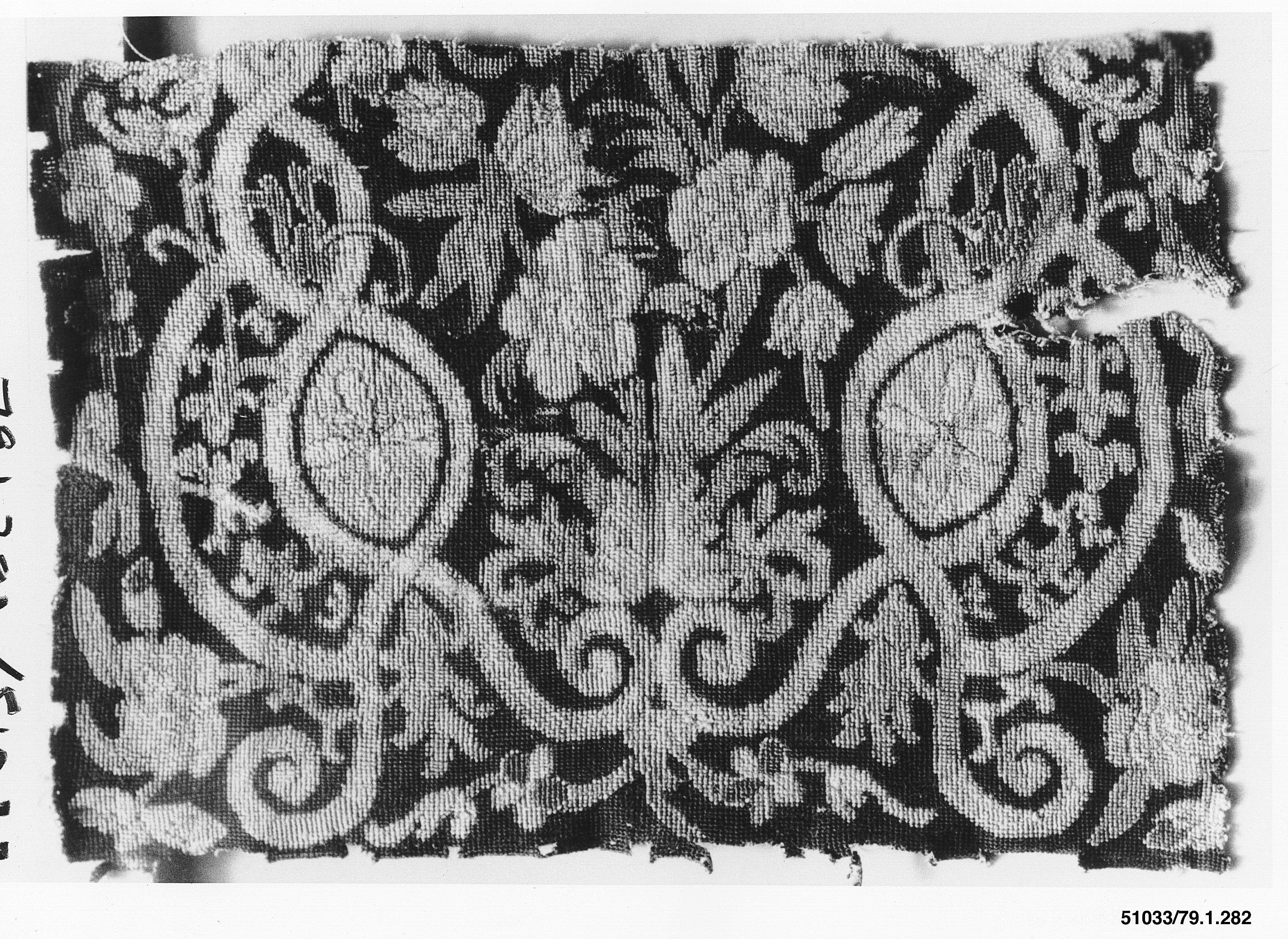
Fragment as Method: The Couture Logic of Incompletion
Within the disciplined vocabulary of haute couture, the fragment occupies a paradoxical position. It is at once an admission of loss and an assertion of intent — a deliberate withholding that generates meaning precisely through what it declines to supply. For Katherine Fashion Lab, the fragment is not a byproduct of cutting-room pragmatism but a governing aesthetic principle: the garment conceived as a partial utterance, completed only in the act of wearing. This standalone study examines how fragmentation, executed in silk and informed by a global heritage of textile traditions, reframes the couture object as an open proposition rather than a closed statement.
Defining the Fragment Within Couture Grammar
To speak of the fragment in couture is to invoke a lineage that runs from the unfinished non-finito of Renaissance sculpture to the deconstructive interventions of late-twentieth-century Japanese design. Yet the fragment should not be confused with the ruin. The ruin is passive — it records the erosion of an original whole. The fragment, by contrast, is active: it is selected, isolated, and recontextualized by an authorial hand. In this distinction lies the entire strategic value of the device. A fragment implies a whole that exists conceptually but not materially, and it is this absent whole that the wearer's body is invited to occupy.
Katherine Fashion Lab treats the fragment as a structural unit of composition. A single sleeve may be realized in full while its counterpart is reduced to a seam line. A bodice may terminate abruptly, exposing the architecture of its own construction. These are not errors of execution; they are decisions of grammar. The garment becomes a sentence with an intentional ellipsis, and the ellipsis carries as much semantic weight as any completed clause.
Silk as the Carrier of Absence
Material selection is inseparable from this logic. Silk is uniquely suited to the aesthetics of the fragment because it is a fiber that records process. Its luster reveals every fold, its weight responds to every gesture, and its drape exposes the precise point at which a fabric has been cut. Where a heavier textile might disguise an unfinished edge, silk amplifies it. The raw selvedge, the unhemmed bias, the exposed seam allowance — each becomes legible, even eloquent.
Consider the behavior of silk charmeuse at a cut edge. The fibers separate slightly, producing a faint halo that softens the boundary between garment and air. This is fragmentation rendered tender rather than violent. In heavier silks such as dupioni or taffeta, the same interruption reads as architectural — a clean fracture that holds its line. Katherine Fashion Lab exploits this spectrum deliberately, calibrating the weight and finish of the silk to determine whether a given fragment whispers or declares.
The fiber's historical prestige further complicates the reading. Silk has for millennia signified continuity — the unbroken filament of the silkworm, the unbroken trade routes that carried it across continents. To fragment silk is therefore to interrupt a material narrative of wholeness. That interruption is the point.
Global Heritage as Source and Critique
The fragment aesthetic cannot be responsibly practiced without acknowledging its debts. The incomplete garment is not a Western invention. It appears in the sari, where an unstitched length of silk or cotton becomes a complete garment only through the wearer's draping. It appears in the Japanese kimono, whose rectangular panels preserve the full width of the loom and refuse the tailor's sculptural cutting. It appears in West African adire and kente traditions, where pattern is composed from discrete strips joined into a larger field, each strip retaining its own integrity.
These traditions share a philosophical premise: the textile is not subordinate to the pattern, and the garment is not subordinate to the tailor. The cloth retains agency. Katherine Fashion Lab draws on this premise while refusing to treat non-Western textile knowledge as mere ornament. Instead, the atelier positions the fragment as a point of convergence — a place where the European couture tradition's insistence on the finished object meets a global heritage that has long understood completion as a collaborative, ongoing event.
This convergence demands rigor. Appropriation occurs when a tradition is mined for surface effect; dialogue occurs when its underlying logic is engaged. The distinction is visible in construction. A fragment that references the unstitched drape of the sari must reckon with the sari's engineering — its pleats, its pallu, its relationship to the body's movement — or it becomes costume. The atelier's approach treats these references as structural problems to be solved in silk, not as motifs to be applied.
The Wearer as Co-Author
Ultimately, the fragment transfers authorial responsibility to the wearer. A completed couture garment prescribes its own reading: the silhouette is fixed, the proportion resolved, the intention sealed. A fragmented garment leaves the resolution open. The wearer must decide how the exposed shoulder sits, how the unfinished hem falls, how the absent sleeve is compensated by posture or gesture. The garment is not incomplete; it is unfinalized — and that distinction is the entire thesis of the study.
This transfer of authorship has commercial and philosophical implications. Commercially, it produces garments that resist the seasonal obsolescence of fully resolved fashion, because their meaning is renewed with each wearing. Philosophically, it proposes a model of luxury grounded not in the perfection of the object but in the quality of the relationship between object and wearer.
Conclusion: The Discipline of the Unfinished
Fragmentation in couture is frequently mistaken for looseness — an alibi for unresolved design. The work of Katherine Fashion Lab demonstrates the opposite. To fragment well is to know precisely what to remove, where to stop, and what the absence will signify once the silk is cut. It requires a command of material behavior, a respectful fluency in global textile traditions, and the confidence to leave the final clause unwritten.
The fragment, properly understood, is not a lesser whole. It is a more demanding one — a garment that asks its wearer to finish the sentence, and in doing so, to become part of its authorship. In silk, under the atelier's discipline, incompletion becomes a form of eloquence.