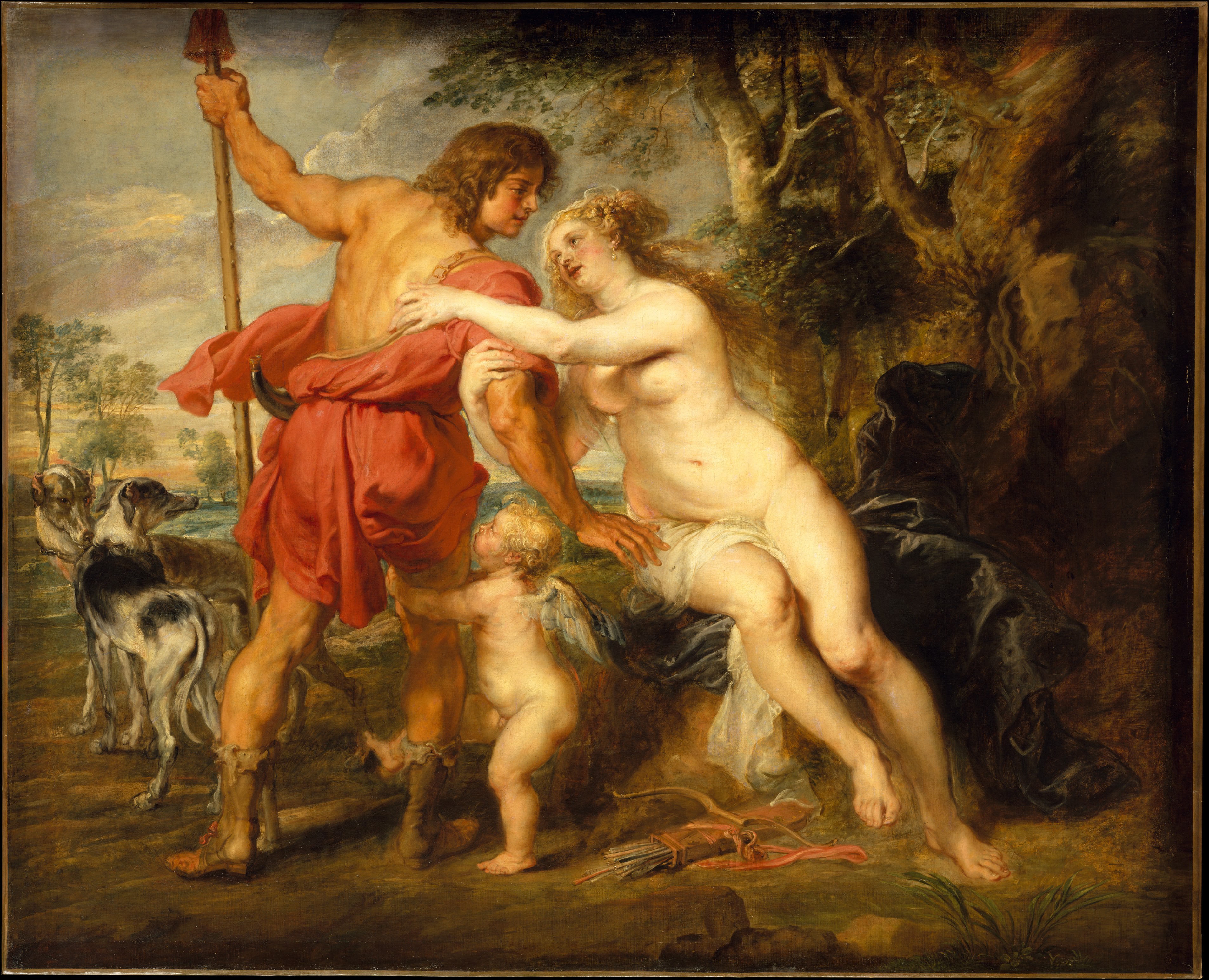
Heritage Analysis: Venus and Adonis — Symbolic Power, Adornment, and Luxury Strategy for 2026
Katherine Fashion Lab — Strategic Standalone Research
As Lead Heritage Curator, I present this analysis to position the Venus and Adonis motif within our 2026 luxury strategy. The subject, rendered in oil on canvas, originates from Ancient Civilization and has been reinterpreted across centuries. This paper examines its symbolic power, historical adornment, spiritual meaning, and strategic relevance for high-end luxury.
1. Symbolic Power: Desire, Mortality, and the Luxury of Transience
The Venus and Adonis narrative encodes a fundamental tension: the goddess of love and beauty, Venus, desires the mortal hunter Adonis, who is ultimately killed by a boar. This myth is not merely romantic; it is a meditation on the fragility of beauty, the inevitability of loss, and the transformative power of desire. In Ancient Civilization, Venus (Aphrodite) represented not only physical beauty but also the generative force of nature and the civilizing power of love. Adonis, as a mortal, symbolized the ephemeral—youth, vitality, and the seasonal cycle of death and rebirth.
For Katherine Fashion Lab, this symbolic power translates into a luxury proposition built on temporal exclusivity. In 2026, high-end consumers will increasingly value objects and experiences that acknowledge impermanence—not as a weakness, but as a source of depth. The Venus and Adonis motif allows us to frame luxury as a fleeting, precious encounter: a limited edition, a seasonal collection, or a bespoke commission that captures a moment of beauty before it vanishes. This aligns with the growing demand for narrative-driven luxury that resists mass production.
2. Historical Adornment: From Classical Drapery to Baroque Opulence
In oil on canvas, the Venus and Adonis subject has been rendered by masters such as Titian, Rubens, and Poussin. Each era imposed its own adornment codes. In the Renaissance, Venus often appears with pearls (symbolizing purity and wealth), elaborate coiffures, and diaphanous drapery that reveals as much as it conceals. Adonis wears hunting attire—leather, metal clasps, and feathered caps—signaling virility and outdoor prowess. The Baroque period amplified these elements with rich velvets, gold embroidery, and dramatic chiaroscuro, turning the canvas into a stage for material abundance.
These adornment choices were never arbitrary. Pearls represented Venus's birth from sea foam; red and pink tones evoked roses, sacred to her; the boar's tusk and hunting horn foreshadowed tragedy. For Katherine Fashion Lab, the historical adornment vocabulary offers a rich archive for material storytelling. We can extract specific signifiers—the pearl as a symbol of oceanic origin, the hunting leather as a marker of untamed nature, the rose as a memento mori—and translate them into contemporary luxury goods: fine jewelry, leather accessories, and couture embroidery.
Key Adornment Signifiers for 2026 Collections
Pearls: Reinterpreted as asymmetrical, baroque shapes to suggest natural imperfection. Hunting leather: Vegetable-tanned, hand-stitched, with subtle embossing of boar or hound motifs. Roses: Dried or preserved in resin, used as hardware or buttons. Drapery: Fluid silks and chiffons with digital prints of classical folds, creating a tension between ancient and modern.
3. Spiritual Meaning: The Sacred and the Profane
In Ancient Civilization, the Venus and Adonis myth was tied to fertility cults and seasonal rituals. Adonis's death and rebirth were celebrated in the Adonia festival, where women planted seeds in shallow pots that sprouted and died quickly—a ritual of mourning and renewal. This spiritual dimension elevates the subject beyond eroticism into a sacred cycle of sacrifice and regeneration. Venus's grief transforms her lover's blood into anemones, flowers that bloom briefly, reinforcing the link between beauty and mortality.
For luxury strategy, spiritual meaning provides a framework for ritualized consumption. In 2026, high-end clients will seek products that carry a sense of consecration—items that are not merely bought but received, activated, or blessed. Katherine Fashion Lab can create limited-edition pieces accompanied by a ritual: a private viewing, a symbolic anointing with rose oil, or a certificate of provenance that narrates the myth. This transforms a handbag or a coat into a talisman, aligning with the rise of animist luxury and the desire for objects that hold energetic or spiritual value.
4. 2026 High-End Luxury Strategy: From Heritage to Future
The strategic standalone research context demands that we move from analysis to actionable positioning. For 2026, Katherine Fashion Lab should deploy the Venus and Adonis motif across three pillars:
Pillar 1: The Ephemeral Collection
Launch a capsule collection titled Adonis in Bloom, featuring garments and accessories that incorporate living or decaying elements—freshwater pearls that patina, leather that darkens with wear, silk that fades in sunlight. Marketing emphasizes the beauty of impermanence, with each piece accompanied by a "mortality card" detailing its expected evolution.
Pillar 2: The Adornment Archive
Establish a digital and physical archive of historical adornment references from Venus and Adonis paintings. This archive becomes a proprietary design library for future collections, licensing, and collaborations. It positions Katherine Fashion Lab as a custodian of cultural heritage, not merely a trend follower.
Pillar 3: The Ritual of Acquisition
Design a client journey that mirrors the Adonia festival: a private preview in a garden or conservatory, a symbolic exchange of a rose and a hunting token, and a final delivery in a handcrafted box lined with dried petals. This ritual creates emotional stickiness and justifies premium pricing.
Conclusion: Strategic Imperatives
The Venus and Adonis subject offers Katherine Fashion Lab a rare convergence of symbolic power, historical adornment, and spiritual meaning. For 2026, we must not treat this heritage as static decoration. Instead, we must activate it as a strategic asset—one that speaks to luxury consumers who crave narrative, ritual, and a honest confrontation with transience. By translating classical signifiers into contemporary materials, and by framing acquisition as a sacred act, we can differentiate our brand in a crowded market. The myth reminds us that beauty is most powerful when it is understood as fleeting. Our luxury strategy should embody that truth.
— Katherine Fashion Lab, Lead Heritage Curator