The Bowl as Autonomous Artifact: A Couture Analysis of Form, Surface, and Cultural Memory
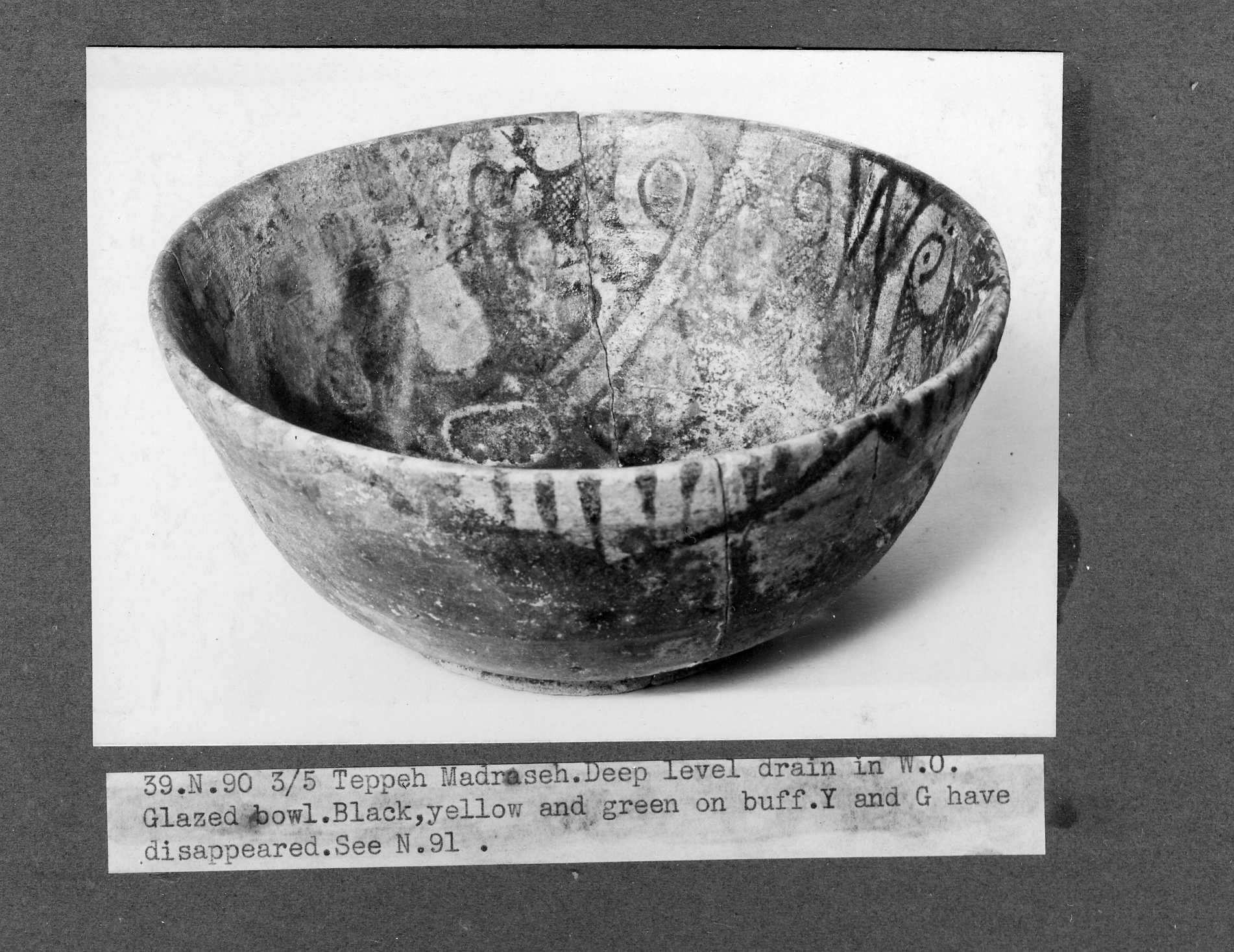
Within the discipline of material culture, certain objects resist classification as mere vessels and instead assert themselves as autonomous works of art. The earthenware bowl under examination here—decorated with a buff slip and underglaze drawing in black, green, and yellow—belongs to this rarefied category. It is not a component of a service, not a functional accessory to a dining ritual, but a standalone study: a self-sufficient aesthetic proposition whose value derives from its coherence as a unified object. For Katherine Fashion Lab, such an artifact offers a critical lens through which to interrogate the relationship between utility and beauty, between the vernacular and the refined, and between global heritage and contemporary couture sensibility.
Material Integrity and the Poetics of Earthenware
The foundational choice of earthenware situates this bowl within one of humanity's oldest and most democratic ceramic traditions. Unlike porcelain, which signals imperial exclusivity and technological mastery, earthenware speaks to accessibility, to the fertile clay beds of river valleys, and to the communal kilns of village economies. Yet the application of a buff slip—a liquid clay wash applied before firing—elevates the surface into a deliberate canvas. The slip does not merely smooth imperfections; it establishes a chromatic ground, a warm neutral field that anticipates and frames the subsequent underglaze drawing. This preparatory layer is analogous to the gesso ground of a Renaissance panel or the sized linen of a couture toile: an invisible architecture that supports visible expression.
The underglaze technique itself demands precise sequencing. Pigments are applied to the raw or bisque-fired body before the final glaze is deposited and fired. The artist must therefore envision the final colors through the distorting veil of molten glass, calculating how black, green, and yellow will interact under heat. This is a temporal and cognitive discipline—a form of delayed gratification that parallels the couture process, where a designer must imagine the fall of a fabric, the drape of a seam, and the movement of a garment on a living body long before the final stitch is placed.
Chromatic Grammar: Black, Green, and Yellow
The palette employed here is neither arbitrary nor decorative. Black, in ceramic traditions from Attic Greece to Ming China to Pueblo pottery, functions as structure: it defines contour, articulates rhythm, and anchors the composition. Here, the black underglaze drawing likely delineates the primary motifs—perhaps floral, geometric, or figurative—providing the visual skeleton upon which the other colors depend.
Green introduces a register of organic vitality. Depending on its copper or iron base, green can evoke jade, moss, celadon, or emerald. In the context of a global heritage object, green often signals fertility, regeneration, and the natural world. Yellow, meanwhile, occupies a more complex position. Across many cultures—from Chinese imperial yellow to Andean gold—yellow connotes solar energy, sovereignty, and spiritual illumination. The triadic relationship of black, green, and yellow creates a chromatic tension that is both balanced and dynamic: the black grounds, the green enlivens, and the yellow radiates.
For the couture analyst, this palette is instructive. It demonstrates that limitation generates sophistication. A restricted chromatic range, rigorously applied, produces greater visual authority than an indiscriminate spectrum. This principle governs the most enduring fashion collections, where a designer's disciplined commitment to three or four hues yields a coherent aesthetic statement.
Form and the Standalone Study
The bowl's status as a standalone study releases it from the obligations of utility. It need not stack, pour, or nest. It need not conform to a dinner service's dimensions. Instead, it may pursue formal perfection on its own terms. The curve of the wall, the articulation of the foot, and the tension of the rim become autonomous sculptural concerns. In couture terms, this is the difference between a garment designed for a collection and a piece conceived as a pièce unique—a singular expression that answers only to its own internal logic.
The standalone study also invites sustained contemplation. A bowl within a set is read quickly, its meaning exhausted by its function. A standalone bowl demands duration: the viewer circles it, observes the underglaze drawing from multiple angles, and registers how the buff slip shifts in different light. This durational attention is the essence of connoisseurship, whether applied to ceramics or to couture.
Global Heritage and Contemporary Couture
To classify this bowl under "Global Heritage" is to acknowledge that its formal language—earthenware, slip, underglaze drawing—belongs to no single nation or dynasty. Variations of this technique appear in Persian ceramics, Japanese Mino ware, Mexican Talavera, and North African pottery. The bowl is therefore a node in a global network of material knowledge, a testament to the migration of techniques along trade routes and through colonial encounters.
Katherine Fashion Lab's interest in such objects lies in their capacity to inform contemporary design. The buff slip as a neutral ground suggests a design philosophy of restraint. The black, green, and yellow underglaze drawing proposes a model of chromatic storytelling. The standalone study asserts the value of the autonomous object in an age of mass production. These are not merely historical observations; they are creative prompts. The couture designer who studies this bowl learns that surface is not superficial, that color is structural, and that a single object, rigorously conceived, can carry the weight of an entire cultural tradition.
In conclusion, this earthenware bowl with buff slip and underglaze drawing in black, green, and yellow is a masterclass in material intelligence. It demonstrates that the humblest clay can achieve the highest aesthetic refinement when treated with deliberate technique and disciplined vision. For Katherine Fashion Lab, it stands as a reminder that couture is not confined to fabric and thread; it is a way of seeing, a commitment to form, and a dialogue with global heritage that continues with every generation of makers.