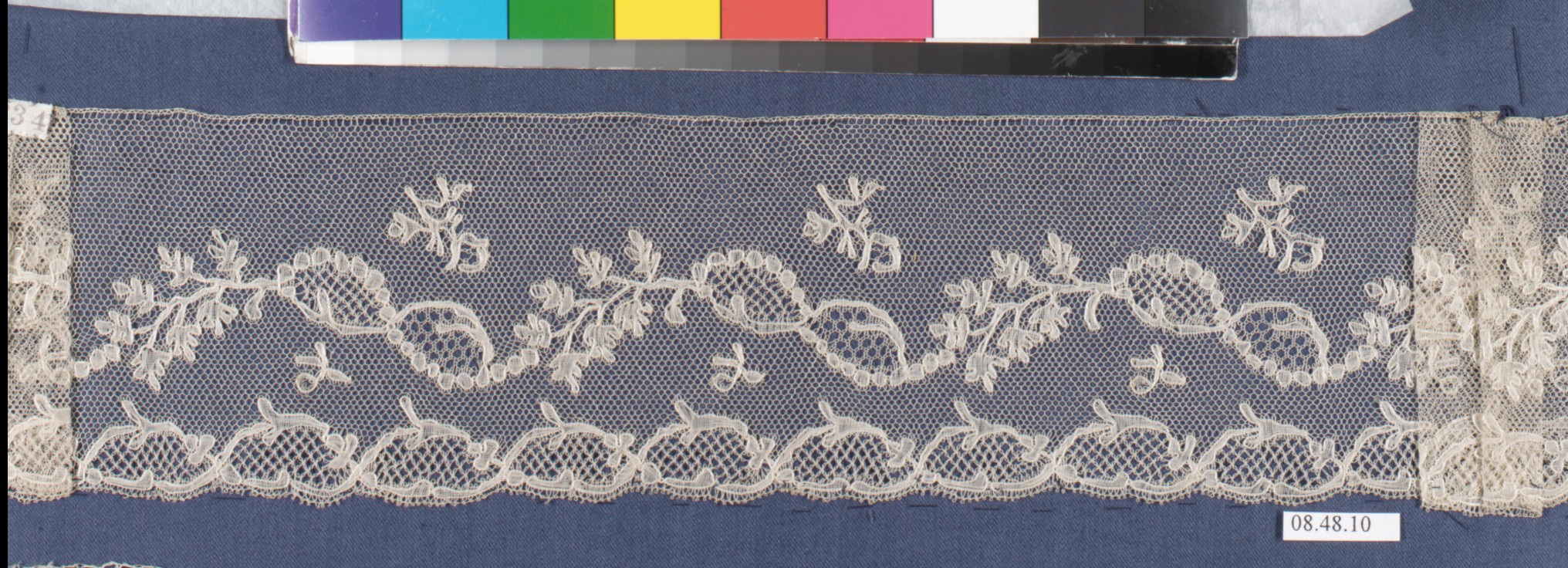
Heritage Analysis: Edging in Bobbin Lace from Ancient Civilizations
Katherine Fashion Lab — Strategic Standalone Research
Edging, as a decorative and symbolic boundary, represents one of humanity's earliest and most persistent impulses: to define, protect, and elevate the periphery of an object, a garment, or a body. Within the medium of bobbin lace, edging evolved from a functional necessity into a sophisticated language of power and spiritual meaning. This analysis examines the origins of edging in ancient civilizations, its codification through bobbin lace, its symbolic resonance across cultures, and its strategic relevance for the 2026 high-end luxury market.
Ancient Origins: The Ritual and Social Function of Edging
Long before the invention of bobbin lace in sixteenth-century Europe, ancient civilizations practiced edging as a sacred and social act. In Egypt, linen garments were finished with braided borders that served both structural and amuletic purposes. These edges were often knotted with specific patterns believed to trap malevolent spirits or invoke protection from deities. The edge was not merely a hem; it was a threshold between the wearer and the external world.
In Mesopotamia, Sumerian and Babylonian elites adorned their robes with fringed and woven borders. These edges indicated rank, with the complexity of the border directly correlating to the wearer's proximity to divine or royal authority. The edge became a visual contract: the closer one stood to power, the more intricate the boundary of one's garment.
In the Indus Valley Civilization, evidence from archaeological textiles suggests that edging was used to reinforce cloth while simultaneously encoding symbolic motifs. The repetition of geometric patterns along edges—diamonds, zigzags, and interlocking loops—likely carried spiritual significance, representing cycles of life, protection, and continuity.
The Rise of Bobbin Lace: Edging as a Medium of Refinement
Bobbin lace, developed in the Flemish and Italian regions during the Renaissance, transformed edging from a utilitarian or ritual practice into a highly refined art form. Using multiple bobbins wound with fine thread, lacemakers crossed and twisted threads to create openwork fabrics that were both delicate and durable. Edging became the primary application of this technique, as lace was most often used to trim collars, cuffs, ruffs, and hems.
The symbolic power of bobbin lace edging lay in its transparency and fragility. Unlike woven borders that could be heavy and opaque, lace edges suggested a liminal space—a boundary that was present but permeable. This quality made lace edging particularly popular in religious contexts. Altar cloths, vestments, and christening gowns were edged with bobbin lace to symbolize the intersection of the earthly and the divine. The edge became a site of spiritual mediation.
In the seventeenth and eighteenth centuries, bobbin lace edging became a marker of aristocratic status. The wider and more intricate the lace, the greater the wealth required to commission it. French, Venetian, and Brussels laces competed for supremacy, with edging patterns named after royalty and religious figures. The edge was no longer just a boundary; it was a signature of cultural capital.
Symbolic Power and Spiritual Meaning
Across cultures, edging carries a consistent symbolic grammar. It represents protection, transition, and identity. In many spiritual traditions, the edge of a garment is believed to hold residual energy of the wearer. In Jewish tradition, the tzitzit (fringes) on the corners of garments serve as reminders of commandments and as a boundary between the sacred and the profane. In Hindu and Buddhist practices, the borders of saris and monastic robes often feature auspicious symbols that bless the wearer and ward off negativity.
Bobbin lace edging, with its geometric precision and open structure, amplifies these meanings. The holes in the lace are not absences but presences—they allow light and air to pass, symbolizing the flow of grace, knowledge, or spiritual energy. The edge becomes a dynamic interface rather than a static wall.
Moreover, the labor invested in bobbin lace edging—hours of repetitive, meditative work—imbues the object with what anthropologists call "inalienable wealth." The maker's time and intention remain embedded in the lace, giving it a spiritual weight that mass-produced trims lack. This is why heirloom lace edging is often passed down through generations as a talisman of family continuity.
Strategic Relevance for 2026 High-End Luxury
As Katherine Fashion Lab looks toward 2026, bobbin lace edging offers a compelling strategic platform. The luxury market is shifting from logo-driven consumption to heritage-driven narratives. Consumers seek authenticity, provenance, and spiritual meaning. Bobbin lace edging satisfies all three.
First, it provides a tangible link to ancient civilizations. By referencing Egyptian, Mesopotamian, and Indus Valley edging traditions, a brand can position itself as a custodian of human history rather than a trend follower. This aligns with the "quiet luxury" movement, where value is communicated through craft and story rather than overt branding.
Second, bobbin lace edging supports sustainability and slow fashion. The technique is inherently low-energy and can be produced by artisan communities. In 2026, luxury brands that invest in heritage craft will be rewarded with consumer loyalty and premium pricing. Edging becomes a visible sign of ethical production.
Third, the spiritual dimension of edging resonates with the post-pandemic search for meaning. Consumers are increasingly drawn to objects that offer protection, grounding, and connection to something larger than themselves. A bobbin lace edge on a garment or accessory can be marketed as a "threshold amulet"—a beautiful boundary that carries intention.
Finally, edging is versatile. It can be applied to ready-to-wear, leather goods, home décor, and even digital fashion. For 2026, Katherine Fashion Lab could develop a signature bobbin lace edge that becomes a recognizable brand code—a modern hieroglyph of luxury, heritage, and spiritual power.
Conclusion
Edging in bobbin lace is not a minor decorative detail. It is a historical technology of meaning, rooted in ancient rituals of protection and status, refined through centuries of European craftsmanship, and now poised for strategic revival in high-end luxury. For Katherine Fashion Lab, the opportunity lies in treating edging as a narrative asset: a way to connect the wearer to ancient wisdom, to the hands of artisans, and to a future where luxury is defined by depth rather than display. The edge, once a boundary, becomes the center.