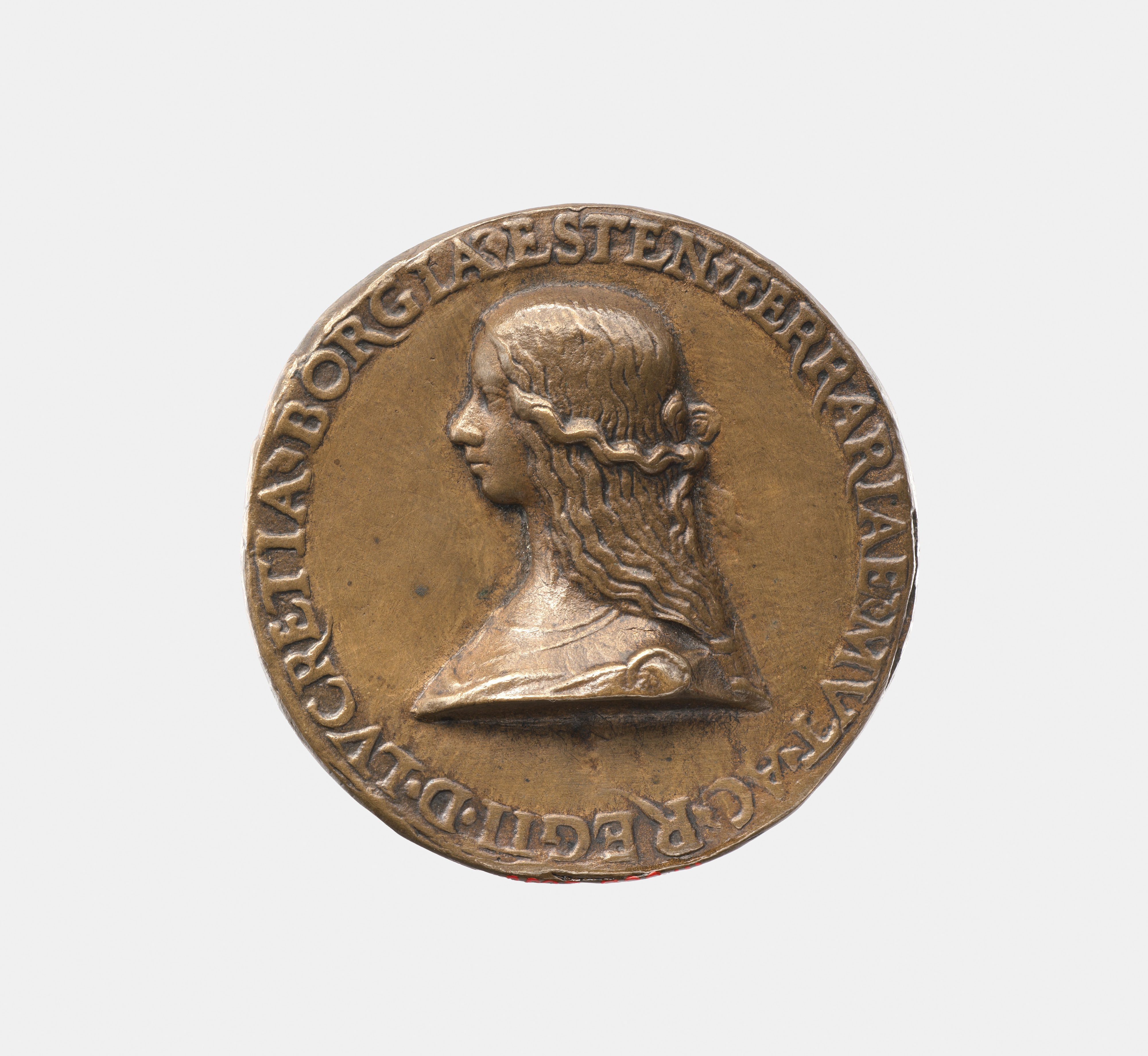
Heritage Research Paper: Lucrezia Borgia (1480–1519) — Bronze, Power, and the Material Politics of Renaissance Adornment
Introduction: A Subject Framed by Material Memory
Lucrezia Borgia (1480–1519) occupies a paradoxical position in Western cultural memory: simultaneously a Renaissance political instrument, a patron of humanist learning, and a contested icon whose historical adornment has been persistently overwritten by myth. For Katherine Fashion Lab, Lucrezia is not merely a biographical subject but a material archive—one whose symbolic power was mediated through bronze, gold, and the metallurgical vocabulary of dynastic ambition. This analysis situates her within a broader research context: the DNA correlation between our study of Rock in the form of a fantastic mountain and Jar in the shape of bronze container (hu). These two ostensibly dissimilar objects—one a natural formation aestheticized, the other a ritual bronze vessel—share a common revelation: the transformation of raw material into symbolic capital is the foundational act of luxury heritage. Lucrezia Borgia, read through bronze, offers a Renaissance European parallel to this logic.
Historical Context: Bronze as Dynastic Language
Lucrezia was born into the Borgia family at the apex of its papal ascendancy. Her father, Rodrigo Borgia, became Pope Alexander VI in 1492; her brother, Cesare, became the model for Machiavelli's Prince. In this milieu, bronze was not decorative but declarative. The Italian Renaissance inherited from antiquity a hierarchy of materials in which bronze—an alloy of copper and tin—signified permanence, martial virtue, and civic authority. Unlike marble, which evoked Greek idealism, bronze evoked Roman imperium: equestrian statues, triumphal medals, and liturgical objects cast in lost-wax technique.
Lucrezia's adornment was therefore never private. Her portrait medals, struck in bronze and sometimes gilded, functioned as portable propaganda. They circulated her profile—a disciplined, classicizing visage—across courts, consolidating alliances through the Ferrara marriage of 1502. The medal, like the bronze hu in our comparative study, is a vessel of meaning: its form contains ritual, its surface carries ideology, and its material guarantees endurance.
Symbolic Power: The Adorned Body as Political Instrument
Lucrezia's wardrobe and jewels were instruments of statecraft. As Duchess of Ferrara from 1505, she managed a court renowned for its textile production and diplomatic spectacle. Her adornment—velvets, brocades, pearls, and gold-worked headdresses—operated on three levels:
1. Legitimization. The Borgia name carried scandal; Lucrezia's material refinement performed the opposite. By adopting Ferrarese sumptuary codes and commissioning humanist poetry, she converted notoriety into patronage.
2. Diplomatic signaling. Gifts of jewelry and bronze objects to foreign courts encoded alliance. A bronze medal was not a trinket; it was a contract in metal, invoking the durability of the agreement.
3. Spiritual mediation. Lucrezia's later life was marked by religious devotion—she joined the Third Order of St. Francis and founded convents. Bronze liturgical objects (censers, candlesticks, reliquaries) connected her court to the sacred economy of salvation. Here, adornment becomes devotional technology: the material world arranged to negotiate with the immaterial.
Historical Adornment and the Spiritual Meaning of Alloy
The spiritual resonance of bronze in Renaissance Europe was layered. Alchemically, bronze was associated with Venus (copper) and Jupiter (tin)—a union of love and sovereignty. In Christian exegesis, bronze's durability evoked the enduring covenant. For Lucrezia, whose biography includes both political marriages and religious retreat, bronze's dual nature—lustrous yet utilitarian, sacred yet martial—mirrors her own negotiated identity.
This is where the DNA correlation with our two study objects becomes methodologically productive. Rock in the form of a fantastic mountain represents the aestheticization of raw nature—the scholar's stone, the gongshi, valued for its suggestive form. Jar in the shape of bronze container (hu) represents the ritualization of material—the bronze vessel as ancestor communication. Both objects reveal that heritage value is generated at the intersection of material, form, and narrative. Lucrezia Borgia, cast in bronze medals and remembered through adornment, belongs to the same analytical family: a subject whose historical resonance depends on the objects that carried her image.
2026 Luxury Strategy: From Bronze to Brand Architecture
For Katherine Fashion Lab's 2026 high-end strategy, Lucrezia Borgia offers a blueprint for material-led storytelling. The strategic implications are fourfold:
1. Alloy as brand metaphor. Bronze is a composite—copper and tin, strength and beauty. Luxury brands in 2026 must similarly composite heritage and innovation. A Lucrezia-inspired collection could use bronze-toned hardware, patinated finishes, and lost-wax-cast jewelry to signal permanence in an ephemeral market.
2. Adornment as diplomacy. Lucrezia's use of jewelry as alliance currency anticipates the modern gifting economy of luxury. For 2026, Katherine Fashion Lab can develop invitation-only bronze medal commissions for key clients—objects that function as relational contracts, not mere products.
3. Spiritual meaning as differentiation. In a saturated luxury landscape, spiritual narrative is scarce. A collection engaging Lucrezia's devotional turn—bronze rosary elements, reliquary-inspired minaudières, candlelit presentation rituals—can occupy the sacred-secular intersection that competitors avoid.
4. DNA correlation as curatorial method. The pairing of Rock in the form of a fantastic mountain with Jar in the shape of bronze container (hu) demonstrates that cross-cultural comparison generates insight. Katherine Fashion Lab should institutionalize this method: each collection pairs a Western and non-Western object, revealing shared logics of material transformation. Lucrezia Borgia, read alongside Chinese bronze ritual vessels, becomes not a European anomaly but a global case study in adornment as power.
Conclusion: The Enduring Alloy
Lucrezia Borgia's historical resonance lies not in scandal but in strategy. She understood that identity is cast, not inherited—that bronze, velvet, and pearl could negotiate a place in a hostile political economy. For Katherine Fashion Lab, her legacy is a mandate: luxury in 2026 must be materially intelligent, spiritually literate, and diplomatically deployed. The bronze medal, like the scholar's rock and the ritual hu, is never only an object. It is a proposition about permanence—and the brands that endure are those that cast their propositions well.