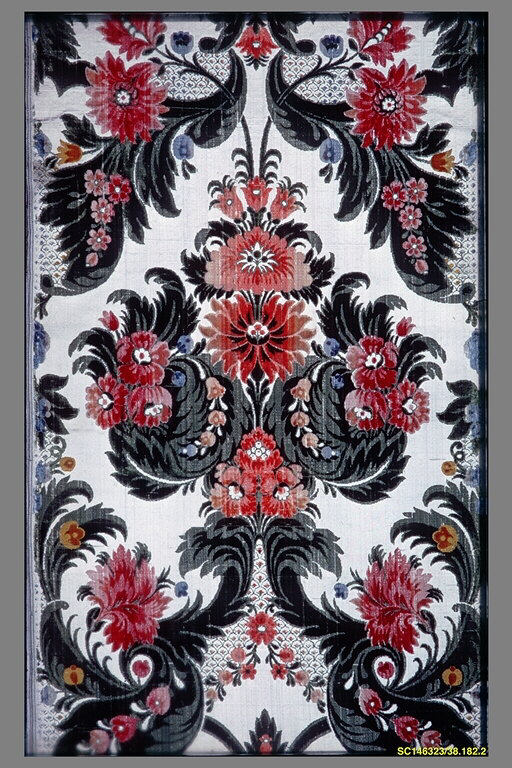
Piece as Protagonist: A Couture Analysis of Silk in Global Heritage
In the lexicon of contemporary couture, the term piece carries a weight that transcends mere garment classification. It denotes singularity—an object conceived not for the rack but for the archive, not for the season but for the epoch. When this piece emerges from the confluence of global heritage and silk, it enters a rarefied domain where materiality, memory, and mastery converge. This standalone study examines the piece as a self-sufficient artifact: a closed system of meaning in which silk functions simultaneously as medium, metaphor, and manifesto.
The Ontology of the Piece in Couture
Couture has always distinguished between the collection and the piece. The collection speaks in the plural—a narrative arc, a seasonal thesis, a commercial proposition. The piece speaks in the singular. It resists the logic of the ensemble; it requires no companion. In the atelier tradition, the piece is the unit of ultimate accountability: the object on which the première d'atelier stakes her reputation and the house stakes its lineage.
This standalone study positions the piece as an autonomous text. It is not a fragment of a larger story but a complete utterance. Such autonomy demands internal coherence—every seam, every fall of fabric, every gesture of construction must justify itself without external reference. The piece must be legible in isolation, and yet it must carry within it the sediment of everything that produced it: the hands, the history, the hemisphere.
Silk as Material Archive
No fiber is more burdened by history than silk. Its domestication in ancient China, its passage along the Silk Roads, its cultivation in Byzantium, Persia, India, and later Lyon and Como—each chapter has deposited meaning into the filament itself. When a couture piece employs silk, it does not merely select a textile; it activates an archive.
The material properties of silk are inseparable from its cultural biography. Its tensile strength—greater than steel by weight—mirrors the resilience of the heritage economies that produced it. Its lustre, which arises from the triangular prismatic structure of the fibroin, has been read across civilizations as a sign of refinement, sanctity, and power. Its thermoregulatory behavior, simultaneously insulating and breathable, has made it the fabric of ceremony in climates as disparate as the Rajasthani desert and the Japanese court.
In the context of this piece, silk is not a neutral ground. It is a protagonist in its own right. The couturier who works with heritage silk inherits not only a material but a set of obligations: to the sericulturists, to the weavers, to the dyers whose knowledge is encoded in the cloth. The piece becomes a vessel for this chain of custody, and its value is measured partly by how faithfully it transmits that inheritance.
Global Heritage as Design Grammar
Global heritage, in couture terms, is often invoked as a mood or a motif—a superficial quotation of the exotic. This study rejects that reading. Heritage, properly understood, is a grammar: a structured system of rules, proportions, and symbolic relations that governs how forms may be combined. To design from global heritage is not to sample motifs but to think in the syntactic terms of a tradition.
Consider the piece under examination. Its construction may draw on the sari's unstitched logic, the kimono's rectilinear economy, the kaftan's volumetric generosity, or the huipil's modular assembly. Each of these traditions offers a distinct grammar of the body—a way of negotiating the relationship between fabric and flesh that is not reducible to Western tailoring's adversarial fit. When silk is deployed within these grammars, its behavior changes: it drapes rather than sculpts, it wraps rather than constrains, it flows rather than interrupts.
The piece therefore becomes a site of translation. It does not appropriate heritage; it converses with it. The couturier's task is to identify the structural principles of a tradition and to rearticulate them in the vocabulary of haute couture, using silk as the connective tissue between two knowledge systems.
Standalone Study: Method and Implication
To treat the piece as a standalone study is to adopt a particular critical posture. It means suspending the question of trend, of marketability, of seasonal coherence. It means asking: what does this object know? What does it remember? What does it propose?
Such a study proceeds through three registers. The first is material: the specific provenance of the silk—its denier, its twist, its finish, its dye chemistry. The second is structural: the pattern-cutting logic, the seam architecture, the relationship between two-dimensional cloth and three-dimensional form. The third is symbolic: the piece's position within a heritage grammar, its citation of precedent, its departure from it.
When these registers align, the piece achieves what couture at its highest level aspires to: it becomes irreducible. It cannot be paraphrased, substituted, or mass-reproduced without loss. It exists as a singular argument about how silk, heritage, and the body might relate.
Conclusion: The Piece as Proposition
In an industry increasingly governed by velocity and visibility, the standalone piece asserts a different temporality. It is slow, deliberative, and cumulative. It does not seek to be seen once but to be studied repeatedly. Silk, with its millennia of cultivation and its molecular precision, is the ideal medium for such an assertion. Global heritage, with its deep grammars and its distributed authorship, is its ideal context.
The piece, finally, is not a product. It is a proposition—about material ethics, about cultural transmission, about the possibility of making an object that is fully itself. In the hands of a couturier who understands silk as archive and heritage as grammar, the piece becomes what every serious garment secretly wishes to be: a permanent argument in cloth.